



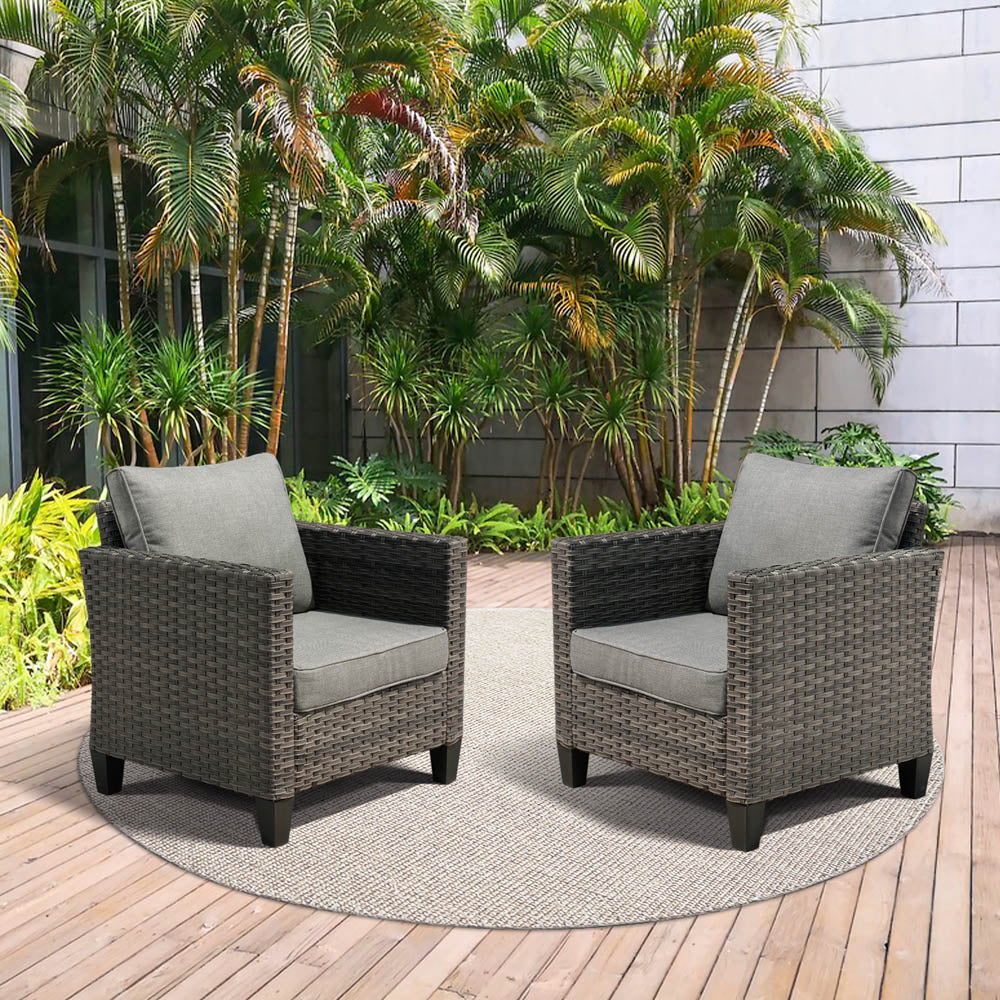
Limited outdoor space does not have to mean sacrificing style or comfort. With the right scale of compact balcony furniture, thoughtful layout, and cohesive materials, a micro-patio or urban balcony can feel like an extension of a high-end living room while preserving circulation and usability.
Urban renters and condo owners often face the same challenge: balconies that look generous in photos but shrink dramatically once furniture is added. The key is selecting pieces specifically designed for outdoor use, measuring accurately, and prioritizing clear pathways over maximum seating. This approach avoids the common regret of cramped, cluttered, or weather-damaged setups that reduce rather than enhance enjoyment.
Why Scale and Proportion Matter Most in Small Outdoor Spaces
The difference between a cramped balcony and an inviting micro-patio usually comes down to a few inches of clearance rather than the absolute size of the furniture. Official spatial planning guidance emphasizes preserving usable circulation and avoiding edge-to-edge arrangements that block movement or doors. In practice, this means treating your balcony as an extension of your living space instead of a storage zone.
Before shopping, measure the usable width and depth, accounting for door swing, railings, and any planters. As this official design guideline notes, outdoor spaces work best when clear walking paths remain open. A good rule of thumb is to keep furniture from occupying more than about half the depth on very narrow decks so the area still feels open and functional.
Thresholds That Determine Whether a Layout Will Feel Luxurious or Crowded
Readers need concrete boundaries to evaluate options. The most important thresholds revolve around circulation width, door clearance, and the share of balcony depth taken by furniture.
Practical planning thresholds include:
- Main circulation path: 30–36 inches of clear space to move comfortably.
- Door clearance: Approximately 36 inches in front of operable doors or sliders.
- Furniture depth share: Aim to keep fixed furniture mass below roughly 50% of the balcony depth on small decks.
For a typical 4×8 ft balcony, these limits usually support only a slim bistro set or one to two modular seats with side tables. A 6×12 ft balcony offers more flexibility for a compact conversation set or modular arrangement, provided circulation stays intact. These are illustrative planning values derived from spatial-planning resources; always measure your exact space and consider building-specific rules.
Balcony Layout Thresholds by Size and Setup
Modeled for typical balconies — measure your space before deciding.
View chart data
| Category | Furniture depth used (in) | Clear path preserved (in) | Door clearance target (in) |
|---|---|---|---|
| 4x8 ft — Bistro set | 18.0 | 30.0 | 36.0 |
| 4x8 ft — Compact modular | 24.0 | 24.0 | 36.0 |
| 6x12 ft — Bistro set | 18.0 | 42.0 | 36.0 |
| 6x12 ft — Conversation set | 24.0 | 36.0 | 36.0 |
| 6x12 ft — Compact modular | 30.0 | 30.0 | 36.0 |
Modeled illustrative thresholds for typical balconies, derived from spatial-planning guidance and internal threshold tables/matrix: main circulation target 30–36 in, door clearance target 36 in, and small-balcony furniture depth kept near or below ~50% of depth. Use for fit comparison only; measure the actual balcony before choosing.
This chart illustrates how different setups compare against the key thresholds. It is modeled for comparison only; a layout that appears acceptable here can still fail if your balcony has irregular geometry, outward-swinging doors, or additional obstructions.

Scenario Matrix: Matching Furniture to Your Balcony Shape and Use
Not every small balcony calls for the same solution. The best compact patio set depends on primary use, required flexibility, and available depth.
- Narrow apartment balcony used mainly for morning coffee or quick meals: A slim bistro set or pair of lightweight chairs placed against the wall usually preserves the most open space.
- Reading or relaxed lounging nook: One high-back swivel chair with a small side table often feels more comfortable and upscale than forcing in a full set.
- Light entertaining for two to four people: A compact conversation set or modular pieces become viable only when the balcony depth supports at least 30–36 inches of clear circulation.
- Rental or frequently reconfigured space: Prioritize easy-to-move or foldable pieces over fixed conversation layouts.
Swivel rocking chairs add comfort for longer sitting sessions but require more clearance to function fully. Fire pit tables can serve as a stylish focal point in deeper micro-patios but often crowd narrower balconies and may not suit wind-exposed or rental situations. This scenario guidance aligns with internal resources on maximizing comfort on a small apartment balcony and designing a luxury micro-patio.
If your balcony must stay fully movable or serve multiple daily functions, foldable or convertible options generally outperform permanent-looking sets. The decision flips when the space can support a stable, anchored layout without sacrificing pathways.
Choosing Space-Saving Pieces That Deliver Premium Comfort and Durability
Look for furniture explicitly rated for outdoor use rather than repurposed indoor items. Weather-resistant PE wicker, rust-resistant steel frames, and spill-resistant cushions stand up to sun, rain, and humidity far better than untreated materials. As noted in official residence policies, choosing pieces designed for outdoor exposure reduces long-term risk and maintenance headaches.
Popular compact options include:
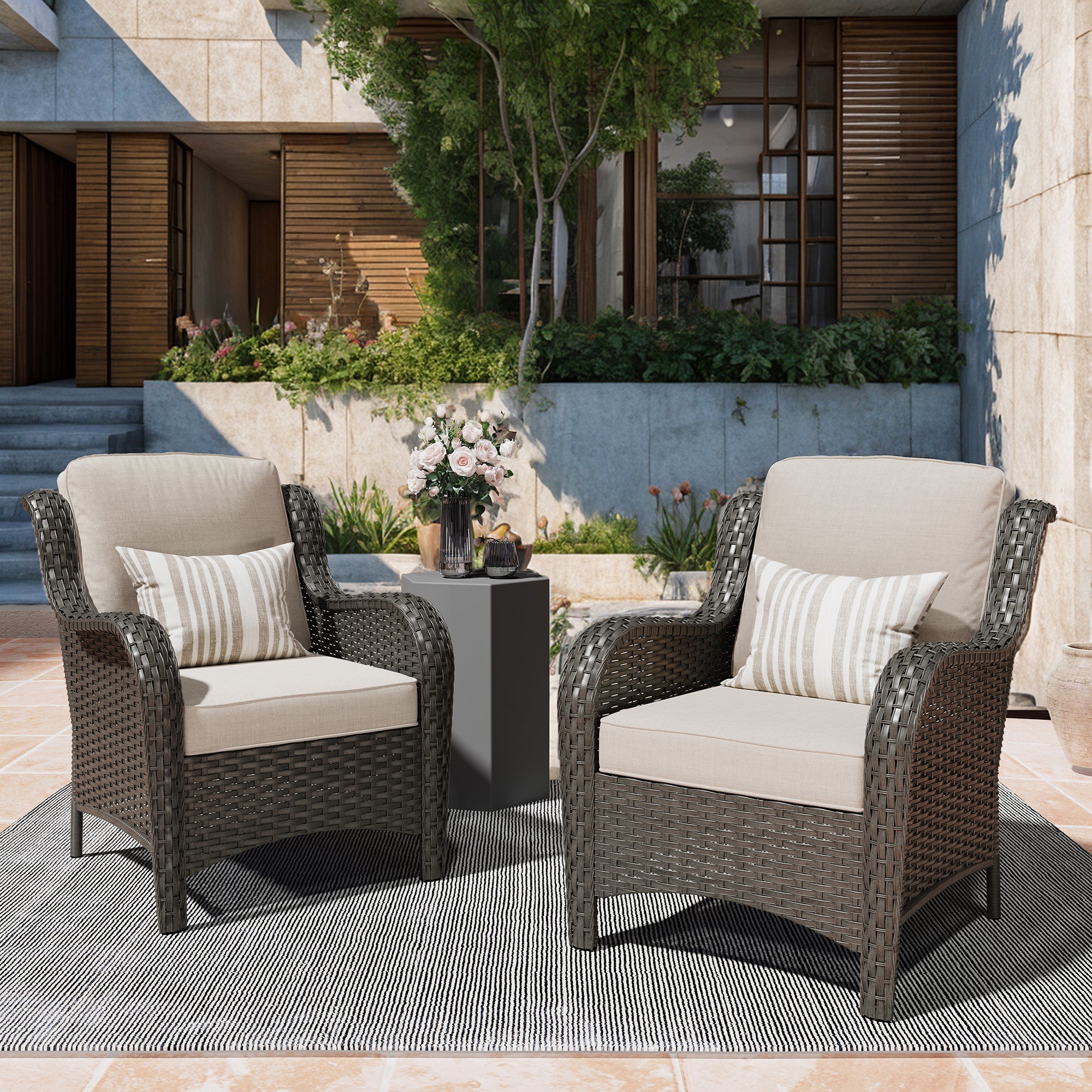
- 3- or 4-piece conversation sets with slim profiles and high-back support.
- Swivel rocking chairs that offer movement without needing extra floor space for reclining.
- Bistro sets or loveseats ideal for 1–2 seat collections on the narrowest balconies.
- Modular sectionals that can be reconfigured as needs change.
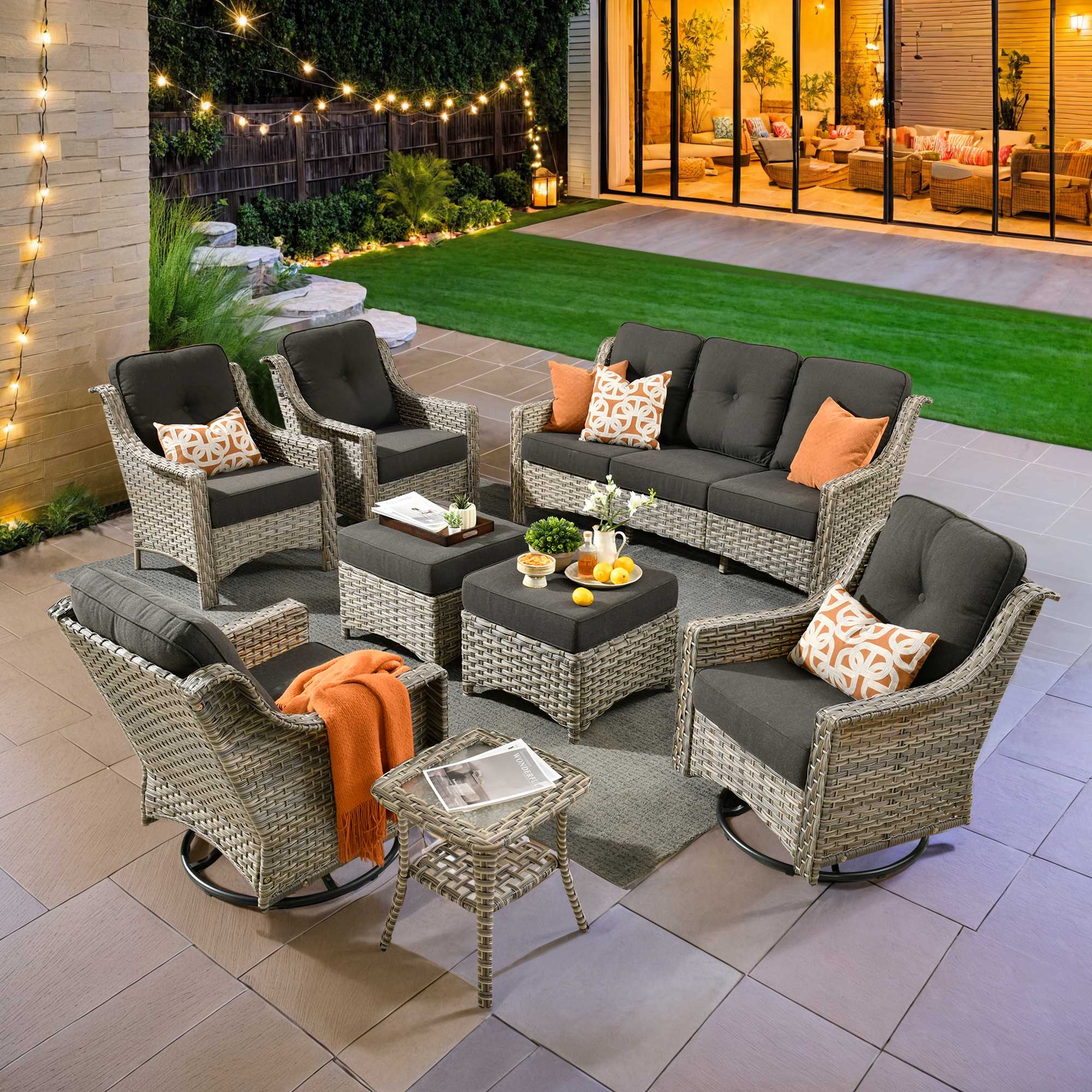
Our OVIOS 4-Piece Outdoor Patio Set with Swivel Chairs and VNC Series Patio Swivel Chair 3-Piece Set are designed with these constraints in mind, offering 360° rotation, generous yet space-conscious cushions, and all-weather construction. For even tighter footprints, explore the 1–2 Seats collection or individual swivel chairs.
Avoid oversized lounge chairs, deep sectional pieces that dominate depth, or items with delicate fabrics and finishes that will weather poorly. In exposed locations, favor UV-resistant, quick-drying materials. Noncombustible or fire-resistant considerations may also apply in higher-risk wildfire zones or near building envelopes.
Coordinating Materials, Colors, and Textures for an Upscale Look
A cohesive palette is one of the fastest ways to make limited square footage feel intentional and luxurious. Choose matching or complementary frame finishes, cushion tones, and accessory materials rather than mixing many contrasting elements. Neutral grays, warm beiges, deep charcoals, and natural wood tones tend to enlarge the visual space while projecting quiet sophistication.
Incorporate layered textures—handwoven rattan, smooth metal accents, soft outdoor rugs, and matte planters—to add depth without visual clutter. As interior design standards suggest, a unified mix of materials and patterns creates a more polished result in compact areas.
Add finishing touches strategically. A small outdoor rug defines the seating zone, a few well-chosen potted plants soften edges, and subtle lighting (string lights, lanterns, or solar fixtures) extends usability into evening. These elements, highlighted in practical guides such as AARP’s balcony update recommendations, turn a basic setup into an inviting retreat.
Anchor seating around one focal point—such as a slim coffee table, solar-powered centerpiece, or statement planter—rather than scattering pieces. This technique, drawn from outdoor room design principles, keeps the layout feeling composed rather than random.

Common Mistakes to Avoid on a Micro-Patio
Many first-time buyers overestimate how much furniture a small balcony can absorb. Oversized conversation sets, too many decorative objects, or mismatched styles quickly make the space feel smaller and less premium. Low-quality materials that fade, stain, or deteriorate also undermine the upscale aesthetic you are trying to achieve.
Other frequent pitfalls include ignoring door swing and railing clearance, choosing pieces that cannot be easily moved for cleaning or seasonal storage, and filling every corner instead of leaving breathing room. In multifamily buildings, accessibility standards around thresholds and level changes may apply, so check building rules before finalizing a layout.
The reverse recommendation is clear: skip any set that only looks balanced in a large showroom, relies on indoor-only finishes, or adds visual complexity the balcony cannot support. Renters especially benefit from lightweight, modular, or foldable designs that can be reconfigured or stored without hassle.
Upgrade Path: From Basic to Polished Without Adding Bulk
You do not need to buy everything at once. A practical progression for most urban balconies starts with one strong anchor piece—such as a bistro set or single premium swivel chair—then layers in function and refinement gradually.
- Begin with correctly scaled, weather-appropriate seating that leaves clear pathways.
- Add one versatile surface, such as a nesting or drop-leaf table.
- Unify the look with coordinated cushions, frames, and planters.
- Introduce a single focal element (rug, lighting, or statement plant).
- Only expand to a larger conversation or modular set once measurements confirm the footprint still works.
This staged approach, supported by resources on maximizing space with modular outdoor sectionals, emphasizes quality and coherence over quantity. Premium small space outdoor furniture often succeeds through restraint rather than accumulation.
How to Choose and Set Up Your Own Upscale Micro-Patio
Use this checklist to evaluate options and finalize your layout:
- Measure twice and map circulation paths and door swing first.
- Confirm every piece is explicitly outdoor-rated with weather-resistant materials.
- Test the layout mentally or with tape on the floor—ensure you can walk, sit, and stand without squeezing.
- Select a cohesive color and material story that matches your interior for a seamless indoor-outdoor feel.
- Prioritize movable or modular designs if you rent or like to refresh seasonally.
- Add soft furnishings, plants, and lighting only after the core furniture is placed and balanced.
If your balcony is part of a shared or regulated building, also consider accessibility requirements around thresholds and clearances. For persistent questions about specific building codes or health-related comfort (such as prolonged sun exposure), consult property management or a qualified professional. This article provides general styling and setup guidance only and does not constitute design, medical, or compliance advice.
With careful selection from collections like Patio Conversation Sets or Outdoor Loveseat, and by following these scale and layout principles, even the smallest balcony can become a luxurious extension of your home. The result is a space that feels intentionally designed, comfortably furnished, and pleasantly open rather than crowded.
Explore more ideas in our guide to outdoor patio decorating with limited space or how to design a backyard patio for broader inspiration that still applies to compact areas. Measuring your space and starting small almost always leads to the most satisfying long-term outcome.
References
- Outdoor Living Spatial Planning & Safety Standards
- Residence Agreement Policies and Procedures 2026-27
- DESIGN GUIDELINES FOR RESIDENTIAL PROJECTS
- 4 Easy Ways to Fix Up Your Balcony Space
- ADA Accessibility Standards

Leave a comment
This site is protected by hCaptcha and the hCaptcha Privacy Policy and Terms of Service apply.