



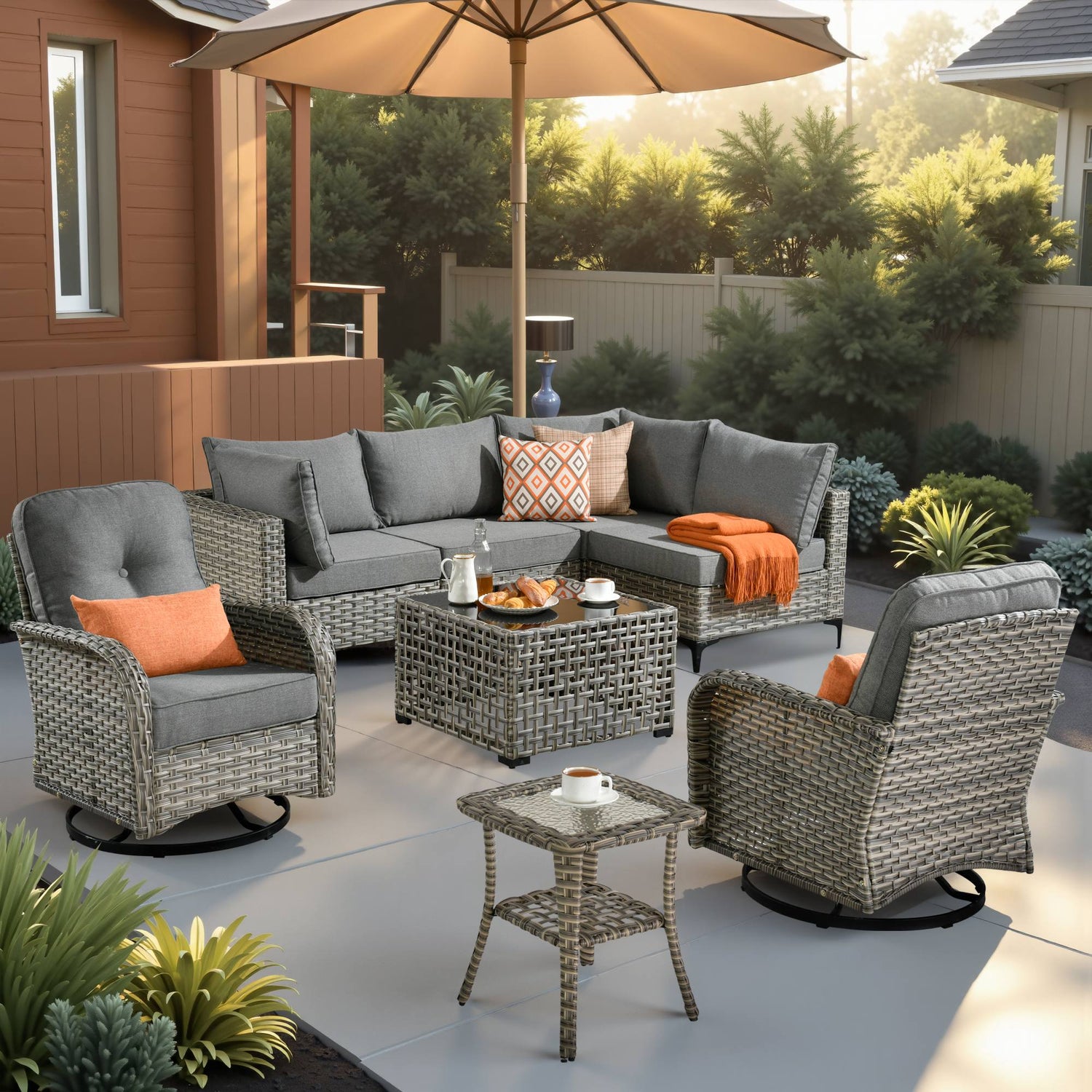
Key Takeaway
Whether you have a compact urban backyard or a sprawling suburban yard, the right patio layout transforms your outdoor space into a functional, beautiful extension of your home. The secret lies in understanding your space size, defining your purpose, and choosing materials and zones that match your lifestyle.
Planning the layout first saves you from costly mistakes later. A solid plan ensures your furniture fits the space and sits in the right amount of shade, no matter how large or how small the space is. This helps you pick durable materials that suit your land and your goals. Good design turns a basic patch of grass into a space you actually use for relaxing or hosting guests.

Assess Your Backyard Before Picking a Design
Taking the time to walk the perimeter and note the physical traits of your land will save you from major headaches later.
Measure and Map the Area
Grab a long measuring tape and record the length and width of the space. Note where the back door sits and look for any irregular curves or jagged corners. Use graph paper to draw a simple bird's-eye view. This helps you see exactly how much room you have for patio layout ideas without guessing.
Watch the Sun and Wind
Spend a day tracking how the sun moves across the yard. A spot that feels great at 10:00 AM might be scorching hot by 4:00 PM. Note where the shadows fall from your house or large trees. Also, pay attention to wind. If one corner of the yard is a wind tunnel, it is not the best place for a fire pit.
Check Drainage and Utilities
Look for low spots where water pools after it rains. You never want to build a patio on a swampy patch before correcting drainage problems. Also, contact your local utility locator service (such as calling 811 in the U.S.) to have underground utilities marked before you dig. You don't want to dig into a gas or water pipe while setting your foundation.
Define How You Will Use the Space
Do you host large Sunday dinners? Or do you just want a private corner for coffee? Decide if the primary goal is dining, lounging, or gardening. Knowing this helps you set a realistic budget and keeps you focused on what actually matters to your family.
[[related_products_1]]
Core Principles for Any Patio Size
Good design follows a few basic rules that work for every home. These principles ensure your outdoor area feels balanced, easy to walk through, and connected to the rest of your property.
The Rule of Proportion
A patio should usually take up about 25% to 30% of your total backyard. If it is too small, it looks like a lonely island. If it is too big, you lose the beauty of your greenery. Aim for a size that leaves room for some grass or plants to soften the edges.
Create Natural Traffic Flow
People need room to walk. Leave at least three feet of open space for main walkways. Ensure there is a direct, clear path from your back door to the main seating area. If guests have to squeeze past a grill or trip over a chair leg, the layout is too crowded.
Pick a Focal Point
Every area needs an anchor. This is the first thing your eyes land on when you walk outside. It could be a stone fireplace, a large dining table, or a bubbling water fountain. Build the rest of your furniture around this central piece to give the space a sense of purpose.
Match Your Home's Interior
Your patio should feel like an outdoor room. If your kitchen is modern and clean, use similar colors and lines for your pavers. Matching the flooring height of the patio to your indoor floor creates a seamless transition that makes both areas feel larger.
Maintain Material Consistency
To keep the design looking professional, use no more than 2–3 complementary materials. Mixing too many different types of stone, wood, and metal creates visual clutter that distracts the eye. Using a consistent palette of materials helps the space feel calm, organized, and high-end.

Smart Layout Ideas for Small Backyard Patios
Small yards require extra creativity to feel open rather than cramped. When space is tight, every inch must work hard, so focus on high-quality materials and multi-functional items that do not clutter the view.
Define One Core Function First
In a tiny space, trying to do everything often results in a cluttered mess. Choose a single primary purpose to avoid overcrowding the area. Some of the best small backyard ideas include a bistro dining corner for two, a compact fire pit lounge, or a quiet reading nook. By picking one anchor activity, the area stays breathable and useful.
Go Vertical to Gain Space
When you run out of floor room, look up to the sky. Use trellises with climbing plants to add privacy and greenery without taking up valuable patio square footage. You can also install wall-mounted shelves, planters, and lighting to keep the ground clear. For shade, an attached pergola or a lean-to roof structure provides cover without the need for heavy, freestanding pillars.
Pick Smart Furniture
Heavy, bulky chairs are the enemy of a small yard. Look for compact patio furniture that is low-profile, foldable, or serves multiple uses. Built-in benches are a fantastic choice because they often feature hidden storage for garden tools or extra cushions. Stick to lightweight materials like aluminum or resin wicker, which allow for easy reconfiguration whenever you need more open space.
Use Visual Expansion Tricks
You can trick the eye into seeing more room than actually exists. Use light-colored pavers to make the ground feel wider and brighter. Choosing unified flooring that extends from your indoor room directly to the outdoors creates a seamless look that stretches the horizon. Additionally, placing strategic mirror panels or open lattice along a fence adds a sense of depth and mystery to the boundaries.
Small Patio Style Inspirations
- If you like clean lines, a Modern Minimalist look with smooth concrete and black metal accents feels very sophisticated.
- For a more relaxed vibe, try a Boho Garden style using terracotta tiles, rattan patio conversation sets for small spaces, and soft string lights.
- If you want a peaceful retreat, a Japandi Zen layout with light gravel, bamboo screens, and simple, clean lines will make the space feel like a private spa.
Creative Layout Ideas for Large Backyard Patios
Large yards offer more freedom, but they can feel cold or empty if not planned well. The goal here is to break the massive space into smaller, cozy "rooms" that serve different purposes throughout the day.
Divide Your Space into Zones
Divide your space by function: create a dedicated dining zone, a comfortable lounge zone, a fire pit zone, and an outdoor kitchen zone. Instead of building walls, use different paving materials or slight changes in ground levels to show where one area ends and another begins. You can connect these spots with natural pathways made of stepping stones or pavers to guide guests through the yard.
Anchor Zones With Statement Features
Big yards can handle big, bold ideas that act as a centerpiece.
- A sunken lounge area creates a sense of drama and intimacy, making a large space feel more private.
- An outdoor kitchen island serves as a natural hub for entertaining and food prep.
- If you have a pool, design your patio to wrap around the water, letting the pool serve as the anchor while other seating zones radiate outward from the edge.
Group Furniture in the Center
- When it comes to outdoor furniture arrangement in a large space, avoid pushing all your chairs against the perimeter walls. This leaves a big, awkward hole in the middle of the patio. Instead, "float" your furniture by pulling pieces toward the center.
- Arrange seating in conversation-friendly clusters rather than straight rows.
- Use large-scale outdoor rugs to "ground" each group, which helps define each zone and makes the hard stone feel more like a living room.
Integrate Plants into the Design
Too much stone and concrete can look harsh and cold. Use integrated planting beds to soften the hard edges of your paving. Layered hedging or tall ornamental grasses work perfectly for privacy screening from the neighbors. You can also use raised garden beds as natural dividers to separate the dining area from the lounging area without blocking the view across the yard.
Large Patio Style Inspirations
With a large footprint, you can fully lean into a specific aesthetic.
- For a Resort Luxury feel, use light travertine stone paired with a pool and a shaded cabana.
- If you prefer a Rustic Farmhouse look, try brick pavers, a heavy wooden pergola, and hanging Edison bulbs.
- For something more contemporary, the Modern Organic style uses irregular flagstone, native plants, and a sleek concrete fire table to blend the patio into the natural landscape.
Picking the Best Materials for Your Layout
The materials you choose dictate how much work you will do later. Some surfaces require yearly scrubbing, while others are nearly indestructible. Choose a material that fits both your style and your local weather.
| Material | Best For | Pros | Cons |
| Concrete Pavers | All sizes | Strong and affordable | Can shift or crack |
| Natural Stone | Large patios | High-end, unique look | Expensive to buy |
| Brick | Traditional homes | Classic look, non-slip | Hard to install DIY |
| Composite Decking | Raised patios | No rot, easy to clean | Gets hot in the sun |
| Gravel | Low-budget areas | Cheap and drains well | Moves around easily |
Finishing Your Layout With Style
Once the hard surfaces are down, the final details bring the whole look together. These finishing touches turn a slab of stone into a comfortable living space where you actually want to spend your time.
Layer Your Lighting
Don't rely on one bright floodlight. Use string lights for a soft glow over the seating area. Add small "task" lights near the grill so you can see your food. Finally, use "accent" lights to shine upward on trees or stone walls to create depth at night.
Add Comfort With Textiles
Outdoor rugs are a game changer. They are soft on your feet and help define your outdoor furniture arrangement. Toss on some weather-resistant cushions and thick blankets. These items add color and make the hard furniture feel much more inviting.
Solve Privacy Issues
If your neighbors are close by, use bamboo screens or tall potted plants to create a barrier. Outdoor curtains can also be hung from a pergola to block the sun and keep prying eyes away. These simple additions make your patio feel like a private sanctuary.
Avoiding These Common Design Mistakes
Many people rush the process and end up with a space that looks good but does not function well for their family.
- Buying Furniture First: Never buy a set of modular outdoor sectionals until you know they fit. Measure your patio first, then shop for furniture.
- Going Too Small: A tiny patio is hard to use. If you want a dining table, ensure there is room for people to pull their chairs out without falling off the edge.
- Forgetting Drainage: If the ground doesn't slope away from your house, water will pool and damage your foundation.
- Too Many Materials: Stick to two or three different textures. Mixing wood, brick, stone, and concrete all in one spot looks messy and confusing.
- No Shade Plan: A beautiful patio is useless if it is too hot to sit on. Always include a plan for an umbrella, pergola, or trees.
Building Your Perfect Outdoor Retreat
Designing a patio turns an empty yard into a place where you actually want to spend time. Small yards stay open with vertical plants and light colors, while big yards feel cozy when split into functional zones. Start with a solid plan and pick materials that fit your daily life. Your backyard is ready to become the best part of your home!
FAQs
Q1: How do I choose the right patio size for my backyard?
A general rule is that your patio should cover no more than 25–30% of your total backyard area. For dining, a minimum of 12×12 ft is recommended; for lounging with multiple seats, plan for at least 16×16 ft.
Q2: What is the best patio layout for a small backyard?
A single-function layout with vertical elements works best. Choose one anchor piece (like a small fire table or bistro set), go vertical with trellises or a lean-to pergola, and use light-colored, uniform pavers to visually expand the space.
Q3: How do I divide a large patio into zones without building walls?
Use a combination of different paving materials, large outdoor rugs, varied furniture groupings, and subtle level changes (even a single step) to define each zone. Planting beds and pergolas also act as natural dividers without enclosing the space.

Leave a comment
This site is protected by hCaptcha and the hCaptcha Privacy Policy and Terms of Service apply.