



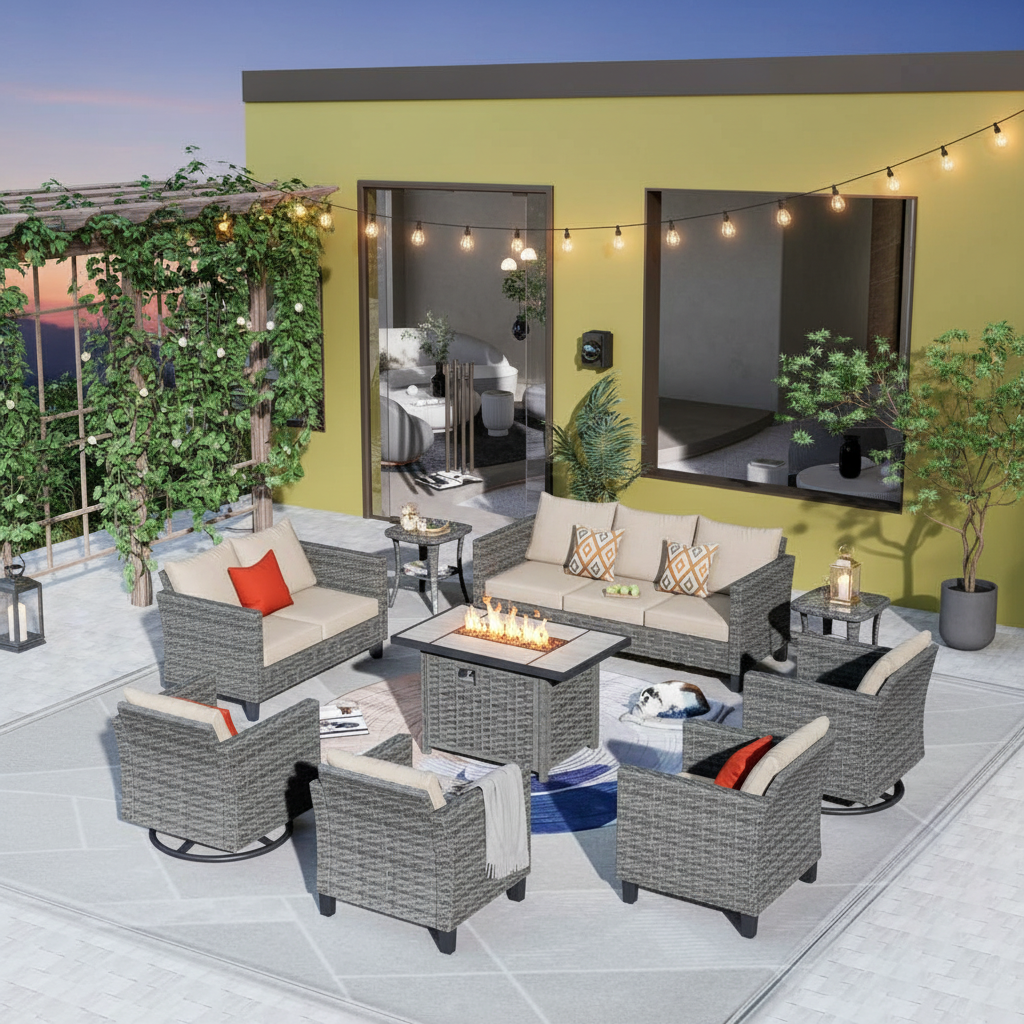
A fire pit can serve as the true anchor of an outdoor room, but only when safety clearances, comfort distances, and circulation paths are planned first. Many homeowners place seating too close for warmth or too far for conversation, or overlook local code requirements that vary widely by jurisdiction. Start by measuring required setbacks from your house, deck, or other combustibles, then map a seating ring that feels inviting without crowding the fire zone or blocking movement. This approach helps create a safe, functional layout that extends your patio season comfortably.

How Far Should A Fire Pit Be From Your House?
Safety clearance must come before any decisions about style, seating distance, or furniture arrangement. Local fire codes and manufacturer instructions set the non-negotiable boundaries, and these rules vary significantly by jurisdiction and fuel type. As this Philadelphia code bulletin on portable fireplaces illustrates, official guidance often requires substantial spacing from structures, fences, decks, and other combustibles.
A practical starting heuristic many municipalities suggest is 10 to 15 feet from combustible materials for portable outdoor fireplaces, but only as a quick reference point. According to guidance from North Metro Fire, place a portable outdoor fireplace at least 10 to 15 feet from combustible materials unless local code or the manufacturer requires more. Some areas enforce stricter rules: Pflugerville guidelines note that fire pits may need 15 feet or more of clearance from structures and fencing, while certain jurisdictions, such as those referenced in Spokane County alerts, require up to 25 feet from structures and combustibles.
National safety organizations further emphasize why distance matters. The NFPA highlights that outdoor fires should be kept well away from structures because embers and brands can spread fire. Always treat manufacturer instructions as the final authority, since they can impose stricter requirements than generic advice, as noted in West Metro fire regulations. Check your local fire department and product manual before finalizing any layout.
This section aligns with broader guidance on anchoring your outdoor space with a fire pit table set and the 2026 blueprint for designing a luxury outdoor room.
How Do You Set Up Seating Around A Fire Pit Without Crowding It?
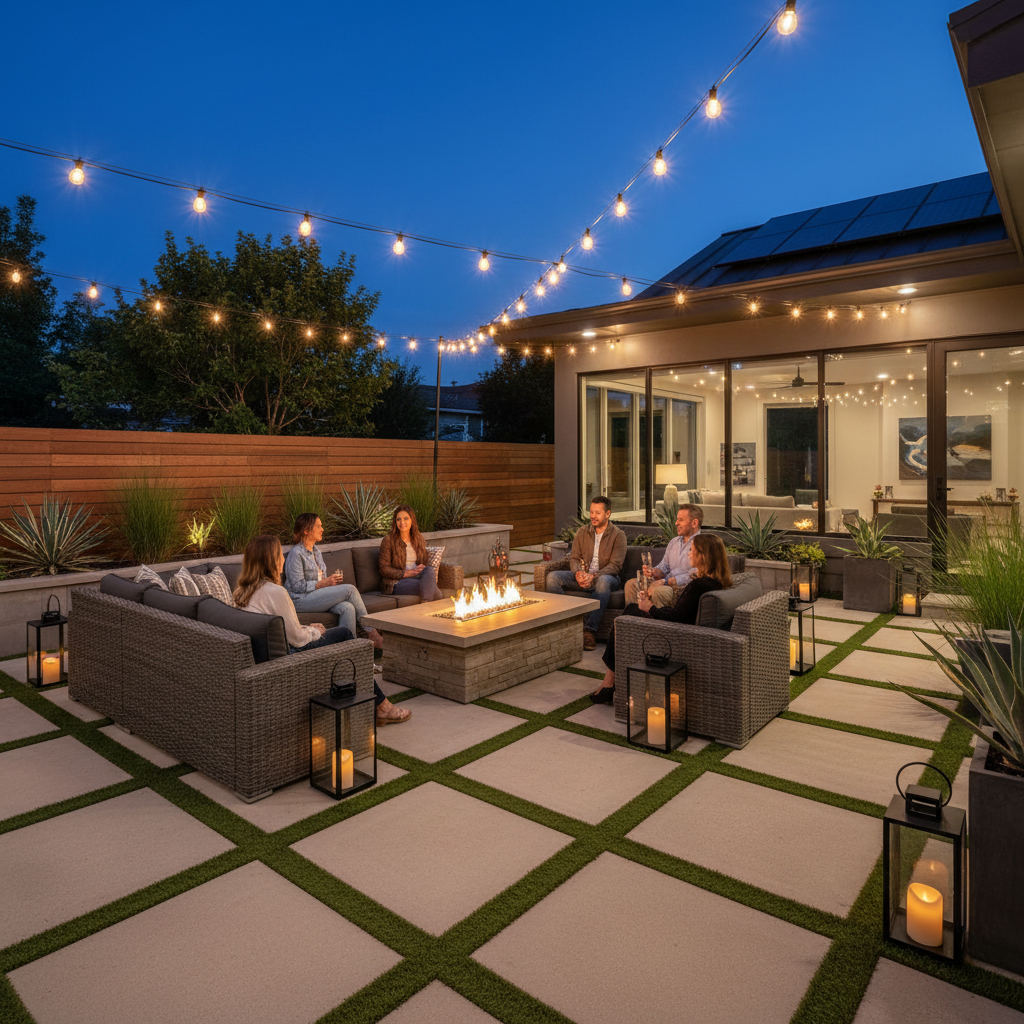
Comfort distance is distinct from safety clearance and should be treated as a flexible heuristic rather than a fixed rule. The ideal seating ring depends on flame height, chair depth, whether you use a fire pit table or standalone pit, and how guests interact. If people must lean forward uncomfortably to converse or if walkways feel pinched, the arrangement needs adjustment.
National fire safety resources and event planning guidance stress keeping traffic paths clear. As outlined in MIT EHS materials, keep traffic paths clear around the fire zone so guests can move without crossing through a tight or risky area. For warmth without crowding, aim for a conversational geometry where seating feels intimate yet allows easy movement. Fire pit tables often work well here because the surface provides a natural buffer.
This planning principle supports practical setups like those in our guide to configuring large patio furniture sets for expansive outdoor rooms and anchoring your outdoor space with a fire pit table set.
What Is The Best Patio Layout With A Fire Pit And Sectional?
Patio shape largely determines which fire pit and sectional arrangement works best. Rectangular patios typically offer the most flexibility for framing the fire pit while preserving circulation lanes. Square patios often suit centered fire pit tables with sectionals on two or three sides. Narrow patios require more care to avoid blocking movement or pushing seating too close to the flame.
In each case, position the sectional to frame rather than enclose the fire zone, ensuring at least one clear path remains open. This scenario-based approach helps prevent the common issue of a layout that looks good on paper but feels cramped in use. For many homeowners, a fire pit table serves as the natural anchor when space allows two-way traffic around the group.
These considerations tie into strategies for maximizing your space with modular outdoor sectionals and the 2026 blueprint for designing a luxury outdoor room.
Patio Shape Fit for Fire Pit Layout Scenarios
Higher tiers indicate a better typical fit for circulation and layout flexibility under bounded spacing assumptions.
View chart data
| Category | Circulation openness | Sectional orientation fit | Clearance headroom |
|---|---|---|---|
| Rectangular patio | 3.0 | 3.0 | 2.0 |
| Square patio | 2.0 | 3.0 | 2.0 |
| Narrow patio | 1.0 | 1.0 | 1.0 |
Based on planner guidance and public layout articles emphasizing traffic flow, shape-based seating fit, and clearance variance across patio forms.

How Do Wind And Smoke Change Fire Pit Placement?
Wind direction and smoke drift can turn an otherwise safe layout into an uncomfortable one. Position the fire pit so prevailing breezes carry smoke away from the main seating area rather than directly into it. In fire-prone regions, also consider nearby vegetation and other fuels as part of site selection.
Guidance from fire safety organizations recommends thoughtful placement that accounts for these variables. Resources such as Big Bear fire department materials advise keeping the fire feature away from flammable vegetation and planning around wind patterns, while Oregon State Extension notes the value of controlling fuels in wildfire-risk areas. These adjustments are highly site-specific, so observe your yard on a typical evening before locking in the final arrangement.
Smart fire pit tables with controlled flames can sometimes make these adjustments easier. Explore options in our article on upgrading to a smart fire pit table.
What Not To Do When Planning A Fire Pit Outdoor Room
Several common mistakes can undermine safety or usability even when measurements look reasonable on paper. Never treat a single clearance number as universal across all locations or products. Avoid letting seating block exits, primary paths, or easy access to the fire feature itself. Do not ignore manufacturer instructions simply because the visual layout appears balanced.
Another frequent error is pushing chairs so close that guests sit in the direct heat zone, or spacing them so far apart that the fire pit loses its role as the room’s anchor. These issues often surface only after the furniture arrives and real movement is tested. Following local codes and product manuals helps avoid these pitfalls, as reinforced in multiple municipal fire guidelines.
Our guide to anchoring your outdoor space with a fire pit table set offers additional practical reminders on avoiding layout regret.
Fire Pit Layout Checklist For Your Outdoor Room
Use this checklist to confirm your plan before purchasing or arranging furniture:
- Measure the required fire-clearance envelope from structures and combustibles first, checking both local code and the manufacturer’s manual.
- Map the intended seating ring and verify at least one clear circulation path remains open in both directions.
- Observe wind patterns and smoke drift on a typical day, then adjust the fire pit orientation accordingly.
- Confirm that chair depth, side tables, and walking lanes fit without creating pinch points near the flame.
- If the space feels borderline, scale back seating rather than compromise on clearance or traffic flow.
This final verification step helps ensure your fire pit truly anchors a comfortable, safe outdoor room. For larger configurations, review guidance on configuring large patio furniture sets for expansive outdoor rooms and the 2026 guide to modular outdoor living.
FAQs
How Far Should Patio Chairs Be From a Fire Pit? Comfort distance is usually closer than safety clearance and serves as a heuristic rather than a code requirement. Most people find 4 to 8 feet workable for conversation and warmth, but test the arrangement with actual chairs and adjust based on flame size and personal preference. Always maintain the larger safety setback required by local rules or the manufacturer.
What Is the Best Layout for Sectional and Fire Pit? A U-shaped or L-shaped sectional that frames the fire pit table often works best on rectangular or square patios, leaving open circulation on at least one side. On narrow patios, a linear arrangement with the fire pit at one end may preserve better traffic flow. The key is ensuring guests can move freely without stepping between seats or too close to the fire.
Can You Put a Fire Pit on a Covered Patio? Yes, but only if overhead and side clearances meet both manufacturer specifications and local code. Smoke accumulation under roofs adds risk, so extra ventilation and stricter setbacks are usually required. Many covered setups favor propane fire pit tables with controlled flames and built-in safety features.
Does Wind Direction Affect Where I Place My Fire Pit? Yes. Position the fire pit so prevailing wind carries smoke away from seating rather than across it. In windy locations this may mean rotating the entire arrangement or choosing a different anchor point. Test the site on a breezy day before finalizing furniture placement.
How Do I Know if My Patio Is Too Small for a Fire Pit and Sectional? If you cannot maintain required safety clearances plus comfortable seating and a clear walking path, the space is likely too small for both. In borderline cases, choose a smaller fire pit table and fewer seats, or consider a standalone pit placed farther from the house with minimal additional furniture.
Do All Fire Pit Tables Have the Same Clearance Requirements? No. Gas/propane models and wood-burning units are often regulated differently, and manufacturer instructions can add further restrictions. Always consult the product manual and your local fire department rather than relying on general rules of thumb.

Leave a comment
This site is protected by hCaptcha and the hCaptcha Privacy Policy and Terms of Service apply.