



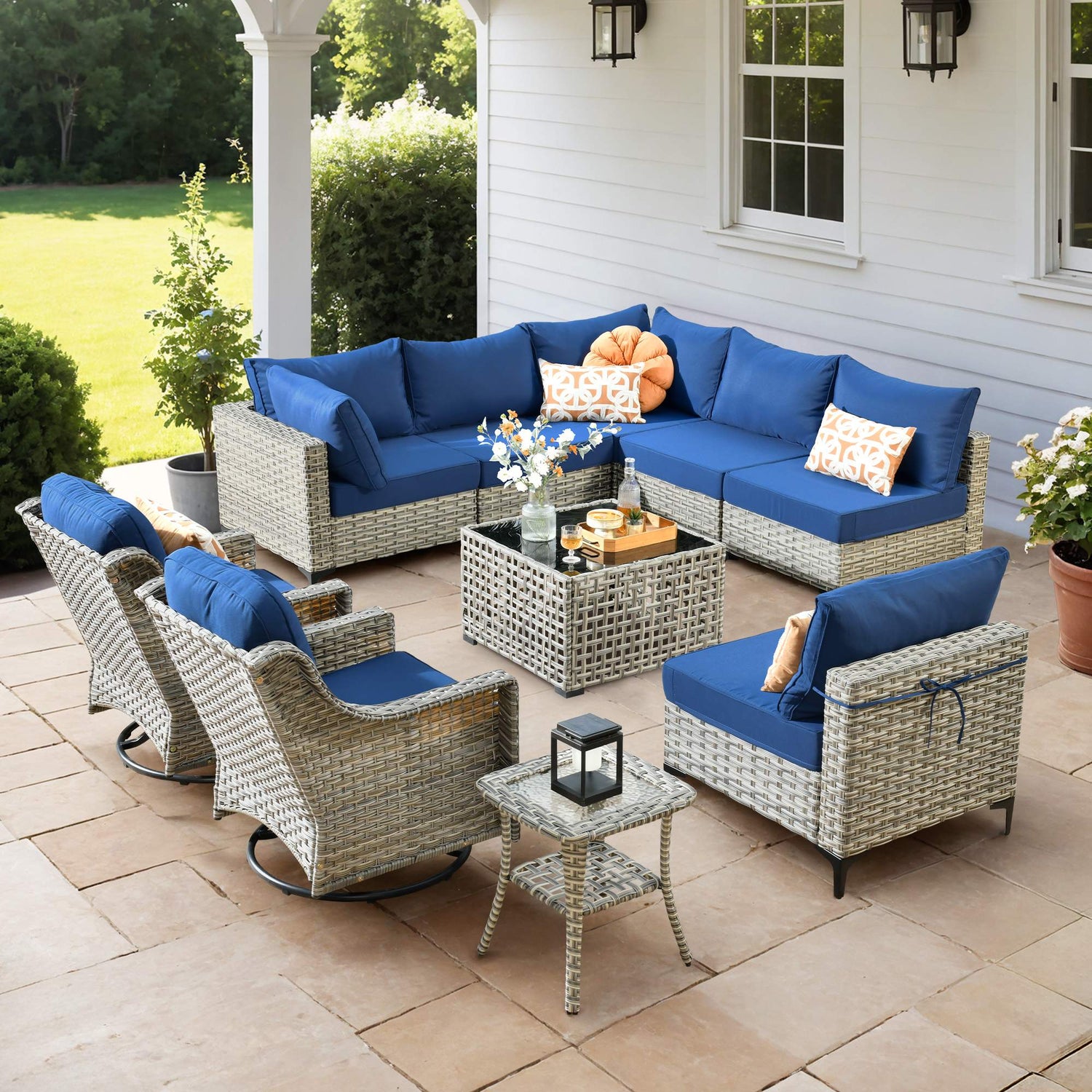
Configuring a large patio furniture set for an expansive outdoor space requires more than simply buying the biggest collection available. The key decision is whether your yard can support multiple functional zones while preserving clear circulation paths that keep movement easy and the space feeling open rather than cluttered.
When planned around specific activities and traffic flow, an 8- to 15-piece modular system can create comfortable areas for dining, lounging, and conversation that work well for entertaining without overwhelming the area. Start by measuring your actual patio or deck and mapping the primary uses before selecting pieces. This approach helps avoid common regrets such as blocked walkways or underused dead zones.
Why Zoning Matters More Than Piece Count for Large Outdoor Rooms
Landscape design treats outdoor space as a purposeful arrangement of elements rather than one oversized seating block. A large patio can be organized into distinct zones instead of a single furniture cluster. This principle directly addresses decision fatigue when comparing modular sets: focus first on the activities your space must support, then choose and position furniture to serve those functions while maintaining open circulation.
Successful plans begin by defining whether the patio will mainly host casual conversation, family meals, evening gatherings around a fire pit, or a mix of uses. This NC State Extension guide on landscape design emphasizes organizing space intentionally, which translates well to residential patios. Placing an outdoor dining or seating area near the house is a common and practical choice for convenience, while a secondary lounge area can sit farther out when circulation remains unobstructed.
How Much Patio Furniture Do You Actually Need?
There is no universal rule that dictates the perfect number of pieces for every yard. The right size depends on your patio dimensions, intended uses, and how people will move through the space. For expansive areas used for entertaining, many homeowners find 8- to 12-piece modular conversation sets or sectionals provide flexibility without excess.
Consider these conservative planning benchmarks derived from accessibility and landscape guidance:
- Minimum clear walkway width: 36 inches (use as a baseline to prevent squeezing past furniture)
- Preferred passing space in longer paths: at least 60 inches where two people may need to pass
- Typical zone footprint for a 6-8 person conversation area: roughly 12 x 15 feet, leaving room for circulation around the perimeter
Use these numbers as a layout test rather than strict standards. If your planned arrangement forces guests to navigate tight gaps or walk through seating to reach the house or grill, reduce the module count or reconfigure. This MSU Extension resource on developing a home landscape plan reinforces starting with functions and circulation before finalizing furniture placement.
Conversation Sets vs. Sectionals vs. Split Zones: When Each Layout Wins
The best configuration often flips based on your primary use case and patio shape. A unified patio conversation set works well when socializing is the dominant activity. A modular sectional offers flexibility for L-shaped or linear arrangements that define one large zone while preserving flow. Split zones become preferable when the space must comfortably handle both dining and lounging without one area compromising the other.
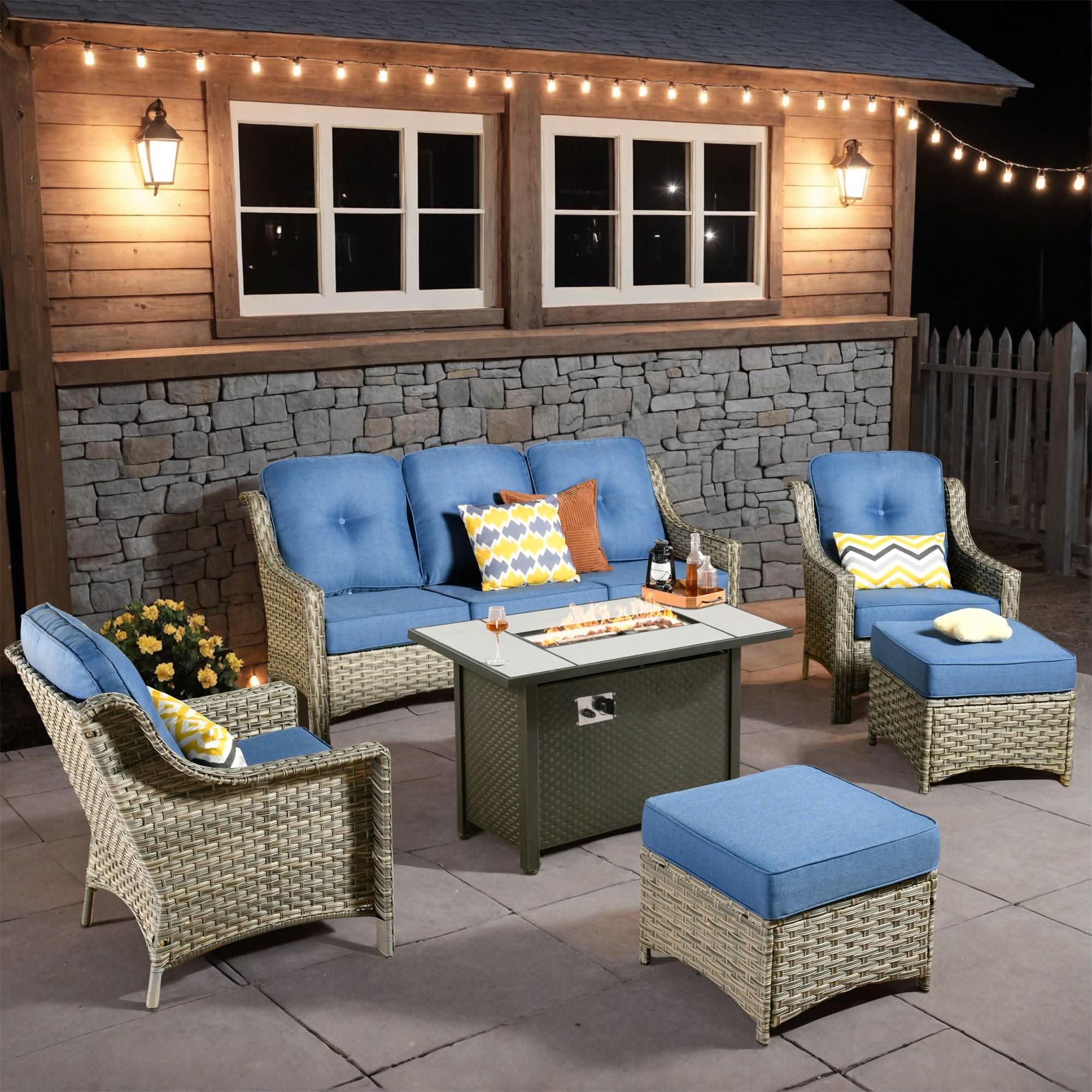
Fire-pit-centered layouts shine for evening entertaining because the fire table naturally draws people together and anchors the conversation area. For long rectangular patios, align zones along the length to keep the center open for movement. Families that prioritize meals may prefer a dining set closer to the house with a smaller lounge add-on only if space allows generous pathways.
Large outdoor rooms can support multiple activity areas when circulation paths are intentionally defined between them. The risk arises when a large modular outdoor sectional is placed without first mapping these paths, creating awkward traffic flow or visual imbalance.
Here is an illustrative chart modeled from function-first landscape heuristics to visualize how layout preferences shift across common scenarios:
Illustrative Planning Guide Based on Function-First Landscape Heuristics
Recommended layout types and approximate piece-count ranges for common large-patio scenarios, using function-first zoning heuristics.
View chart data
| Category | Conversation set | Sectional | Split dining + lounge zones | Fire-pit centered |
|---|---|---|---|---|
| Frequent hosts | 4.0 | 2.0 | 1.0 | 1.0 |
| Mixed dining + lounging | 3.0 | 4.0 | 2.0 | 1.0 |
| Long rectangular patio | 2.0 | 2.0 | 4.0 | 1.0 |
| Fire-pit focal layout | 2.0 | 3.0 | 1.0 | 4.0 |
| Family meals | 1.0 | 1.0 | 2.0 | 1.0 |
Modeled comparison for planning only, derived from function-first landscape heuristics: keep circulation open, place dining near the house, and split zones when the patio is large enough. Values are illustrative ranges converted to relative fit scores rather than empirical measurements.
This visualization shows relative fit across scenarios. Higher bars indicate stronger alignment with that layout type. Adjust based on your specific measurements and traffic patterns.

Step-by-Step Guide to Arranging Your Large Modular Outdoor Sectional
-
Measure and map first. Use the painter's tape method or chalk to outline potential zones on your patio. Reference our how to measure your space for a modular sofa guide for accurate footprint planning.
-
Define primary functions. Decide the balance between dining, lounging, and conversation. Place the dining area adjacent to the house for convenience when meals are frequent.
-
Establish circulation paths. Ensure at least 36–48 inches of clear width for main walkways and wider passing space where possible. Traffic flow and circulation must remain unobstructed according to basic landscape design principles.
-
Anchor zones with modular pieces. Our OVIOS 10-Piece Patio Conversation Set with Fire Pit & Swivel Chairs offers swivel rockers and a propane fire pit that can anchor a conversation zone while remaining reconfigurable.
-
Balance visual weight. Avoid placing all large pieces on one side of the space. Use smaller accent chairs or tables to fill gaps without creating clutter. Our OVIOS Modular Wicker Patio Furniture Set with Fire Pit Table & Coffee Table provides flexible components ideal for this.
-
Test and adjust. Sit in the taped layout at different times of day. Walk all intended paths. Rearrange modules until the space feels both spacious and functional.
For open layouts, modular sectionals can help define zones while maintaining an airy feel. See our related article on how to use a modular sofa to define zones in an open-plan living room for transferable indoor-outdoor ideas.
Common Layout Mistakes to Avoid With Oversized Sets
Do not commit to a large patio furniture set before mapping zones. The most frequent regret occurs when buyers select based on style or maximum seating capacity rather than circulation and function. Avoid layouts that force the main walking route through seating clusters or position dining far from the house without strong justification.
If your plan leaves only narrow gaps between pieces or creates dead-end areas, simplify. A slightly smaller but better-configured set will deliver more daily enjoyment. Basic principles of landscape design stress preserving movement patterns, a rule that applies equally to patios.
Choosing the Best Large Outdoor Furniture Set for Entertaining
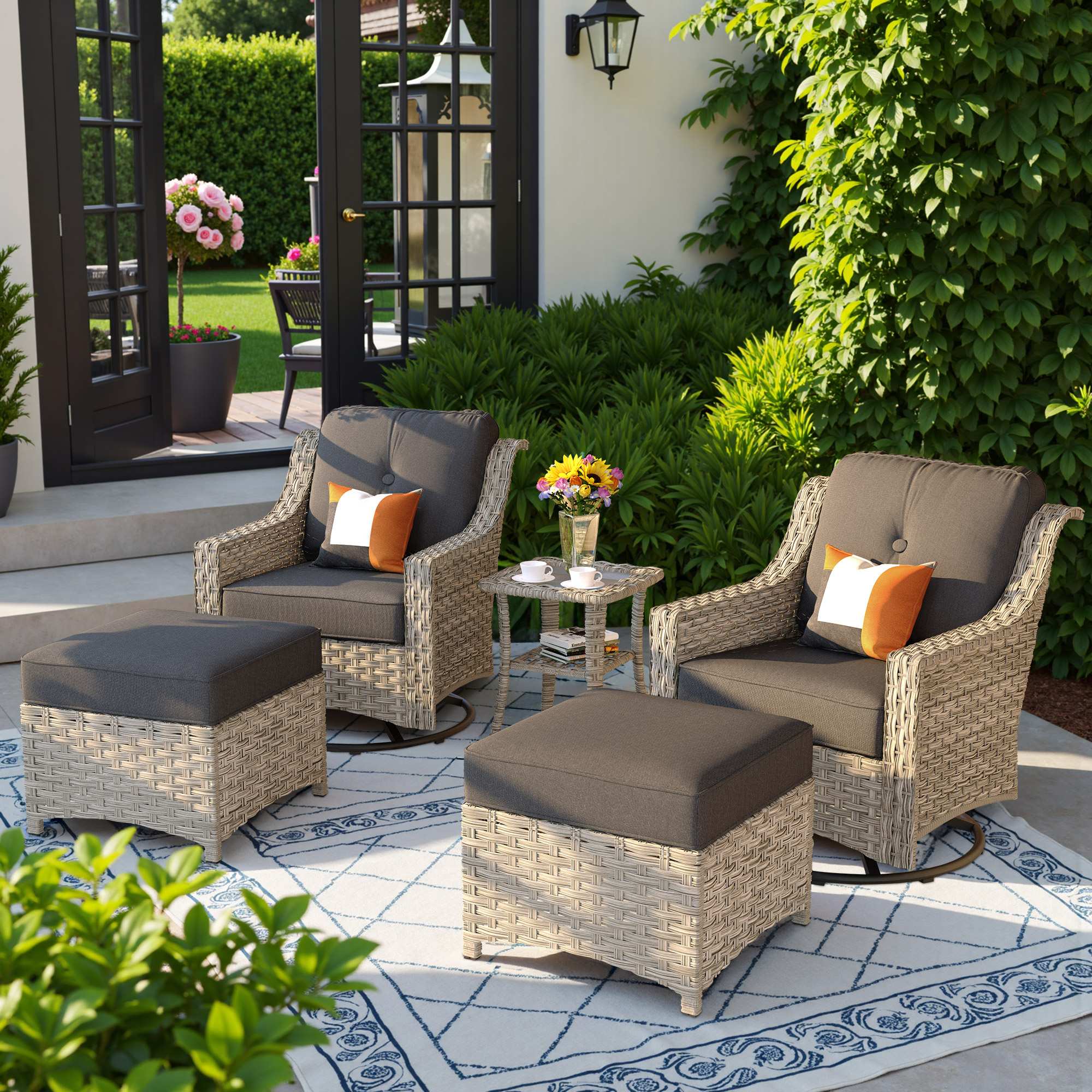
Look beyond aesthetics to modularity, durability, and ease of reconfiguration. Sets featuring all-weather wicker, removable splash-proof cushions, and swivel chairs offer flexibility for changing needs. Fire pit tables add both function and ambiance for evening gatherings.
Our 8-10 Seats collection and 11-12 Seats collection include many options with integrated fire pits that support the zoning strategies discussed. The OVIOS Wicker Patio Conversation Set with Fire Pit Table for Backyard & Deck is particularly versatile for 9–11 piece configurations.
For additional ideas on comfort and arrangement, review our complete buying guide on choosing the perfect outdoor sofa and outdoor furniture size guide for different families.

Final Checklist Before You Buy or Arrange
- Have you measured the exact available area and taped out zones?
- Does every major path maintain at least 36 inches of clear width?
- Is dining positioned near the house if meals are a priority?
- Will the layout support your most frequent activities without forcing people to navigate through seating?
- Have you left enough open space so the furniture reads as part of one cohesive outdoor room rather than scattered islands?
Answering yes to these questions significantly reduces the risk of returns or dissatisfaction. Large modular systems deliver excellent value for expansive patios when configured around real circulation and use patterns rather than maximum seating alone.
This article provides general comfort and layout planning guidance only. It is not a substitute for professional design services. If you have specific accessibility needs or structural questions about your outdoor space, consult qualified landscape professionals or local building authorities.
With thoughtful zoning, your large patio can become a versatile extension of your home that supports both relaxed family time and memorable gatherings for years to come. Explore our full range of Outdoor Furniture with Fire Pit Sets to find modular pieces that fit your vision.

Leave a comment
This site is protected by hCaptcha and the hCaptcha Privacy Policy and Terms of Service apply.