



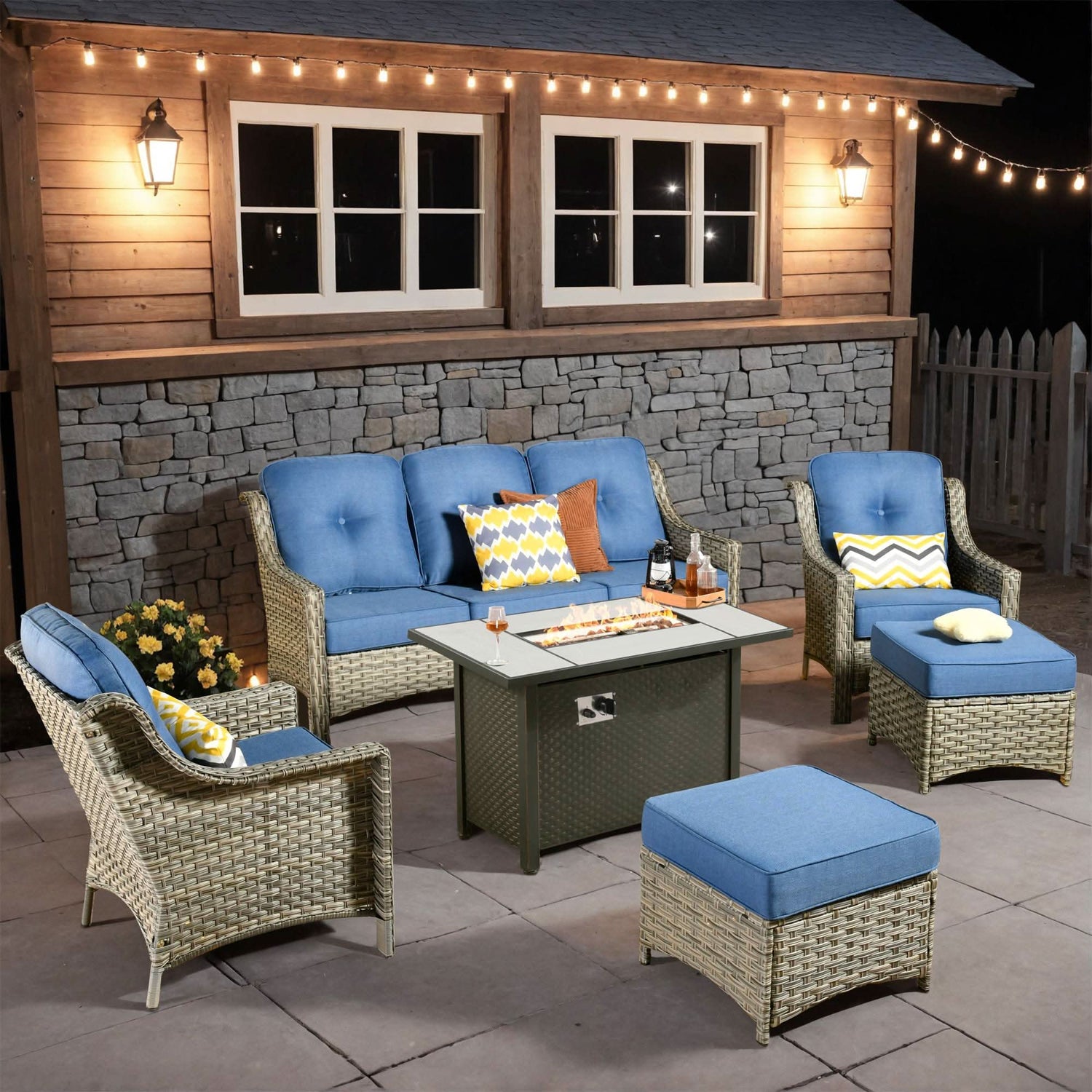
If you want to truly lounge outdoors instead of perching on shallow patio chairs that leave your legs dangling or your back unsupported, deep seating patio chairs with extra-wide armrests and generous seat depth often make the biggest practical difference. These designs let you sit back fully with thigh support while keeping a small gap behind the knees, turning a quick sit into extended relaxation that matches how most people actually use their patios.

Deep seating patio chairs prioritize lounge-friendly ergonomics over upright dining posture. Standard patio seating typically offers seat depths around 16–20 inches, which works well for meals or shorter visits but can feel cramped during longer sessions. Deep seating, often 20–24+ inches, better supports the thighs and reduces the forward slide that creates awkward posture and fatigue over time. For tall buyers, pairing that depth with high backs (20+ inches) and wider seats (24+ inches) creates oversized patio chairs that finally accommodate longer legs and broader frames without forcing a slouch.
Why Seat Depth Matters More Than Many Shoppers Realize
Seat depth is one of the most important yet overlooked features when choosing comfortable patio furniture. According to ergonomic guidance, a chair should support most of the thigh while leaving a small gap (roughly 2–3 inches) between the front edge of the seat and the back of the knees. This setup allows feet to rest flat on the floor or a footrest and prevents pressure behind the knees that can lead to numbness or discomfort during extended outdoor lounging.
Shallow chairs common in big-box sets often fail this test for anyone taller than average or anyone who prefers a relaxed posture. The result is forward sliding, lower-back strain, and the feeling that you can never quite get comfortable. Deep seating patio chairs address this by extending the support surface so your thighs rest fully rather than balancing on the sit bones alone. This is especially valuable on patios used for after-work unwinding, weekend hosting, or poolside afternoons where sessions stretch beyond 30–60 minutes.

Yet depth alone does not guarantee comfort. The best designs combine it with high backs for upper-body support, wide armrests that let arms rest naturally, and cushions thick enough (typically 4–6 inches) to add pressure relief without bottoming out. As this ergonomic seating overview from UCLA explains, adequate seat depth improves thigh support and reduces pressure behind the knees. Similar principles appear in guidance from Harvard and other institutions focused on posture and fatigue prevention.
Deep Seating vs Standard Patio Seating: A Practical Comparison
The difference between deep seating and standard patio seating becomes clear once you map it to real use cases. Standard sets usually favor upright posture and easier stand-up movement, making them practical for dining areas or mixed households where people of varying heights share the same furniture. Deep seating modular sets, by contrast, create a sink-in living-room feel outdoors that encourages longer conversations and true lounging.
Consider these thresholds as planning guides rather than rigid rules:
- Seat depth of 16–20 inches works well for upright or dining-focused use with a proper knee gap.
- Seat depth of 20–24+ inches better supports relaxed lounging and taller users.
- Back height under 20 inches can feel low for anyone over 5'10", while 20+ inches provides meaningful upper-back and head support.
- Seat width below 24 inches often feels narrow during position shifts, while 24+ inches offers room to sprawl comfortably.
These ranges derive from common patio dimensions and ergonomic principles around thigh support and personal fit. Cushion thickness in the 4–6 inch range tends to strike a practical balance across both styles when the underlying frame is firm.
Practical Fit Ranges Derived from Ergonomic Principles
Compare practical patio seating fit ranges by primary use case.
View chart data
| Category | Average/short dining | Tall lounging |
|---|---|---|
| Seat depth | 18.0 | 23.0 |
| Back height | 18.0 | 22.0 |
| Seat width | 22.0 | 26.0 |
| Cushion thickness | 5.0 | 5.0 |
Illustrative fit ranges derived from ergonomic principles and common patio specs. Typical upright/dining seating centers on 16-20 in seat depth, while lounging/tall-user setups often move to 20-24+ in. Back height under 20 in reads low; 20+ in supports taller users more comfortably. Seat width under 24 in can feel cramped; 24+ in is roomier. Cushion thickness is commonly 4-6 in. Values are practical planning ranges, not precise measurements.
The chart above illustrates how these dimensions typically shift between average-height dining-focused use and tall-user lounging priorities. It is an illustrative planning aid based on ergonomic guidelines and observed patio furniture ranges. Actual comfort still depends on your exact body proportions, the chair's seat angle, and cushion compression.
Common Myths About Oversized Patio Chairs
Many shoppers assume that bigger always equals better when it comes to outdoor seating. In reality, oversized patio chairs only deliver comfort when the proportions match how you sit and what you use the space for.
Myth: All large-looking patio chairs are automatically more comfortable. Reality: Visual bulk does not guarantee support. A chair can look generous yet still force you into awkward angles that increase muscle tension during long sessions.
Myth: Deeper seats are universally superior. Reality: Extra depth helps when you want to lounge or recline, but it can feel cumbersome for upright dining or frequent stand-up movement. As ergonomic references note, the best chair depends on the activity it supports.
Myth: Thicker cushions alone solve discomfort. Reality: Cushion thickness helps with pressure relief, but firmness and shape matter more. Soft cushions on a poorly proportioned frame can still bottom out or fail to keep your back supported. Our guide to choosing outdoor cushions explores foam versus fiber fill and ideal thickness for deep seating sets.
Myth: High price guarantees ergonomic fit. Reality: Premium materials improve durability and weather resistance, but only a fit check against your height and posture confirms comfort. This is why high-back versus low-back patio furniture comparisons focus on lumbar support and ease of standing rather than cost alone.
Myth: Modular sets work equally well for everyone. Reality: Modular designs let you customize layouts, yet individual pieces still need to match primary users. A deep seating sectional may feel perfect for tall loungers but awkward for shorter family members who struggle to rise from low, deep seats.
Who Benefits Most from Deep Seating and Oversized Designs
Deep seating patio chairs shine for tall buyers seeking best high back patio chairs for tall people. The combination of extended seat depth, elevated backs, and wide armrests reduces the cramped feeling common in standard sets. Couples or families who treat their patio like an outdoor living room also gain from the relaxed posture these chairs enable.
They are particularly valuable for:
- Poolside or deck lounging where sessions last hours.
- Covered porches or terraces used for evening conversations.
- Homeowners replacing disposable big-box furniture with durable, repairable modular systems that maintain comfort over years.
Our complete buying guide for outdoor sofas and tips for creating cozy outdoor spaces expand on matching furniture scale to your actual layout and lifestyle.
When Deep Seating May Not Be the Best Choice
Deep seating is not ideal for every patio or every user. If your space primarily hosts meals, quick coffee breaks, or serves a mixed-height household with frequent stand-up movement, standard-depth chairs often prove more practical. Shorter users sometimes find deep seats too low, making it harder to stand without extra effort. Tight balconies or high-traffic decks can also feel crowded by oversized footprints.
In those scenarios, look for moderate depth, higher seat heights, and designs that prioritize easy entry and exit. The key test is simple: sit in the chair as you would at home. Can you keep feet flat, maintain thigh support, and shift positions without sliding forward? If not, the dimensions likely do not match your body or use case.
This aligns with broader advice on avoiding disposable patio sets in favor of durable, fit-focused choices that last. Our guide on stopping the cycle of disposable patio furniture and PE wicker versus aluminum comparisons help weigh long-term value alongside comfort.
Feature Checklist Before You Buy a Comfortable Patio Furniture Set
Use this practical checklist to evaluate deep seating options:
- Measure your preferred sitting posture. Sit against a wall and note how much thigh support feels natural.
- Check seat depth against the knee-gap rule: you should have 2–3 inches of clearance behind the knees when sitting all the way back.
- Verify back height and angle support the way you actually lounge, especially if you are tall.
- Test armrest width and height for natural elbow placement without shoulder strain.
- Confirm cushion thickness and density provide support rather than just softness.
- Consider the full set layout. Modular designs let you mix depths, but ensure the primary pieces fit your tallest or most frequent users.
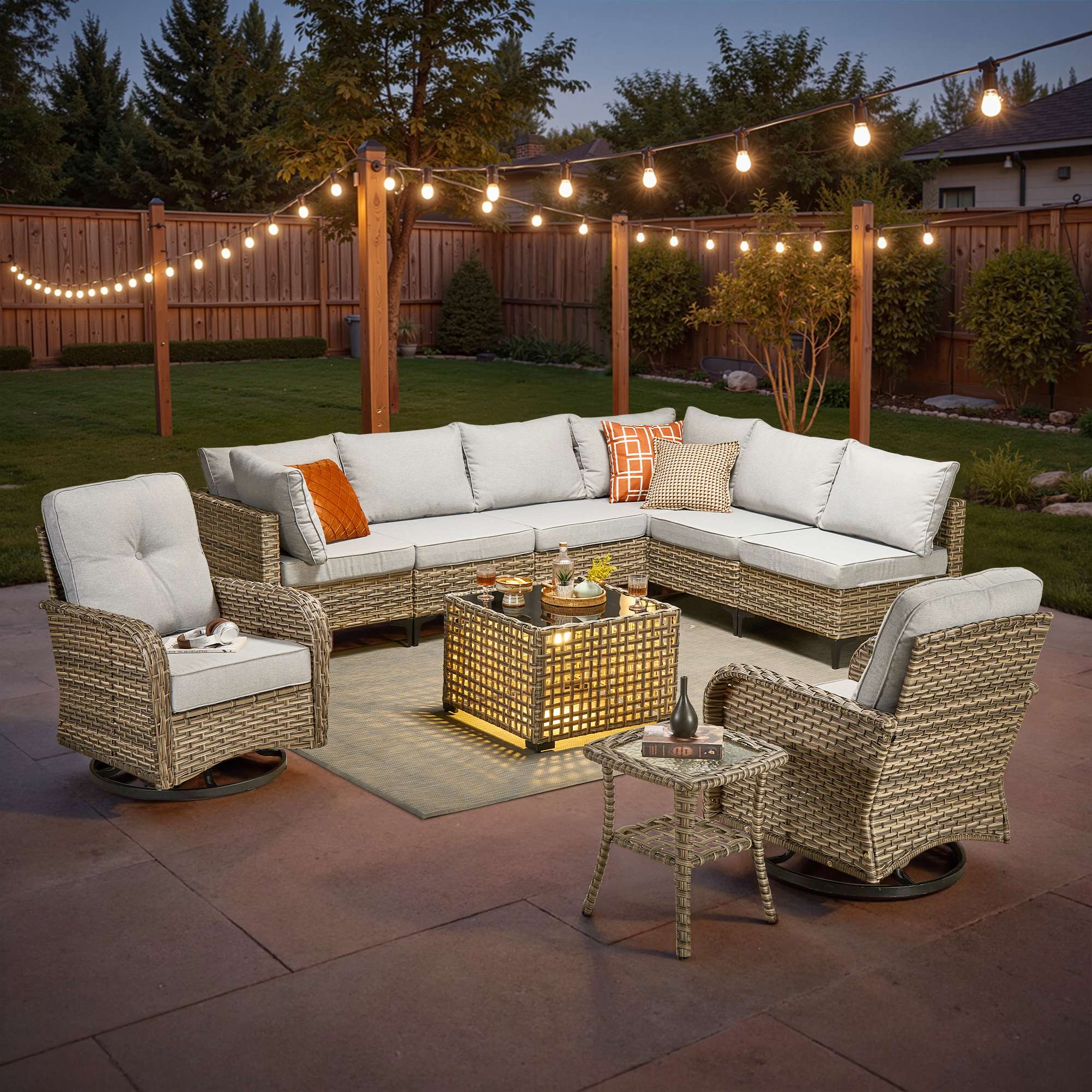
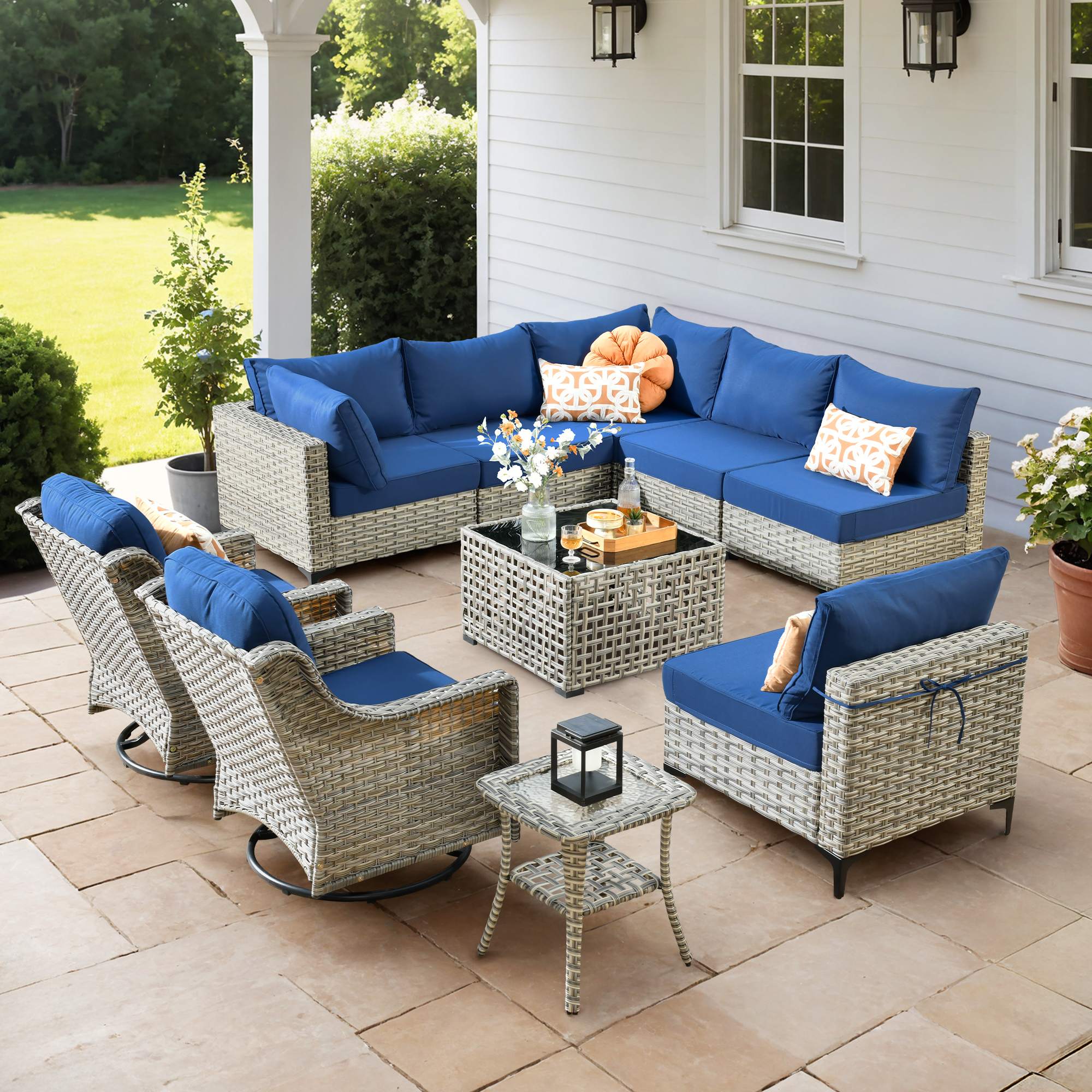
Apply this checklist to options like our OVIOS 4-Piece Outdoor Patio Set with Swivel Chairs or the OVIOS 8-Piece Outdoor Wicker Patio Set with Sofa & Swivel Chairs. Both incorporate deep seating elements, high backs, and thick cushions designed for extended lounging.
For larger gatherings, explore 8–10 seat collections or modular wicker sets with fire pit tables that combine conversation depth with practical durability.
Final Decision Framework for 2026 Patio Upgrades
Deep seating patio chairs deliver genuine lounging comfort when your primary use involves relaxation rather than quick meals, and when the dimensions align with your height and posture preferences. They outperform standard shallow sets for tall users and long-session scenarios, but they are not a universal upgrade. Always prioritize fit over marketing claims about “oversized” or “extra deep.”
Comfort remains subjective and setup-dependent. What feels supportive on a covered porch may feel too low on an open deck. Test against your actual body and habits rather than assuming bigger is automatically better. When chosen thoughtfully, the right deep seating modular set can transform your outdoor space into a true extension of your living room for years to come.
Comfort and Ergonomics Disclaimer
This article discusses setup advice and ergonomic principles for patio furniture selection only. It does not constitute medical advice, diagnosis, or treatment for any condition. Chair comfort is highly individual and depends on personal body dimensions, posture preferences, and existing health factors. If you experience persistent discomfort, pain, or have pre-existing eye, back, or mobility conditions, consult a qualified healthcare professional. Dimensions and features should be verified in person whenever possible.
For more on creating lasting outdoor spaces, see our guide to the lifecycle economy of outdoor furniture.

Leave a comment
This site is protected by hCaptcha and the hCaptcha Privacy Policy and Terms of Service apply.