



Key Takeaway
The best outdoor cushions do three things at once: keep you comfortable through hours of use, hold up against sun, rain, and mold, and pull your patio's look together. Prioritizing filling type, fabric quality, and size saves money and makes your space usable all year.
Indoor pillows stay in climate-controlled rooms. Outside, your seats face UV rays, heavy rain, humidity, and wild temperature swings. To get your money's worth, you need materials built to survive these specific threats. This discussion focuses on the three pillars of a great purchase: comfort (the inside), durability (the outside), and style (the visual fit). Whether you are furnishing a new deck or replacing old, lumpy pads, picking the right materials ensures you won't be shopping again next spring.

The Real Cost of Cheap Outdoor Cushions
Buying the least expensive option often leads to spending more over time. A $30 cushion might look great in May, but by August, the sun has bleached the color and the foam has flattened. If you replace cheap sets every season, you end up spending hundreds more than if you had invested in outdoor furniture cushion quality from the start.
Beyond the money, poor cushions ruin the experience. No one wants to sit on a hard chair or deal with the smell of trapped moisture. High-quality options usually last between 3 to 7 years. The difference lies in the "bones" of the product — the specific foam density and the way the fabric is dyed.
Investing upfront means your patio stays a place of relaxation rather than a source of frustration.

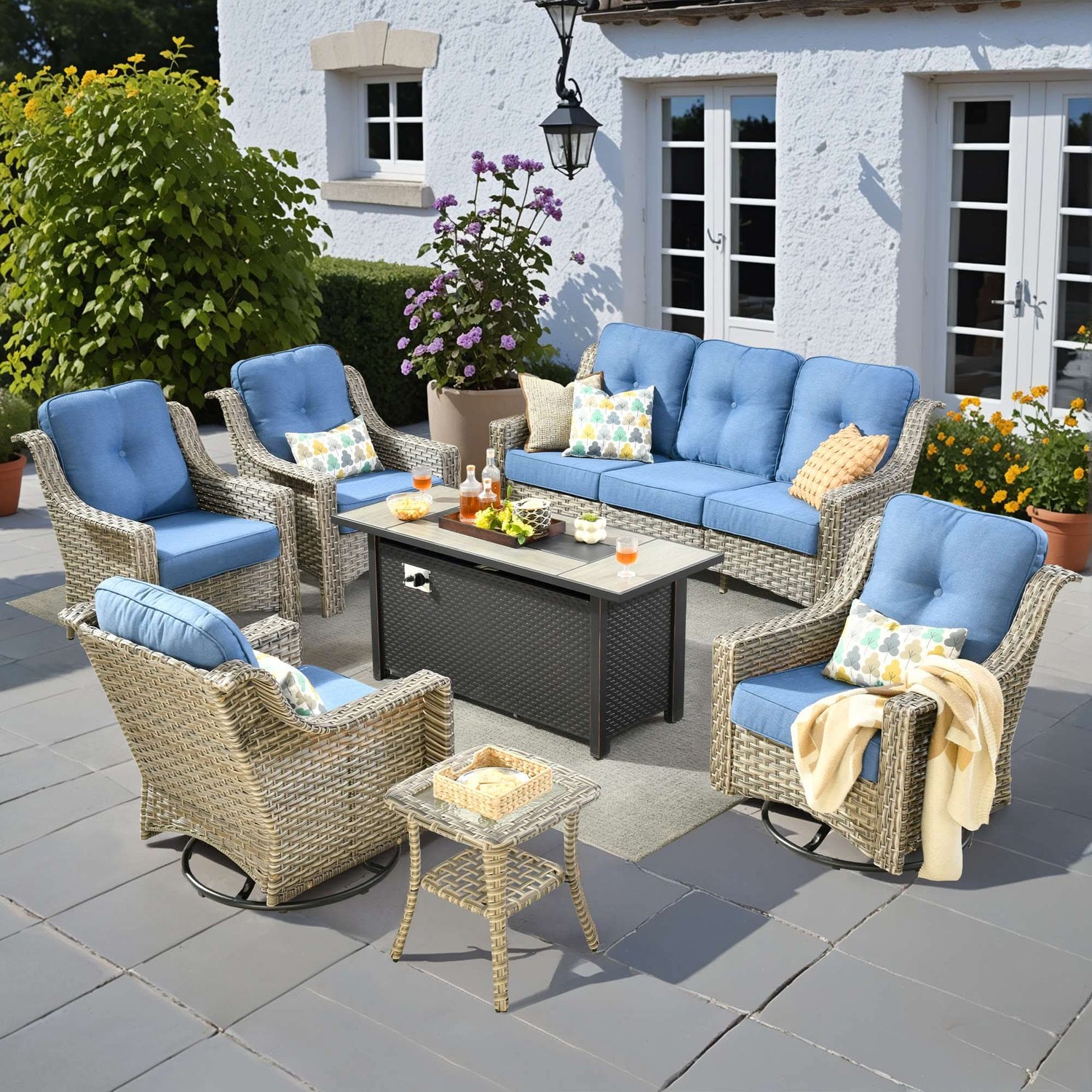
OVIOS 7 Pieces Patio Furniture Set, Outdoor Wicker Sofa with Swivel Chairs, Coffee Table
What Makes an Outdoor Cushion Truly Comfortable?
Getting the right feel for your chairs depends on what is hidden inside the fabric. Different activities, like eating or napping, require different levels of support and thickness.
Common Filling Types and Their Performance
- Polyester Fiber Fill: This is soft and very affordable. It feels like a standard bed pillow. However, it squashes down quickly. Use this for decorative benches or chairs you don't sit in every day.
- Standard Foam: This provides firm support and keeps its shape well. The downside is that it acts like a sponge. If it gets wet, it stays wet for a long time unless it has a specialized waterproof cover.
- Quick-Dry Foam: This is the best choice for rain-prone areas. It has an "open-cell" structure that lets water flow straight through rather than soaking it up. It usually dries in a few hours.
- Hybrid Fill: Many high-end sets use a foam core for support wrapped in a layer of polyester fiber for softness. This gives you the best of both worlds.
Choosing the Right Thickness
Thickness should match the function of the furniture.
- 1–2 Inches: Best for wooden benches or metal bistro chairs where you just need a thin barrier.
- 2–3 Inches: The standard for dining chairs. It provides comfortable patio seating without making the chair too high for your legs to fit under the table.
- 3–4 Inches: Perfect for deep seating patio furniture and sofas. This thickness supports your weight for long periods.
- 4+ Inches: Used for luxury chaise lounges and daybeds to create a resort-style feel.
Support and Ergonomics
Don't just think about the seat. Your back needs support too. Look for sets where the back cushion is structured rather than floppy.
If you have deep-seat patio chairs, measure the depth carefully. If the cushion is too short, your legs will dangle uncomfortably; if it's too deep, you won't be able to lean back properly.

Which Durability Factors Help Cushions Last Longer?
A cushion is only as good as its ability to survive a thunderstorm or a week of direct July sun. The fabric choice is the biggest factor in how long the product stays usable.
Pick the Best Fabric
Some materials are dyed all the way through the fiber, while others just have color printed on the surface.
- Solution-Dyed Acrylic: This is the gold standard. The color is part of the fiber itself. These are highly fade resistant patio cushions that can handle years of sun without turning grey or brittle.
- Olefin (Polypropylene): A fantastic middle-ground option. It resists moisture and UV rays very well but costs less than high-end acrylics.
- Waterproof, UV‑Resistant Polyester: The outdoor‑grade polyester fabric is specifically treated to be water‑repellent and fade‑resistant. It helps block UV rays, sheds light rain, and keeps colors looking vibrant through everyday outdoor use.
- Canvas: It looks classic and feels natural, but it loves to grow mold if it stays damp. Only use this if you have a covered porch or live in a very dry climate.
Construction Details That Matter
High-quality builds include small details that prevent failure.
- Look for UV-resistant stitching, as regular thread will snap after months of sun exposure.
- Check the zippers; they should be plastic or coated stainless steel so they don't rust shut.
- Premium cushions include a separate waterproof inner cover protecting the fill, which allows the outer cover to be removed and washed independently.
- Tie strings are also a must if you live in a windy area, as they keep your cushions from ending up in the neighbor's yard.
Look For Certifications
Check the labels for performance ratings.
- UPF 50+ means the fabric blocks almost all UV rays, protecting both the color and the material strength.
- Look for "Mold and Mildew Resistant" tags if you live in a humid area.
- Also, note the difference between water-resistant (beads water off) and waterproof (stops all water from entering).
How Can You Style Cushions to Elevate Your Patio?
Once you know the cushions will last, you can focus on the look. Your backyard should look and feel like an extension of the colors and style of the inside of your home.
Color Strategy
- Neutral Bases: Charcoal, slate, and taupe are safe choices. They stay in style for years and look great with different colored accessories.
- Bold Accents: Use colors like cobalt blue, sage green, or terracotta for small chairs. These make a statement but are easy to change later.
- Practicality: Dark colors stay hot in the sun, while light colors show dirt faster. Choose what fits your shade levels.
Pattern and Texture Guide
- Solids: These are the most flexible and work with any rug or pillow.
- Stripes: A classic choice for a coastal or farmhouse feel.
- Prints: Use florals for garden areas and geometric shapes for modern decks.
- Pro Tip: Buy solid main cushions and use patterns on small throw pillows. This makes it cheaper to update your look next year.
Match Styles to Furniture
| Furniture Style | Recommended Colors | Best Fabric Texture |
| Modern Aluminum | Charcoal, White | Solid fine weave |
| Rattan / Wicker | Sand, Olive | Woven texture |
| Teak / Hardwood | Navy, Cream | Stripes or solid |
| Cast Iron | Sage, Burgundy | Canvas or floral |
| Coastal | Blue-white stripe | Stripes |
Get the Perfect Fit
- Never guess the size. A cushion should be 1–2 inches smaller than the chair frame. This prevents it from hanging over the edge or slipping off.
- Measure the seat width, depth, and back height before you shop.
- For large sofas, buy all cushions at once to ensure the thickness and colors match perfectly.
Maintenance Tips to Extend Cushion Life
A few simple habits can double the years you get out of your investment.
- When it rains, don't leave cushions lying flat. Stand them up on their side. This helps water drain out of the bottom seams and allows air to move around them, preventing mold.
- For cleaning, skip the harsh chemicals. Use a soft brush, mild soap, and warm water. If your cushions have removable covers, you can machine wash them on a gentle cycle, but never put them in the dryer. High heat can shrink the fabric or ruin the waterproof coating.
- During the winter, store them in a dry spot. Avoid airtight plastic bags, as any trapped moisture will turn into mildew by spring. Instead, use a breathable fabric storage bag or a plastic bin kept in a garage or basement.
Common Outdoor Cushion Buying Mistakes to Avoid
Many buyers fall into traps because they focus on the price tag or the initial softness in the store. Avoiding these simple errors saves you money and prevents the frustration of frequent returns.
- Focusing Only on Looks: Check the fabric specs and the type of fill inside. Pretty cushions often fail quickly if they aren't built for the weather.
- Skipping the Tape Measure: Mismatched sizes cause the most returns. Always measure your chair's width, depth, and back height rather than trusting "standard" labels.
- Trusting the "Outdoor" Tag Alone: Some cheap cushions are just indoor pillows with a light spray. Look for high-quality fabrics that are truly weather-resistant.
- Ignoring Zippers and Seams: Look at the stitching. Weak seams and plastic zippers are usually the first parts to break on low-quality items.
- Storing Damp Cushions: Packing away wet cushions leads to permanent mold. Ensure the fill is bone-dry to keep them fresh for next year.
FAQs
Q1: Which fabric is best for constant sun?
For constant sun exposure, solution‑dyed acrylic is generally considered the most fade‑resistant because the color is built into the yarn itself rather than just printed on the surface. However, high‑quality outdoor polyester fabrics also offer very good colorfastness and are designed to resist fading under regular UV exposure, making them a durable and practical choice for everyday use.
Q2: How do I prevent my cushions from smelling?
The smell usually comes from bacteria or mold growing in damp foam. Use quick-dry foam and always stand your cushions up after a rainstorm so they can dry completely.
Q3: Can I leave my cushions out all winter?
It is not recommended. Even the toughest fabrics will last much longer if they are stored away from snow and freezing temperatures during the months you aren't using them.

Leave a comment
This site is protected by hCaptcha and the hCaptcha Privacy Policy and Terms of Service apply.