



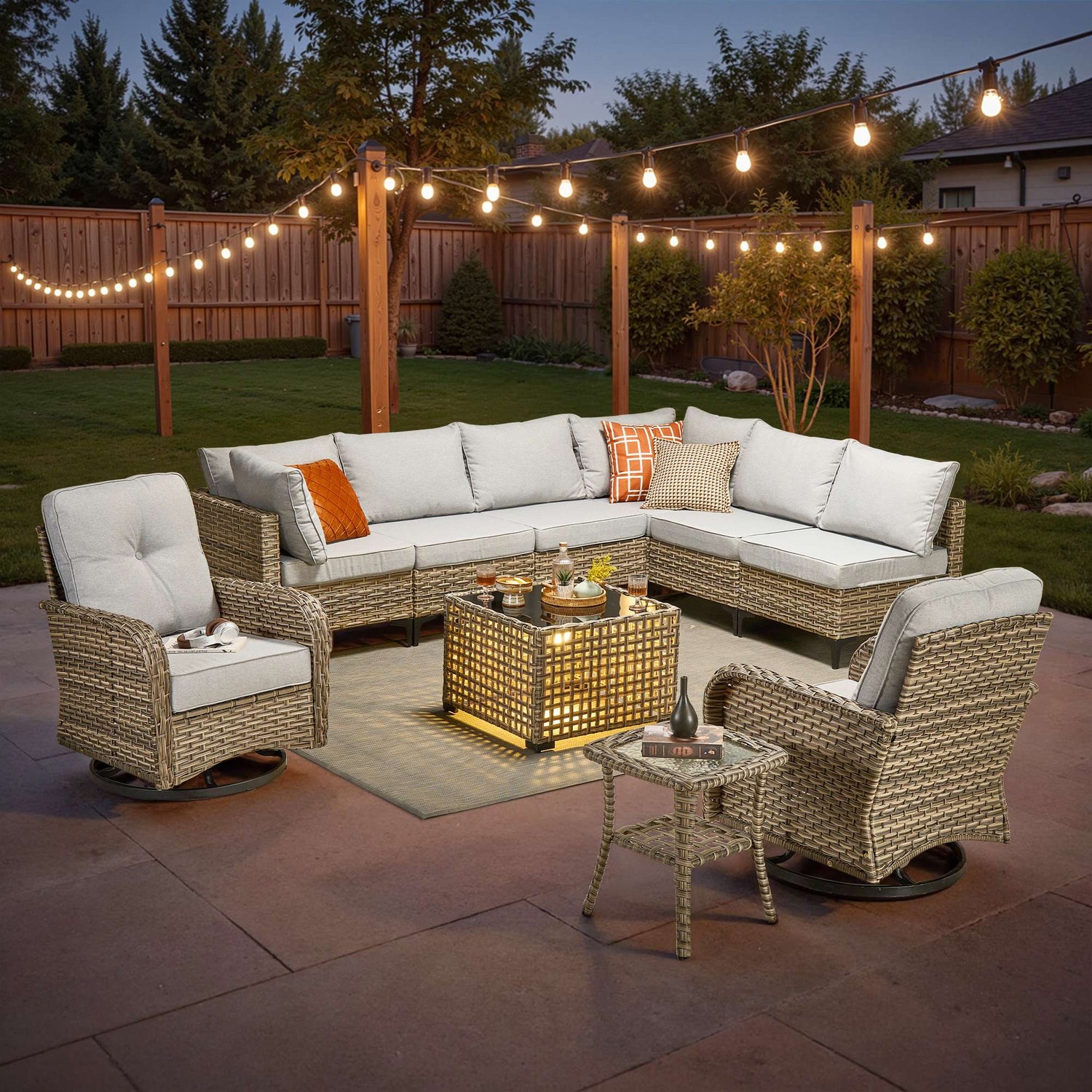
Turning a plain patio, deck, balcony, or backyard into a true outdoor room requires more than buying individual pieces of furniture. The most successful setups treat the space like an interior room: they define clear zones for lounging, conversation, and dining while preserving comfortable traffic flow and visual cohesion. Modular patio furniture systems excel here because their rearrangeable components let you adapt the layout to daily relaxation or larger gatherings without starting over each season.

This approach delivers the upscale, polished look many homeowners seek. Instead of a mismatched collection of chairs and tables, you create a flexible system centered on an outdoor sectional set and often anchored by a fire pit table. The key is planning the entire footprint first, then selecting modules that scale to your actual space and use patterns.
Why Modular Systems Create Better Outdoor Rooms
An outdoor room should be planned as a purposeful arrangement of space, not as a random collection of pieces. As landscape design guidance from North Carolina State University explains, the conscious arrangement of outdoor space maximizes human enjoyment. Modular patio furniture works best when viewed as a room with a clear purpose rather than isolated items.
Traditional fixed sets often lock you into one configuration that works for entertaining but feels oversized for everyday use. Modular systems solve this by letting you reconfigure seating, add or remove pieces, and shift the focus between a cozy sectional for two or an expanded arrangement around a fire pit table for guests. This flexibility is especially valuable for apartment dwellers seeking the best modular patio furniture for apartments or small terraces, where every square foot counts.
The result is higher perceived value and greater long-term satisfaction. A well-planned modular setup feels intentional and cohesive, using consistent materials, colors, and proportions across pieces. This avoids the disjointed look that reduces comfort and makes the space feel less premium.
Planning Your Space: Start with Footprint and Circulation
Before choosing any furniture, measure your available area and map how people will actually move through it. Good space planning leaves clear, unobstructed pathways so people can move comfortably. Official guidance on circulation emphasizes preserving these paths in any layout.
A practical rule of thumb is to maintain at least 36-48 inches for primary walkways. This prevents the common regret of buying beautiful modular pieces only to discover the arrangement blocks doors, railings, or natural traffic routes. For fire pit tables, maintain adequate clearance around the burn area to keep combustible items at a safe distance, as highlighted in recreational fire safety recommendations from fire districts.

Consider your primary use cases early. If the space is mostly for daily lounging by 2-4 people, prioritize one comfortable anchor zone with easy access. For frequent entertaining, plan for multiple zones and the ability to reconfigure around a central fire pit table. The size of an outdoor seating area should depend on how the space will be used, which is why modular pieces shine when needs change between everyday relaxation and hosting.
Here is an illustrative planning guide modeled from landscape design heuristics. It shows how space size influences recommended zones, seating capacity, minimum pathway widths, and the role of a fire pit table. These values are bounded design cues derived from circulation guidance (36-48 inches) and zone scaling principles, not strict engineering standards. Actual fit always depends on your exact dimensions and access points.
Outdoor Space Fit Guide: Zones, Clearance, and Fire Pit Priority
Use this as a planning guide to match outdoor-space size to modular furniture layout, zoning complexity, and fire-pit emphasis.
View chart data
| Category | Min Area (sq ft) | Max Seats | Recommended Zones | Min Path Width (in) | Fire Pit Priority |
|---|---|---|---|---|---|
| Balcony | 40.0 | 2.0 | 1.0 | 36.0 | 1.0 |
| Small Patio | 80.0 | 4.0 | 2.0 | 42.0 | 2.0 |
| Large Deck | 180.0 | 6.0 | 3.0 | 48.0 | 3.0 |
| Backyard | 300.0 | 8.0 | 4.0 | 48.0 | 4.0 |
Illustrative planning guidance derived from landscape design heuristics and the writer's evidence: circulation paths of 36-48 inches, fire clearances of 3-5 feet, and zone footprints scaled to available space. Values are normalized for comparison only and should be treated as bounded design cues rather than exact measurements.
Creating Defined Zones in Your Outdoor Room
A complete outdoor room typically combines lounging, conversation, and sometimes dining functions. The right zone sizes depend on the space and intended use, as noted in accessible outdoor area planning resources. Modular systems help by letting you dedicate specific modules to each zone while maintaining overall cohesion.
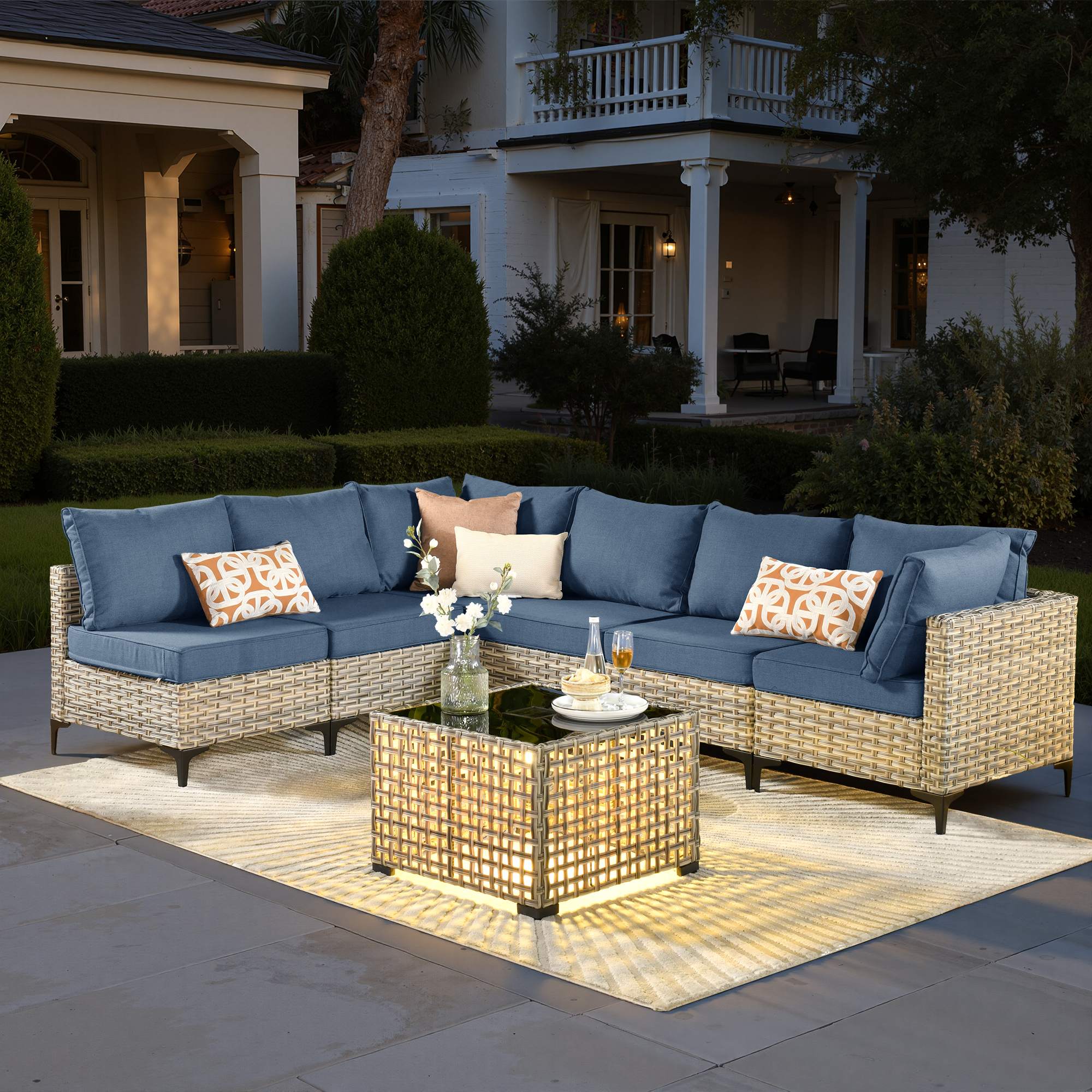
- Lounging zone: Deep outdoor sectional sets work well here. Look for pieces with splash-proof cushions and weather-resistant wicker that can serve as the anchor. In smaller spaces, an L-shaped or compact sectional defines the area without overwhelming it.
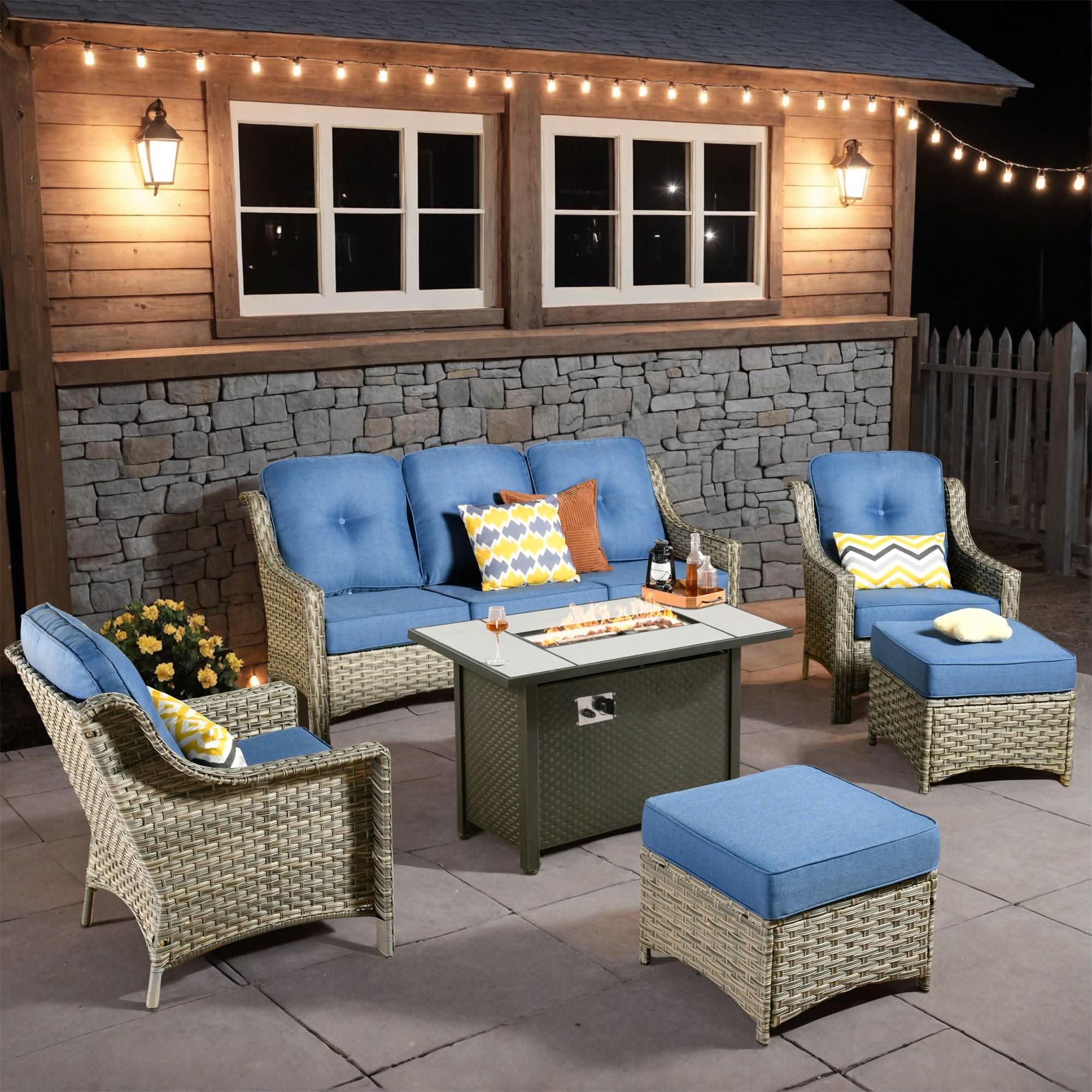
- Conversation zone: A fire pit table often serves as the natural focal point. It draws people together while providing warmth and ambiance. Position it centrally in larger layouts so seating radiates around it, but always respect clearance guidelines.
- Dining or secondary zone: Use smaller modules or swivel chairs that can be pulled up as needed. In compact setups, a dual-purpose coffee table or glowing solar table can bridge lounging and light dining.
For apartment balconies or small patios, limit to one primary zone with flexible add-on pieces. Larger decks and backyards can support distinct zones as long as circulation remains clear. The scenario often flips based on frequency of use: daily relaxation favors open pathways and one comfortable core, while regular hosting benefits from movable modules that reconfigure around a central fire pit table.
This outdoor sectional buying guide offers additional tips on selecting sizes and materials that support multi-zone layouts.
Choosing the Right Modular Patio Furniture
Focus on systems built with all-weather PE rattan, powder-coated frames, and removable, water-repellent cushions. These materials maintain a cohesive look over time and resist fading or mildew. Consistent color palettes across sectional pieces, chairs, and tables prevent the space from feeling disjointed.
Popular configurations include 8- to 11-piece sets that combine sectionals with fire pit tables and swivel rockers. These allow rearrangement for different guest counts. For smaller spaces, look at 3-4 seat or compact conversation sets that still incorporate modular elements.
When integrating a fire pit table, treat it as the organizing center rather than an afterthought. Models with 50,000 BTU output and solar or glowing accents add both function and style. Always follow local fire safety rules regarding clearances and combustible materials, especially on decks in higher-risk areas.
Consider these options from our collection:
- The OVIOS Wicker Patio Conversation Set with Fire Pit Table offers 9-11 pieces with swivel rockers and a 42-inch propane fire pit, ideal for creating a flexible conversation-focused room.
- For larger gatherings, the OVIOS 10-Piece Patio Conversation Set with Fire Pit & Swivel Chairs provides ample seating while maintaining rearrangeability.
- Apartment-friendly choices appear in our 1–2 Seats collection or compact modular sectionals that scale gracefully.
Our Outdoor Furniture with Fire Pit Sets collection showcases complete systems designed for cohesive outdoor rooms.
Compare options further in this conversational sets vs sectionals guide, which highlights flexibility trade-offs for different patio sizes.
Layout Tips for Everyday Use vs Hosting
The best modular patio furniture arrangement often changes with usage patterns. For daily use, keep one fixed core zone (such as a sectional against a wall) and maintain open circulation. This creates a relaxed, easy-to-live-with space.
For entertaining, reconfigure modules to expand seating around the fire pit table. Movable swivel chairs and ottomans serve as extra perches that can be pulled in or stored. In mixed-use spaces, choose one primary zone plus flexible add-ons rather than forcing two equally large competing areas.
Common mistakes to avoid include squeezing too many functions into a small footprint, which creates dead corners or forces zigzag movement. In compact areas, a full multi-zone plan can make the space feel fragmented instead of cohesive. Reduce modules and let one feature (often the fire pit table) define the main zone. This aligns with guidance that furnishings should match real use cases, especially in smaller or frequently rearranged spaces.
For visual inspiration and more arrangement ideas, review our guide on creating a cozy outdoor space or how to create an outdoor living area.
Cohesive Design and Material Consistency
A coordinated outdoor room succeeds when pieces share the same architectural character, materials, and proportions. Choose one rattan weave style, cushion color family, and frame finish across all modules. This creates the high-end look that makes the space feel like an intentional extension of your home.
Accessories such as weatherproof rugs, planters (kept outside circulation paths), and lighting further unify the design. In fire-prone regions or on wooden decks, consider material limits on combustible items as noted in defensible space guidelines.
Safety, Maintenance, and Final Checks
This article discusses comfort and setup guidance for outdoor spaces only. It does not constitute medical, safety, or design advice. Adequate clearances around fire features, proper circulation, and material choices depend on local codes, climate, and your specific layout. If you have existing health conditions, mobility needs, or questions about fire safety, consult qualified professionals. Persistent discomfort or layout concerns should be reviewed by experts.
Before purchasing, create a scaled sketch or use painter’s tape to mock up zones and pathways. Test whether the proposed arrangement allows comfortable movement even when all seats are occupied. Verify that modules can be reconfigured without straining storage or effort.
Modular patio furniture with fire pit tables can transform ordinary patios into versatile outdoor rooms when planned thoughtfully. By starting with your actual space and use patterns, selecting coordinated systems, and preserving circulation, you achieve a flexible, upscale outdoor living area that adapts to your lifestyle for years to come.
The investment pays off in both daily enjoyment and effortless entertaining. With the right modular setup, your patio becomes a true extension of your home rather than just another furniture arrangement.

Leave a comment
This site is protected by hCaptcha and the hCaptcha Privacy Policy and Terms of Service apply.