



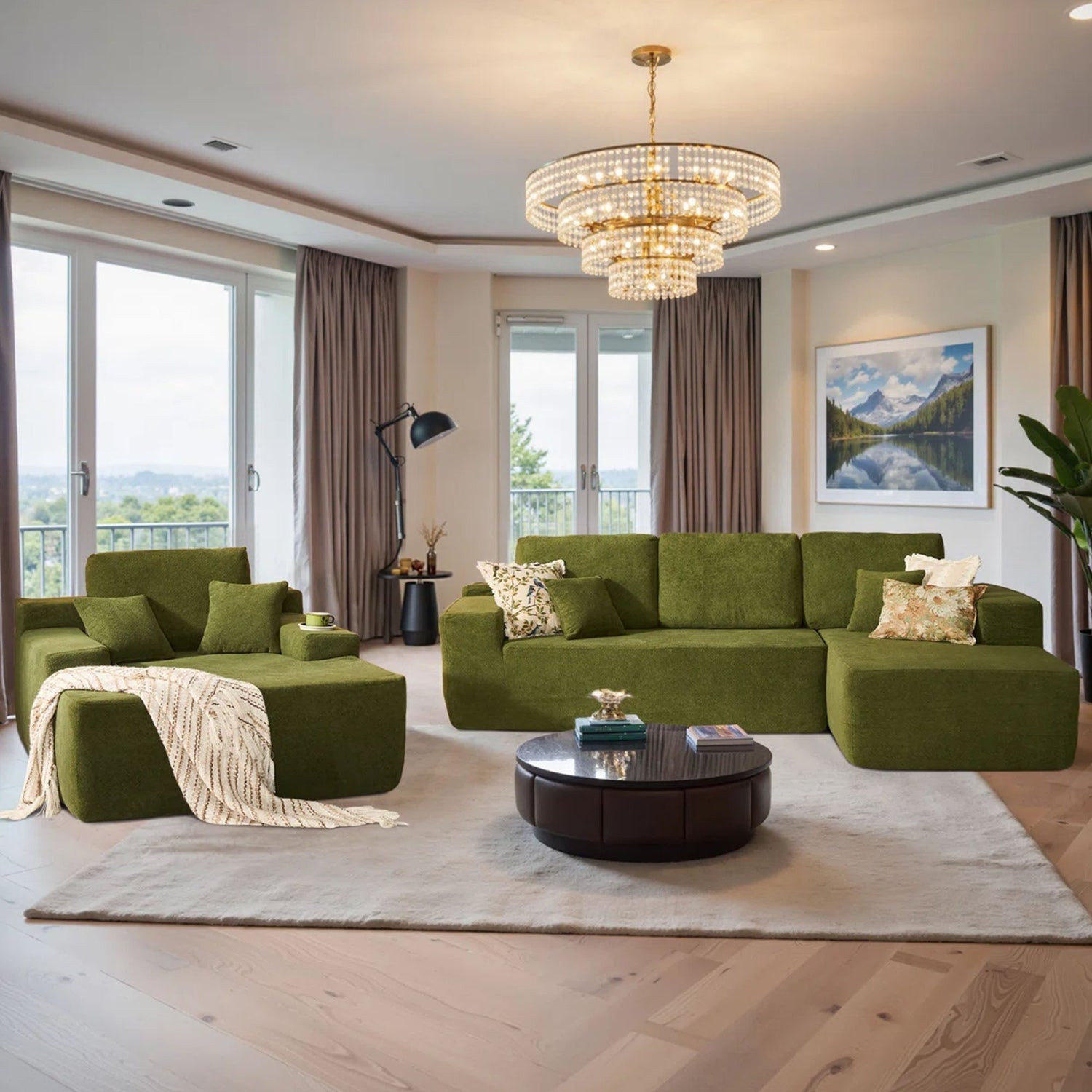
Open-plan living is popular because it brings in natural light and makes homes feel larger. Removing walls allows air to flow freely and helps families stay connected. But without walls, a large room can feel messy and unorganized. You need a way to define specific areas without losing that open, airy feeling. A modular sofa is a functional and stylish solution to this problem.

Why a Modular Sofa Works for Zoning
Standard sofas are rigid, but a Modular Sofa adapts to fit your specific space. These sofas come in separate pieces, so you can arrange them to fit your needs. This makes them perfect for Open-plan living, where one large room serves many purposes.
- High Flexibility: You can move the pieces around easily. This is helpful for parties or if you decide to change the room layout later.
- Acts as a Visual Divider: The sofa acts like a low wall. It separates the living area from the dining room without blocking the view or the light.
- Enhances Traffic Flow: Placing the sofa correctly tells people where to walk. It keeps pathways clear so people do not walk through the middle of a conversation.
- Adds Structure: These sofas usually have clean lines. They make a large, empty room feel organized and modern.
These adjustable pieces give your room structure while keeping it spacious and welcoming.
Planning Your Layout to Create Zones in Open Concept Home
You must plan your floor map carefully before you start moving heavy furniture. A good layout starts with knowing what you need. You probably want a spot for watching TV, a place to eat, and maybe a corner for reading. Once you know these functions, you can plan the walkways. The goal is to create zones in open concept home designs that feel separate but still connected. Exploring different arrangements can help you visualize the best use of your space before committing to a final layout.
The shape of your sofa changes how the room feels. This table helps you match the sofa shape to your room type.
| Room Type | Best Modular Shape | Why It Works |
| Large, Square Room | U-Shaped Setup | This shape creates a cozy "pit" in the middle of the room. It clearly marks the living zone as a separate area. |
| Long, Rectangular Room | L-Shaped with Chaise | The L-shape cuts across the room naturally. It separates the lounge from the dining table while keeping a clear path on the side. |
| Multi-Use Room | Double-Sided | This setup has seats on both sides. One side can face the TV, and the other can face a window or playroom. |
| Small Studio | Small Linear Setup | A simple straight line with a detached footrest defines the space without filling up the whole floor. |
Choosing the right shape for your room size ensures the furniture helps the flow rather than blocking it.
Practical Living Room Layout Ideas With Modular Sofa
Placing your furniture in the right spot is the most effective way to define a large room. The direction your sofa faces changes how the space functions. If you turn the sofa a certain way, you create a natural barrier. If you turn it another way, you open up the flow. These living room layout ideas with modular sofa configurations will help you create order in your home.
Position the Sofa Back Toward Another Area
The easiest way to divide a room is to turn the back of the sofa toward the kitchen or dining table. This creates a clear line. The back of the sofa acts like a fence. It creates a cozy space for sitting while keeping the rest of the room visible. This works very well in long rooms where you want to stop the eye from looking all the way to the back wall.
Create an L-Shaped or U-Shaped Boundary
If you want a private corner, arrange your modules into an L or U shape. This creates a "room within a room." The arms of the sofa block off the space on two or three sides. This is great for families who want a specific area for relaxation. The corner of the sofa anchors the living zone, leaving the rest of the floor open for other things.
Use a Chaise or Ottoman as a Soft Divider
Sometimes a high sofa back feels too big. In this case, use a chaise lounge or a large ottoman to mark the edge of the room. A chaise extends out and shows where the living area ends, but it stays low. This keeps the room feeling open. It allows people in the kitchen to talk to people on the sofa easily.
Try a Double-Facing Layout
In very large homes, the living and dining areas might share one huge space. A double-facing layout is a smart choice here. You can arrange the modules so some seats face the TV and others face the dining room or a window. This turns the sofa into a central island. It bridges the two zones and makes the large space feel useful.
Combine the Sofa With Other Items
The sofa does most of the work, but other items help. Placing a long table behind the sofa adds a nice touch. It hides the back of the sofa and gives you a place for lamps. Tall shelves placed near the sofa can also suggest a wall. These extra items make the zones feel solid and intentional.
Using these layout methods turns a big, empty hall into a series of comfortable, specific places.

Extra Styling Tips to Divide an Open-Plan Living Room Visually
Furniture sets the stage, but decorations clarify the separate areas. To make your zones clear, you need to use accessories. Rugs and lighting act like signals for your eyes. Learning how to divide an open-plan living room involves layering these items around your sofa.
- Use Area Rugs: A rug creates a border on the floor. When you put your sofa and coffee table on a rug, it groups them together. This clearly marks the spot as the "living room."
- Keep Colors Consistent: You want separate zones, but they should look like they belong in the same house. Use the same colors in different ways. If your sofa is gray, use gray pillows in the dining area to connect the spaces.
- Use Vertical Accents: Height creates separation. A tall floor lamp next to the sofa acts like a post. A large plant behind the sofa adds a natural wall. These tall items stop the eye and reinforce the boundary.
- Watch the Sizes: Balance is important. A huge sofa in a small space feels crowded. Tiny furniture in a big room looks lost. Make sure your sofa leaves enough room for people to walk by comfortably.
Adding these styling details makes your open home feel organized and finished.
What to Avoid With Your Indoor Furniture Arrangement
Arranging a large room takes some thought. You want to avoid blocking paths or making the room feel heavy. Proper placement of your indoor furniture makes daily life smoother.
- Blocking Walkways: Do not put the sofa where people have to squeeze by. You should always have a clear, wide path to the kitchen and doors.
- Crowding the Space: It is tempting to use every piece of the modular set. But too much furniture makes the room feel small. Leave some empty space so the room can breathe.
- Mixing Clashing Styles: The sofa should match the dining table nearby. If the styles are too different, the room will look messy. Keep the design style similar across all zones.
- Ignoring the View: Do not face the sofa away from the best view. Always think about what you will look at when you sit down.
Avoiding simple errors will keep your open plan home comfortable and easy to use.
Upgrade Your Open-Plan Living Room With a Modular Sofa
A modular sofa is a powerful solution for organizing a large, open living area. It allows you to build comfortable, separate zones without needing to build walls. With thoughtful placement and the right accessories, your home will feel structured, finished, and inviting.
FAQs
Q1: Can a modular sofa work in small open-plan apartments?
Yes, absolutely. Modular sofas are great for small homes because you can choose only the pieces you need. A small two-seat setup or a compact L-shape can define the living space without making the apartment feel tight or crowded.
Q2: How do I choose between an L-shaped and U-shaped modular sofa?
Pick an L-shape for medium rooms because it leaves two sides open for walking. Choose a U-shape for large rooms where you want a cozy, enclosed area for talking, as it provides seating on three sides.
Q3: Should my modular sofa face the kitchen, dining area, or TV?
The sofa should usually face the main focal point. In most homes, this is the TV, a fireplace, or a large window. Facing the kitchen is social, but facing the focal point is better for relaxing.
Q4: How do I keep the space from feeling too divided?
To keep the room feeling open, choose modules with low backs. This lets you see across the whole room. Using the same flooring and similar colors in all areas also helps connect the zones visually.

OVIOS 104" L-Shape Modular Couch with Chaise,Cloud Velvet Fabric,No Assembly Required


Leave a comment
This site is protected by hCaptcha and the hCaptcha Privacy Policy and Terms of Service apply.