



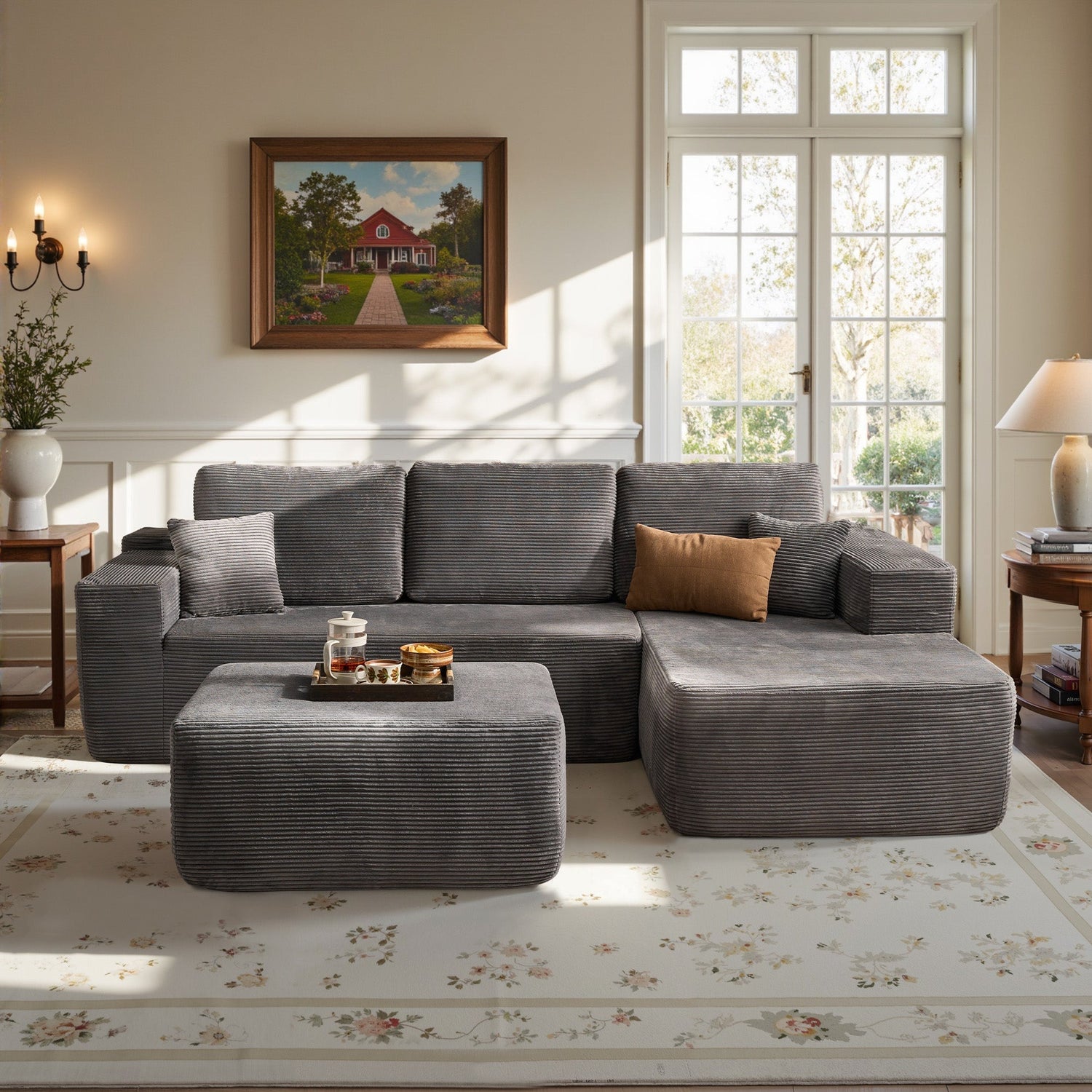
Buying new indoor furniture is exciting, but few things are worse than the sinking feeling when a delivery truck arrives, and your new purchase doesn't fit. A modular sofa offers incredible flexibility for different room shapes, but that flexibility requires careful planning to ensure it works in your home. These simple, non-technical steps help you order with confidence. You can avoid blocking your walkways or crowding your living area.

The Key Takeaways for Success
For a good fit, you need to do four different checks, not just one quick tape measure reading.
- Room Dimensions: You need the full length and width of the room, not just the corner where the sofa goes.
- Delivery Path: Knowing the sofa fits in the room is useless if it cannot fit through the front door or navigate the hallway.
- Floor Layout: The available floor space dictates the shape and number of modules you can actually accommodate.
- Clearance Zones: Leaving enough room to walk around the furniture is just as important as the furniture size itself.
Checking these four factors against the product details works as the best measuring strategy.
Assessing Your Room Dimensions Correctly
Getting an accurate picture of your total space is the foundation of good design.
Full Length and Width
Start by measuring the entire room from wall to wall. Record these numbers clearly on a notepad or a simple sketch. Even if you only plan to use one corner, knowing the total square footage helps you understand how the sofa will impact the overall balance of the room.
Irregular Features and Fixed Elements
Every home has quirks that can ruin a layout if ignored. Note the location of columns, built-in shelving, alcoves, and radiators. These fixed elements will dictate where a sofa can back up against a wall. Mark the exact location of electrical outlets, television connections, and HVAC vents so you do not accidentally block them.
Vertical Space
Ceiling height is often overlooked during space planning for modular sofa setups. If you plan to place your furniture against a window, measure the distance from the floor to the windowsill to ensure the sofa back does not block the view or natural light. High ceilings can handle bulkier furniture, while lower ceilings usually benefit from low-profile designs.
Taking the time to map out these architectural details ensures that your new furniture feels like it was made for the room.

Measuring the Specific Sofa Zone
Once you understand the room, zoom in on the specific area where you want the seating to go. This helps you determine the maximum footprint available for your new layout.
Defining the Boundaries
Identify exactly where the sofa will sit and measure that specific footprint. Determine the maximum length and depth you can allow without encroaching on other zones. For example, if the sofa is floating in the center of the room, measure the space behind it to ensure it doesn't cut off the flow to the dining area or kitchen.
Traffic Patterns
Think about how people move through the room daily. You need to preserve natural pathways from the entrance to the seating area and from the seating area to other rooms. A good rule of thumb is to keep main thoroughfares clear of obstructions so guests don't have to shimmy sideways to get past the armrest.
Visualizing the Footprint
Use painter's tape to outline the potential shape on the floor. This physical representation is often more effective than a drawing because it allows you to physically walk around the space. If you find yourself bumping into the imaginary tape lines, you know you need to scale down your configuration.
Establishing these boundaries early prevents you from buying too many modules for the space you have available.
Checking Delivery Paths and Doorways
Getting the furniture inside is the most stressful part of the process if you haven't prepared. You must measure every choke point from the delivery truck to the living room.
- Doorway Width and Height: Measure the clear opening of your front door and any interior doors. Be sure to account for the door itself if it doesn't swing open 180 degrees.
- Hallway Turns: Tight corners in hallways are often the biggest obstacle. Ensure there is enough clearance for a long box to pivot.
- Vertical Clearance: Check stairwells and elevator ceilings. Low-hanging light fixtures or bulkheads in stairwells can trap tall boxes.
- Modular Benefits: Because a modular sofa comes in separate pieces, it is generally easier to move through tight spaces than a standard couch, but checking is still mandatory.
Doing this "measure for sofa" logic check ensures your delivery day ends with relaxation rather than a returned order.
Understanding Modular Sofa Dimensions
Different modules have vastly different footprints, and knowing these standard sizes helps you build your configuration.
| Module Type | Typical Width | Typical Depth | Notes |
| Armless Chair | 28–35 inches | 35–40 inches | The core building block, the narrowest piece. |
| Corner Piece | 35–40 inches | 35–40 inches | Square shape; connects two sides. |
| Chaise Lounge | 30–40 inches | 55–65 inches | Extends deep into the room; requires extra legroom. |
| Ottoman | 28–35 inches | 28–35 inches | Floating piece; check storage options. |
| Arm Module | 6–10 inches | 35–40 inches | Adds total length to the configuration. |
Knowing standard modular sizes helps you calculate the fit ahead of time. A corner piece, plus an armless chair, plus an arm module, adds up to your total length. Always check the specific product page, because sizes differ between large and compact collections. Understanding these components is key to grasping what makes a modular sofa the most multifunctional furniture choice for modern homes.
Planning Your Perfect Layout
Now that you have your numbers, you can start arranging the pieces to fit your lifestyle. This is where the versatility of modular design really shines.
Sketching the Plan
Draw a simple floor plan using your measurements. You can use graph paper or a digital app, but the goal is to place modules into your room outline to see what fits. Try different shapes, such as an L-shape for corners or a U-shape for large family rooms, to see which uses the space most efficiently. For more inspiration, explore these creative ways to arrange your modular cloud couch sectional to find a style that suits you.
Aligning with Focal Points
Position the primary seating modules to face your main focal point, usually the TV or a fireplace. Ideally, the sofa should be centered relative to this focal point. If you have a large window with a view, consider an open-ended chaise that allows you to look outside without a heavy armrest blocking the sightline.
Layouts for Different Room Sizes
In a smaller room, a simple straight configuration or a small L-shape with a reversible ottoman works best to conserve floor space. In a larger open-concept area, a U-shaped setup can help define the "living room" zone separate from the dining area. The layout should anchor the room without dominating it entirely.
Testing these configurations on paper first saves you the physical effort of moving heavy furniture later.
Establishing Comfort Zones and Clearance Requirements
A beautiful room also needs to be a comfortable one. You must leave enough empty space around your furniture to allow for movement and function.
- Coffee Table Gap: Leave 16 to 18 inches between the edge of the sofa and your coffee table. This is close enough to set down a drink but far enough to walk through.
- Window Breathing Room: Pull the sofa at least 3 to 5 inches away from windows or walls to allow curtains to hang freely and to prevent damage to the wall paint.
- Chaise Clearance: If your layout includes a chaise, ensure the end of it doesn't block the path to the bathroom or kitchen.
- Side Table Space: Don't forget to account for 12 to 24 inches on either side if you plan to add end tables or floor lamps.
Respecting these negative spaces makes the room feel airy and welcoming rather than cluttered and stuffed.
Checking Scale and Visual Balance
Numbers tell part of the story, but visual weight tells the rest. You want your sofa to feel like a natural part of the room's architecture.
The Wall Ratio
A good design guideline is that your sofa should occupy about 60% to 70% of the wall length behind it. If it is too short, the room looks empty; if it is too long, the room looks crowded. This balance keeps the proportions pleasing to the eye and prevents the furniture from feeling like an intruder in the space.
Vertical Balance
Look at the height of the sofa back compared to your ceilings and other furniture. Low-profile modular sofas look sleek in modern apartments but might look lost in a room with cathedral ceilings. Conversely, a high-back sofa can shrink a room with standard 8-foot ceilings.
Relationship to Other Furniture
Consider how the bulk of the sofa compares to your coffee table and TV stand. A chunky, deep modular sectional needs a substantial coffee table to match its visual weight. Pairing it with a tiny, delicate glass table can make the design feel disjointed and unbalanced.
Achieving the right scale ensures your living room looks professionally designed.
Comparing Your Measurements with Product Specs
The final check involves verifying your onsite measurements against the manufacturer's official data.
- Official Dimensions: Download the detailed spec sheet from the retailer. Do not rely on summary bullet points; look for the line diagrams.
- Connection Mechanisms: Check if the connectors add any width to the total dimensions or if they are hidden underneath.
- Adjustability: Confirm if headrests or reclining features require extra clearance behind the sofa to operate fully.
- Tolerance Buffers: Always subtract 2 or 3 inches from your available space as a safety buffer. Walls are rarely perfectly straight, and padding can vary slightly.
This step confirms that the sofa fits safely and functions exactly as intended in your specific environment.
Avoiding Common Measurement Mistakes
Even with a plan, it is easy to miss small details that cause big problems. Being aware of these pitfalls helps you avoid them.
- Ignoring the Diagonal: Many people forget to measure the diagonal depth of the sofa box, which is crucial for tilting it around tight door frames.
- Forgetting Chaise Length: A chaise extends much further than a standard seat. Make sure it doesn't hit your TV stand or fireplace hearth.
- Overlooking Traffic Flow: Placing a sofa where it blocks the natural path through the room is a major functional error.
- Assuming Uniformity: Not all modules in a collection are the same width. A corner piece might be wider than an armless insert.
- Neglecting Leg Height: If you have floor vents, ensure the sofa legs are high enough to clear them or positioned so they don't sit directly on top.
Catching these errors on paper is free; catching them on delivery day is expensive.
FAQs
Q1: How much walking space should I leave around a modular sofa?
For main walkways where traffic is frequent, you should maintain a clearance of 30 to 48 inches (approximately 75 to 120 cm). This width allows two people to pass comfortably or one person to carry a tray of drinks without bumping into furniture.
Q2: How do I know if a modular sofa will fit through my doorway?
You must measure the height and width of the door opening and compare it to the box dimensions. Crucially, check the turning radius inside the hallway. If the entry is tight, purchasing a modular design where pieces arrive in smaller, separate boxes often solves the issue.
Q3: Is a modular sofa suitable for small living rooms?
Yes, these sofas are excellent for compact areas because you can buy only the specific pieces you need. A small two-seat configuration or a corner unit can maximize seating without wasting space. The key is to choose a style with a slim profile and avoid deep-seat versions.
Q4: How far should a modular sofa be from the TV?
The ideal viewing distance correlates to your screen size, but a general range is between 6 and 10 feet (roughly 2 to 3 meters). This distance prevents eye strain and ensures the TV does not dominate the entire visual field from the seating area.
Measure Your Space and Buy with Confidence
Measuring correctly takes a little time, but it guarantees a stress-free experience. Grab your tape measure, map out your room, and enjoy the process of creating a home that fits your life perfectly.

OVIOS 104" L-Shape Modular Couch with Chaise,Cloud Velvet Fabric,No Assembly Required


Leave a comment
This site is protected by hCaptcha and the hCaptcha Privacy Policy and Terms of Service apply.