



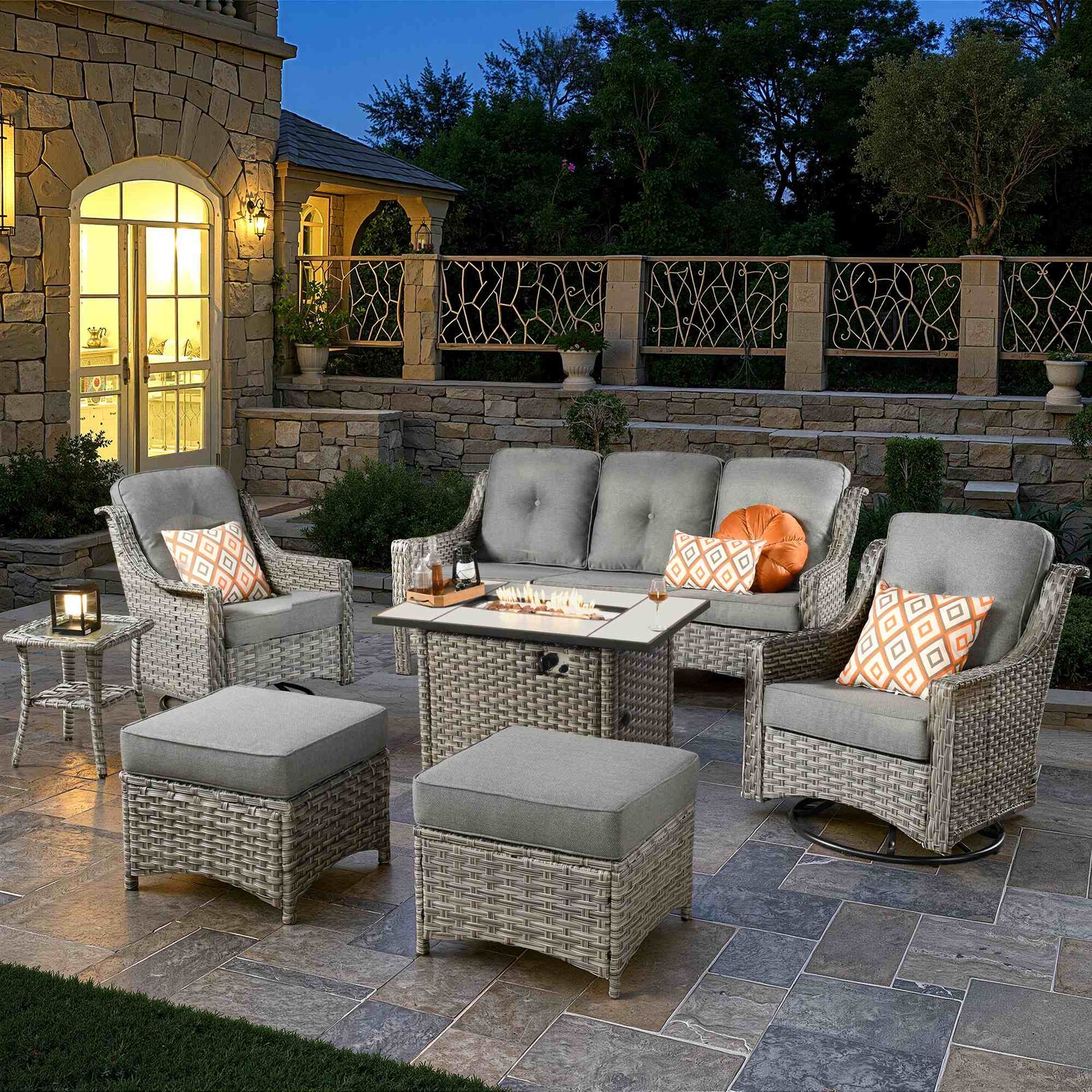
The Ultimate Guide to Upgrading Frames with Replacement Patio Cushions
Replacing only the cushions on your existing patio frame is often a strategic way to refresh your outdoor space without the expense and environmental waste of purchasing an entire new set. For many modern homeowners, this approach offers potential savings of up to 60-80% compared to full set replacement, provided you measure accurately and select weather-resistant materials designed for high-frequency outdoor use.
Related Resources
This guide explores the replacement economy, exact measurement techniques, material selection criteria, cost comparisons, and practical checklists to help you upgrade confidently while avoiding common pitfalls that lead to returns or premature wear.

Why Replacement Cushions Make Financial and Environmental Sense
A common pattern observed in outdoor furniture longevity is that fabric and foam components often reach their end-of-life long before the structural frame. Frames constructed from rust-resistant steel or all-weather wicker can frequently last 8-12 years or more with basic maintenance. In contrast, cushions typically show signs of fading, flattening, or mildew within 3-5 years, depending on local UV exposure and humidity levels. Replacing just the cushions allows you to retain a structurally sound frame and reduces the landfill contribution of discarding functional furniture.
According to sustainability insights from furniture experts, extending the useful life of outdoor furniture through targeted replacements lowers the total cost of ownership over time. Brands that maintain dedicated replacement programs or standardized cushion dimensions create a more sustainable "closed-loop" system for homeowners.
OVIOS outdoor furniture collections emphasize removable, zippered cushions that are designed for easy swapping. Their Outdoor Accessory collection provides waterproof, olefin-fabric options that are compatible with many existing patio configurations.
Common Myths About Patio Cushion Replacement
Many shoppers assume replacement cushions are a universal solution or that they are always significantly cheaper than a new set. In practice, compatibility is often collection-specific, and total costs—including shipping and potential returns—can impact the overall value proposition.
A widespread misconception is that "all outdoor cushions are universal fit." In reality, even a half-inch discrepancy in width, depth, or thickness can lead to sliding, poor aesthetics, or physical discomfort. Another myth is that any fabric labeled "outdoor" will perform identically; performance varies significantly based on material construction (e.g., polyester vs. solution-dyed acrylic) and maintenance routines.
Common consumer frustrations often involve cushions that slide constantly or develop mold in damp environments. As highlighted in manufacturer guidance, these issues frequently stem from skipping precise measurements or underestimating the need for non-slip accessories and proper drying protocols.
Consider alternatives to replacement cushions if:
- You cannot measure your existing cushions or frame with a rigid tape measure to within ½ inch accuracy.
- Your patio environment is consistently damp, making quick-drying foam a mandatory (and potentially more expensive) requirement.
- The frame design (such as deeply curved or unusually angled seating) makes standard rectangular cushions likely to shift without specialized ties.
- The total cost of high-quality replacements, including shipping, exceeds 40-50% of the cost of a comparable new set.
In these scenarios, investing in a complete new modular set with a proven replacement ecosystem may offer better long-term value.
How to Measure for Exact-Fit Replacement Cushions
Accurate measurement is the most critical step in the replacement process. Always measure the existing cushions if they still hold their shape; if they are missing or badly deformed, measure the frame's seating area directly. Use a rigid metal tape measure rather than a flexible cloth one to ensure precision.
For seat cushions, measure the width (left to right across the widest point) and depth (front to back), taking measurements from corner to corner. For back cushions, record the height and width. Note the thickness separately—most OVIOS sets utilize approximately 3.5-inch thick cushions to balance comfort with structural support.
As noted in professional patio furniture guides, you should measure across the seat corner to corner and compare your findings directly against the manufacturer's size chart. Note any requirements for tie-downs, straps, or hook-and-loop attachments, as these features are essential for preventing movement on the frame.

For deeper guidance on selecting the right thickness and fill, see our companion article on what to look for in outdoor cushions.
Choosing Weather-Resistant Materials That Last
Outdoor performance fabrics, such as solution-dyed olefin or acrylic, are generally preferred for their resistance to water, stains, fading, and UV damage. Official fabric guidance emphasizes these properties, though real-world longevity remains dependent on local climate conditions and care habits.
Look for cushions featuring quick-dry foam or high-density fills wrapped in waterproof liners. Removable, zippered covers are highly recommended for easier cleaning and seasonal storage. Avoid low-cost fiberfill in uncovered areas, as it tends to retain moisture and lose shape quickly.
If mold or mildew becomes a concern, follow established protocols such as using a mild bleach-and-soap solution, followed by thorough rinsing and air drying, as detailed in Sunbrella upholstery care instructions. Always store cushions in a dry location during the off-season or utilize high-quality waterproof covers.
If your current cushions tend to slide, explore solutions in our guide on how to stop cushions sliding on outdoor furniture.
Replacement Cushions vs. Buying a New Patio Set: Cost Comparison
The replacement strategy is most effective when the furniture frame remains in good condition. While a new 4- to 6-piece patio set typically ranges from $800 to $1,500, a full set of quality replacement cushions often falls between $150 and $450, depending on the fabric grade and quantity.
Over a five-year period, replacing cushions every 3-4 years frequently results in lower cumulative costs than repeated full-set purchases, while also reducing the environmental impact of furniture disposal.
Five-Year Cumulative Cost of Ownership: Replacement Cushions vs. New Patio Set
Illustrative cumulative-cost comparison for a 5-year ownership window.
View chart data
| Category | Replacement cushions — low-cost scenario | Replacement cushions — high-cost scenario | New patio set — low-cost scenario | New patio set — high-cost scenario |
|---|---|---|---|---|
| Year 0 | 150.0 | 300.0 | 800.0 | 1500.0 |
| Year 1 | 150.0 | 300.0 | 800.0 | 1500.0 |
| Year 2 | 150.0 | 300.0 | 800.0 | 1500.0 |
| Year 3 | 300.0 | 600.0 | 800.0 | 1500.0 |
| Year 4 | 300.0 | 600.0 | 800.0 | 1500.0 |
| Year 5 | 450.0 | 900.0 | 800.0 | 1500.0 |
Modeled for comparison based on typical market price ranges and a 3-5 year cushion lifespan. Replacement cushions are modeled at $150-$300 per replacement cycle every 3-4 years; a new patio set is modeled at $800-$1500 with a 5-7 year useful-life cycle. Values are illustrative cumulative ownership costs intended to show relative break-even behavior, not a quoted vendor price list.
This illustrative model demonstrates how replacement cushions can stay well below the cost of a new set within a typical ownership window, aligning with lifecycle economy analysis that compares repair versus full replacement.
Explore durable options like the OVIOS 4-Piece Outdoor Patio Set with Swivel Chairs if your current frame requires an update alongside new cushions.
Step-by-Step Checklist: Upgrading Your Existing Patio Furniture
Follow this sequence to ensure a successful refresh:
- Inspect the Frame: Check for rust, wicker breakage, or structural instability. If the frame is compromised, a full replacement is safer.
- Measure Twice: Remove old cushions and measure width, depth, and thickness using a rigid tape.
- Check Attachments: Confirm if the new cushions include ties or non-slip backing compatible with your frame.
- Select Fabric: Prioritize performance fabrics (like olefin) with a thickness of at least 3.5 inches for optimal comfort.
- Verify Total Cost: Factor in shipping and potential return fees before finalizing the purchase.
- Choose Compatible Lines: Order from collections with proven compatibility, such as OVIOS 3-4 seat or 8-10 seat lines.
- Maintenance: Install the cushions and clean them regularly according to the manufacturer's fabric instructions.
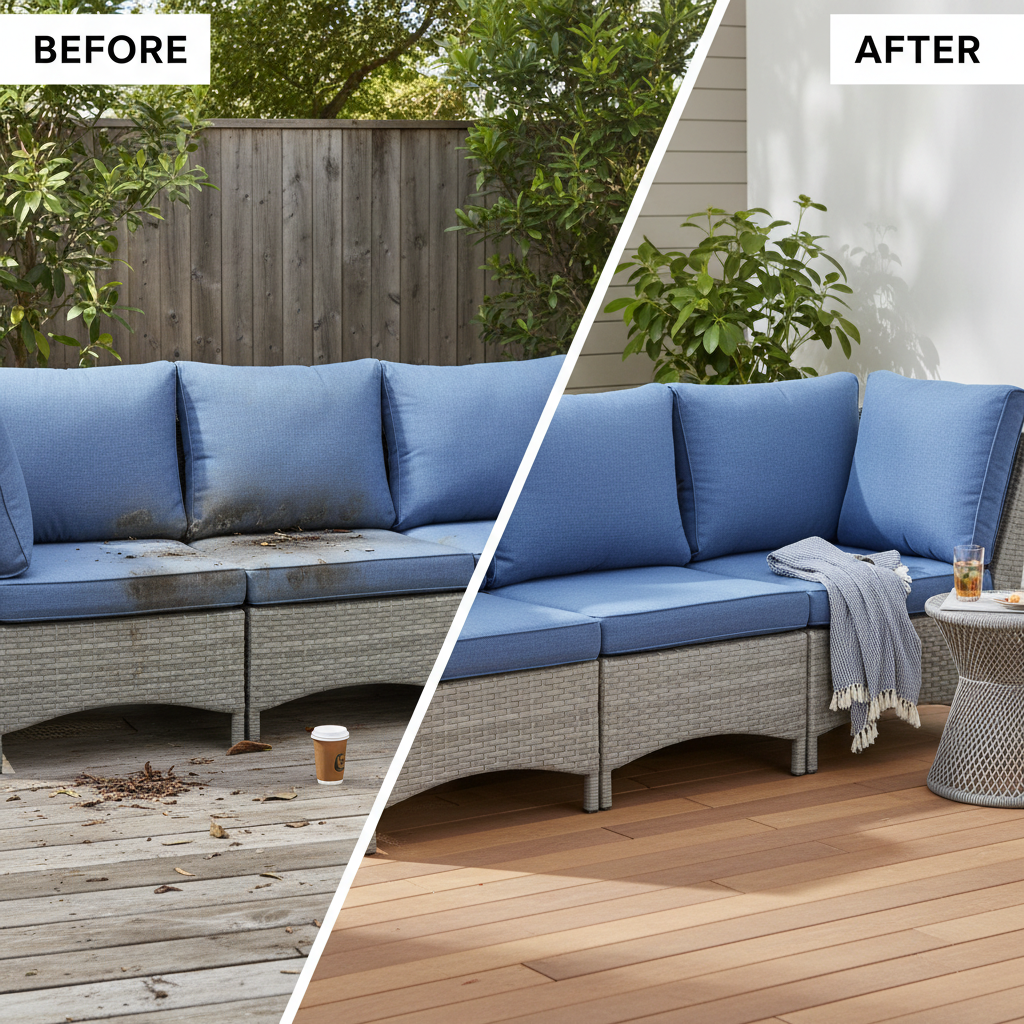
For more on refreshing faded pieces, read our detailed tutorial on how to refresh faded patio furniture with replacement cushions.
Additional insights on durability are available in stop buying disposable patio sets and the secret to long-lasting patio furniture.
Creating a Closed-Loop Cushion Ecosystem for the Future
The most efficient long-term approach is selecting furniture from brands that maintain a consistent replacement cushion ecosystem. This involves standardized sizing and readily available matching covers across different product generations. Such systems reduce the guesswork for future refreshes and support modular upgrades.
OVIOS designs many of its wicker conversation sets and sectional collections around compatible 3.5-inch spill-resistant cushions. Pairing these with their fire pit sets creates a versatile outdoor living space that can be updated incrementally.
By investing in a standardized ecosystem, you protect against the "disposable furniture" cycle and gain the flexibility to update your aesthetic as trends evolve.
Final Decision Framework
Opt for replacement patio cushions when your frames are structurally sound, you can achieve precise measurements, and the total spend remains significantly below the cost of a new set. Prioritize performance fabrics and non-slip features for the best results.
While this strategy saves money and reduces waste, a complete new modular set may be the better choice if your current frames suffer from structural damage or if the styling no longer meets your functional needs.
Note: This article discusses comfort and setup considerations only and does not constitute medical advice. For persistent discomfort related to seating, consult a qualified professional.
Ready to refresh your patio? Browse the full range of replacement cushions or explore complete swivel chair collections that pair beautifully with existing frames.
References
- How to Choose and Measure Patio Cushions for Your Patio Furniture
- How to Measure Outdoor Patio Chairs and Sofa Cushions
- Fabric for Outdoor Cushions
- How To Clean Sunbrella Upholstery Fabric
- Sustainability


Leave a comment
This site is protected by hCaptcha and the hCaptcha Privacy Policy and Terms of Service apply.