



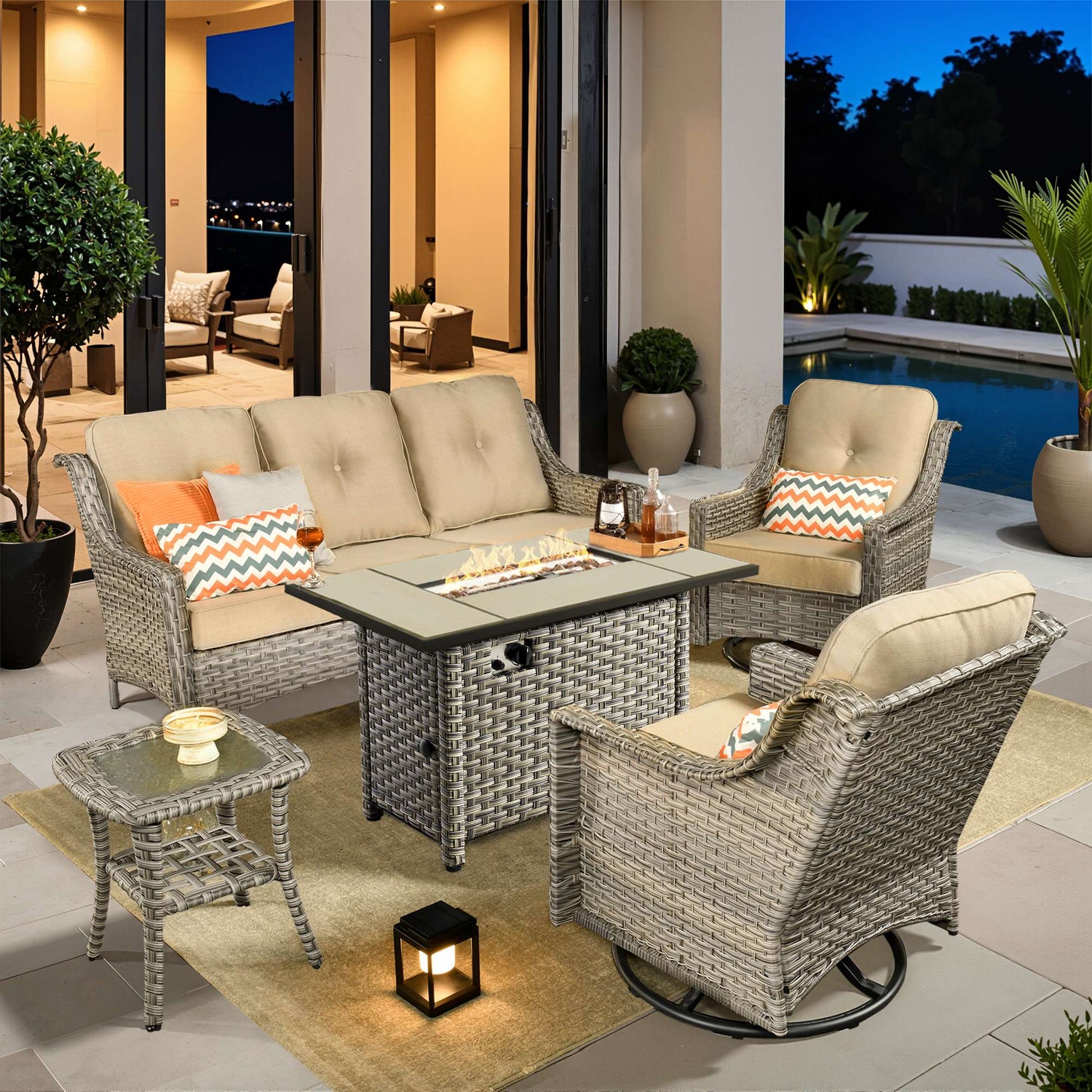
Why Ergonomic High-Back Seating is Essential for Outdoor Living Rooms
When designing an outdoor living room for a compact apartment balcony or a small patio, the choice between high-back and low-back seating is often the difference between a space you use for ten minutes and one where you spend the entire afternoon. High-back modular seating is increasingly favored for these small footprints because it prioritizes vertical support, allowing for deep relaxation without requiring the sprawling footprint of a traditional lounge chair.

For urban dwellers, the balcony is no longer just a place to dry clothes; it is a functional extension of the home. High-back designs provide continuous support from the lumbar region through the upper thoracic spine, which reduces the workload on your core and shoulder muscles. As noted by ergonomics resources, a supportive backrest is essential for offloading the weight of the upper body during prolonged sitting (Improving Posture - Reed College).
The Ergonomics of Outdoor Lounging
Ergonomic outdoor furniture is designed to mimic the natural curvature of the spine. While low-back "club" chairs are popular for their modern, sleek profile, they often lack the height necessary to support the mid-to-upper back.
Key ergonomic features to look for include:
- Lumbar Curvature: A slight inward curve at the base of the backrest to support the lower spine.
- Backrest Height: For true "living room" comfort, a backrest should ideally reach the shoulder blades or higher.
- Seat Pitch: A slight rearward tilt (usually 10-15 degrees) helps distribute body weight more evenly across the seat and backrest.
Official ergonomics programs emphasize that back support is a primary factor in preventing fatigue during extended periods of sitting (Ergonomics - Purdue University). In an outdoor setting, where surfaces are often firmer than indoor sofas, this support becomes even more critical for comfort (Office Ergonomics - UNC EHS).
Why High-Back Seating Wins for "Long-Form" Lounging
The advantage of high-back modular seating is most apparent during "long-form" activities like reading a book, working on a laptop, or hosting a long conversation.
A common pattern observed in outdoor furniture use is the "20-minute slump." In low-back chairs, users often begin to slouch or shift positions frequently after about 20 minutes because the upper back lacks a resting point. High-back designs mitigate this by providing a consistent surface for the spine to lean against, which may reduce the effort your muscles exert to keep you upright (Ergonomics Program - Montana State University).
For small spaces, modular high-back pieces offer a "nesting" effect. The taller backrests create a sense of enclosure and privacy, which is particularly valuable on balconies that may be overlooked by neighbors.
High-Back vs. Low-Back: A Practical Comparison
Choosing between these two styles involves balancing aesthetic preferences with how you actually intend to use the space.
| Feature | High-Back Modular | Low-Back / Bistro |
|---|---|---|
| Primary Benefit | Full-spine support & privacy | Visual openness & portability |
| Best For | Reading, napping, long visits | Quick coffee, small balconies |
| Space Impact | Higher visual "weight" | Makes small areas feel larger |
| Comfort Duration | 1+ hours | 15–30 minutes |
Heuristic Radar Chart: High-Back vs. Low-Back/Modular Fit
Heuristic Fit for Small Outdoor Seating Scenarios
Illustrative comfort and fit comparison for small balconies/patios; use as a decision aid, not a performance metric.
View chart data
| Series | Long Lounging Support | Space Efficiency | Layout Flexibility | Wind / Storage Practicality | Overall Small-Space Fit |
|---|---|---|---|---|---|
| High-back | 5 | 2 | 2 | 2 | 4 |
| Low-back / modular | 2 | 5 | 5 | 4 | 3 |
Illustrative heuristic scores synthesized from the provided scenario matrix and cited module directions. High-back is favored for longer lounging/reading and back support; low-back or modular is favored for quick use, frequent rearrangement, tighter spaces, and wind/storage practicality. Threshold note: sessions over 20 minutes lean toward high-back; brief use leans toward low-back. Scores are relative only, not measured data.
This chart illustrates the trade-offs based on common user experience. While high-back designs lead in comfort and support, they require more careful placement to avoid making a small patio feel "crowded."

Space Planning and Safety for Small Patios
Before investing in high-back modular furniture, consider these three practical boundaries:
- The "Sail" Effect: High-back furniture has a larger surface area, which can catch the wind like a sail. On high-rise balconies, this is a safety concern. Ensure the furniture is heavy (like powder-coated steel or solid teak) or can be weighted down. The National Weather Service notes that unsecured patio items can become hazards during high-wind events (High Wind Safety Rules).
- Visual Depth: High-back chairs often have a slightly deeper footprint (typically 32–36 inches) to maintain stability. Measure your balcony width to ensure you still have at least 18–24 inches of walking clearance in front of the seating.
- Modular Flexibility: In tight quarters, modularity is your best friend. Look for sets that allow you to separate the "corner" and "armless" sections. This allows you to wrap the seating around a corner, maximizing the "dead space" of the balcony.
Shopping Checklist: Finding the Right Fit
When evaluating premium outdoor seating, use this checklist to ensure you are getting both ergonomic value and durability:
- Cushion Density: High-back chairs require supportive cushions. Press down on the foam; it should resist quickly rather than bottoming out. Look for "high-resiliency" (HR) foam.
- Fabric Grade: Since high-back chairs have more surface area exposed to the sun, UV-resistant fabrics (like Sunbrella or solution-dyed polyester) are essential to prevent fading.
- Frame Integrity: Check for rust-resistant materials like aluminum or treated synthetic wicker (PE Rattan).
- Assembly Style: For modular pieces, ensure the "connectors" or clips are included to prevent the sections from sliding apart on smooth balcony tiles.
When to Choose Low-Back Instead
High-back seating is not a universal solution. You might prefer a low-back or bistro-style setup if:
- The View is Low: If your balcony railing is solid and you want to see over it while seated, a standard high-back chair might place your eye level too low.
- Extreme Wind: If you live in a hurricane-prone or high-wind corridor where furniture must be frequently moved or stacked.
- Minimalist Aesthetic: If your goal is to make a 40-square-foot balcony look as large as possible, low-profile furniture keeps the sightlines open.
Conclusion: Investing in Comfort
The premium price of high-back modular seating is usually justified by the complexity of the frame and the volume of high-quality cushioning required. For those looking to turn a small outdoor area into a true "living room," the ergonomic benefits of full-back support far outweigh the space-saving benefits of smaller, less comfortable chairs.
Disclaimer: This article provides general information regarding furniture design and ergonomics. It is not a substitute for professional medical advice. If you have chronic back pain or mobility issues, consult a physical therapist or medical professional before choosing new seating.

Leave a comment
This site is protected by hCaptcha and the hCaptcha Privacy Policy and Terms of Service apply.