



Smokeless vs Propane Fire Pits: Which is Best for Your Patio Setup?
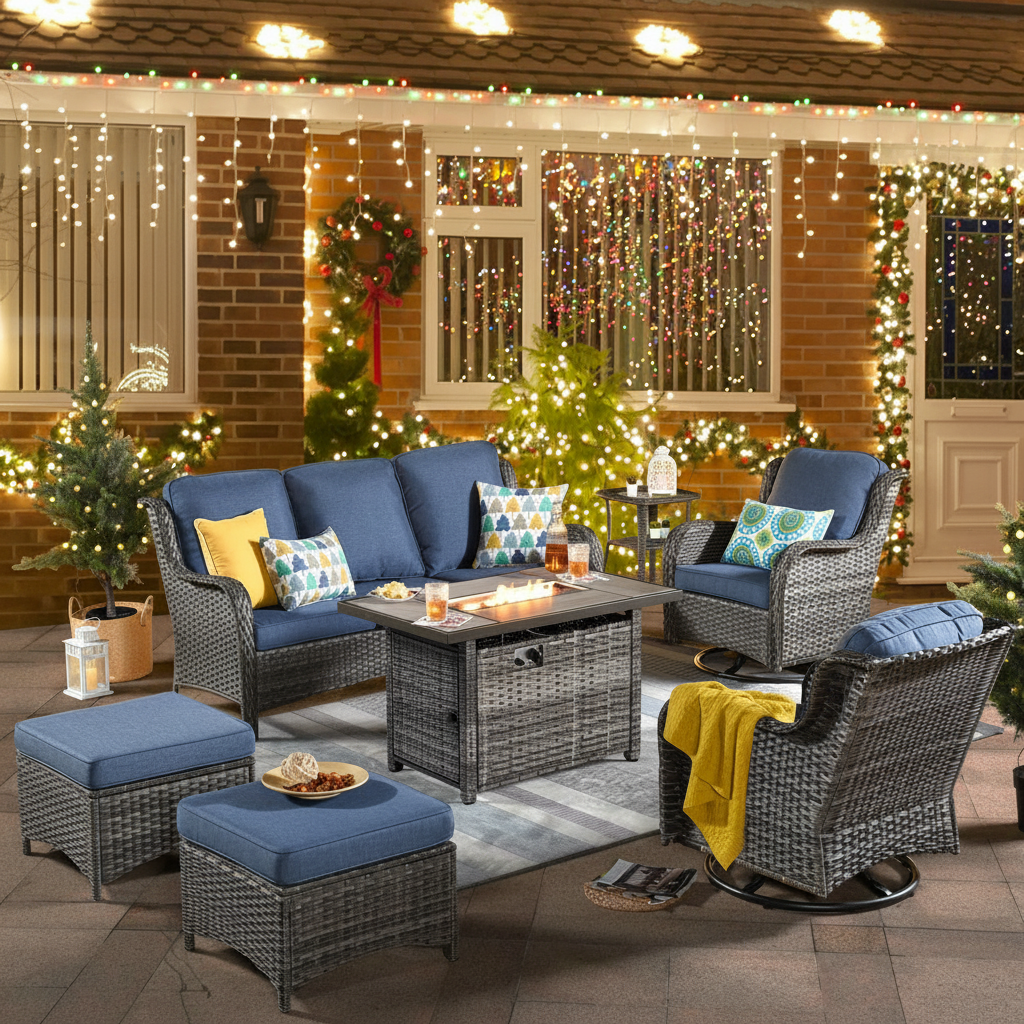
For many modern patio hosts, propane fire pit tables strike a practical balance between instant convenience, reliable warmth, and layout flexibility—especially when paired with heat-sensitive PE wicker conversation sets. While smokeless wood-burning models deliver a traditional campfire ambiance, they typically demand more space and active management. Electric options excel in covered or low-maintenance situations but often provide a more localized heat and a different visual glow. Choosing the right model depends on your specific seating layout, how often you entertain, and your tolerance for post-party cleanup.

How Smokeless, Propane, and Electric Fire Pits Actually Differ
Smokeless fire pits utilize a double-wall design to facilitate "secondary combustion," drawing in air to burn off smoke and particles before they leave the pit. While this significantly reduces visible smoke and ash compared to traditional pits, it is important to note that they are rarely 100% smoke-free. As noted in Wirecutter’s review of the best smokeless fire pits, this mechanism makes them a cleaner alternative for backyards where traditional smoke might bother neighbors.
Propane fire pits, frequently designed as integrated tables, burn clean fuel from a refillable tank. A common industry standard for mid-sized units is approximately 50,000 BTU, which generally provides enough warmth for 4–6 person gatherings without the need to tend logs. Modern models often feature push-button ignition and adjustable flame controls, allowing the unit to function as a coffee table when the burner is covered.
Electric fire pits or heaters produce heat via coils or infrared elements. Because they do not involve direct fuel combustion, they are often characterized as low-maintenance and are frequently the preferred choice for semi-covered patios. However, they typically offer a more static glow and localized heat radius compared to the dancing flames of gas or wood.
In the current market, the real differentiator is integrated technology. Features like reliable electronic ignition and flame-height dials have become standard on mid-range propane tables, reducing the "friction" of outdoor heating that once felt like a chore.
Entertaining: What the Host Actually Gives Up
Experienced hosts often find that the "hidden cost" of a fire feature is the attention it requires. A smokeless wood pit generally needs fresh fuel every 20–30 minutes to maintain its secondary burn, which can pull the host away from the conversation. Propane tables solve this through automation: a single dial controls the heat, allowing the host to stay focused on guests.
Heat radius is another critical factor. A 50,000 BTU propane fire pit table is typically estimated to warm a 4–6 person seating cluster comfortably on cool evenings. This output is often cited as a "goldilocks" zone—providing enough radiant heat for a standard conversation set without requiring oversized tanks. Smokeless wood models can produce higher peak heat at close range, but that heat fluctuates as the wood burns down. Electric units, by contrast, may struggle to heat an entire group evenly, particularly in breezy conditions.
If you prioritize a "set it and forget it" experience, a propane fire pit table with integrated ignition is usually the better social fit. If you enjoy the ritual of tending a fire and the specific scent of wood, the smokeless pit remains the top choice despite the extra effort.
Safety and Placement: Mapping Fire Pit Types to Your Patio Layout
Safety clearances vary significantly by fuel type and local regulations. As a general rule of thumb, wood-burning smokeless pits often require at least a 10-foot clearance from combustible materials, including fences and overhangs. Certified propane fire pit tables can often be placed closer to seating—sometimes within 3–4 feet—provided they carry ANSI Z21.97 or CSA 2.41 certification and are used in well-ventilated areas.
This NFIC guide to ANSI Z21.97 standards emphasizes that outdoor gas appliances must meet specific safety benchmarks for clearance and construction. You should always verify the exact clearance requirements listed in your specific unit’s manual, as these supersede general heuristics.
For those with PE wicker furniture, heat management is vital. PE wicker is more heat-sensitive than metal or teak; direct radiant heat can cause softening or discoloration over time. We recommend positioning the fire feature to avoid heat concentration on wicker arms and using heat-resistant mats if the unit sits on a composite deck.
Electric models are often the safest choice for covered patios because they lack an open flame. However, they still require proper electrical protection and should never be used in fully enclosed spaces without ensuring the manufacturer’s ventilation guidelines are met.

Hidden Chores that Impact Spontaneity
Cleanup timing is a common surprise for new smokeless pit owners. After the fire goes out, the unit and ash typically need to cool for an estimated 4–8 hours before they can be safely moved or cleaned. This delay means the patio often cannot be "reset" to a clean state immediately after a party.
Propane users deal with "tank anxiety." Running out of fuel mid-evening is a common frustration, leading many owners to keep a spare 20lb tank on hand. While some modern models include fuel gauges, the logistics of refilling tanks remain a recurring task that electric setups avoid.
Electric fire features are the winners for maintenance, requiring little more than occasional dusting. However, the trade-off is the "ambiance gap." The glow is steady rather than flickering, which some hosts find less engaging for a central gathering point.
These trade-offs explain why propane fire pit tables remain the most popular choice for frequent entertainers: the convenience of an instant "off" switch usually outweighs the effort of occasional tank swaps.
Fire Pit Trade-offs for Patio Hosts
A scenario-oriented comparison of smokeless, propane, and electric fire pits for patio entertaining, using conservative tiers rather than exact performance scores.
View chart data
| Category | Smokeless / wood | Propane | Electric |
|---|---|---|---|
| Heat output | 2.0 | 3.0 | 1.0 |
| Maintenance | 1.0 | 2.0 | 3.0 |
| Clearance / safety | 1.0 | 3.0 | 3.0 |
| Convenience | 2.0 | 3.0 | 3.0 |
Bounded tiers synthesized from planner thresholds and research notes: propane is commonly framed around about 50,000 BTU with 3-4 ft practical clearance for certified units, smokeless/wood needs much more space and cool-down time, and electric is easiest on covered patios with lower heat and ambiance.
The chart above uses relative tiers (Low = 1, Medium = 2, High = 3) based on typical manufacturer specifications and common patio constraints. Higher scores indicate better performance for social hosting. Propane consistently ranks well for heat, safety clearance, and convenience when CSA-certified units are used with proper ventilation.
Choosing the Right Fire Feature for Your Seating Layout
Start by measuring your patio and comparing it to the clearance requirements of your preferred fuel type. A 10-foot safety buffer is a safe starting point for smokeless wood pits in open yards, while propane tables allow for tighter integration with furniture. Always leave extra breathing room around PE wicker to protect the material.
Next, match the shape to your furniture. Round fire pits encourage circular conversation but require more "walk-around" space. Square or rectangular fire pit tables integrate seamlessly with sectionals or modular sofas, often doubling as a serving surface. Our guide on sizing a fire pit table with an outdoor sectional provides specific layout math to help avoid awkward gaps.
Finally, consider your hosting frequency. If you value spontaneous, short gatherings and want to avoid post-party chores, a CSA-certified propane fire pit table paired with swivel rockers or a 5–7 seat conversation set is usually the most efficient choice. For covered patios where open flames are restricted, electric is the practical default.
Pre-Purchase Checklist:
- Verify ANSI Z21.97 / CSA certification for propane units.
- Measure the distance from the burner to the nearest combustible surface.
- Determine if you prefer the ritual of wood or the convenience of a dial.
- Plan for fuel storage (wood piles vs. propane tanks vs. electrical outlets).
Frequently Asked Questions
Can a smokeless fire pit be used on a covered patio? Generally, no. Smokeless wood-burning pits produce open flames and significant heat. They are typically not recommended for covered or semi-enclosed spaces unless the manufacturer provides specific approval and ventilation requirements are met.
How long does a propane tank last in a fire pit table? A standard 20-pound propane tank typically lasts between 4 and 8 hours on a 50,000 BTU setting. Actual runtime varies based on the flame height, wind conditions, and outside temperature.
Do propane fire pits produce carbon monoxide? Yes, all combustion processes produce some carbon monoxide. Certified propane fire pit tables are safe for outdoor use when there is adequate ventilation. They should never be used indoors or in fully enclosed structures.
Is PE wicker safe near a fire pit? PE wicker is heat-sensitive. You should maintain at least the manufacturer’s recommended clearance and monitor the furniture for signs of softening. Using a heat-resistant barrier or increasing the distance can help preserve the material.
Which fire pit type is easiest to maintain? Electric models require the least maintenance. Propane tables require periodic tank refills and burner cleaning. Smokeless wood pits require the most effort due to ash disposal and the need for the unit to cool completely before handling.
What size fire pit table works best with a 6–8 person sectional? A 42- to 50-inch rectangular or square fire pit table is usually a good match for larger sectionals, providing a central focal point that is reachable for all guests. For more details, see our fire pit layout guide.
Are smart ignition features worth the extra cost? For frequent entertainers, push-button ignition and adjustable flame controls significantly improve the hosting experience by reducing the time spent managing the fire, making them a highly recommended upgrade for modern patio setups.

Leave a comment
This site is protected by hCaptcha and the hCaptcha Privacy Policy and Terms of Service apply.