



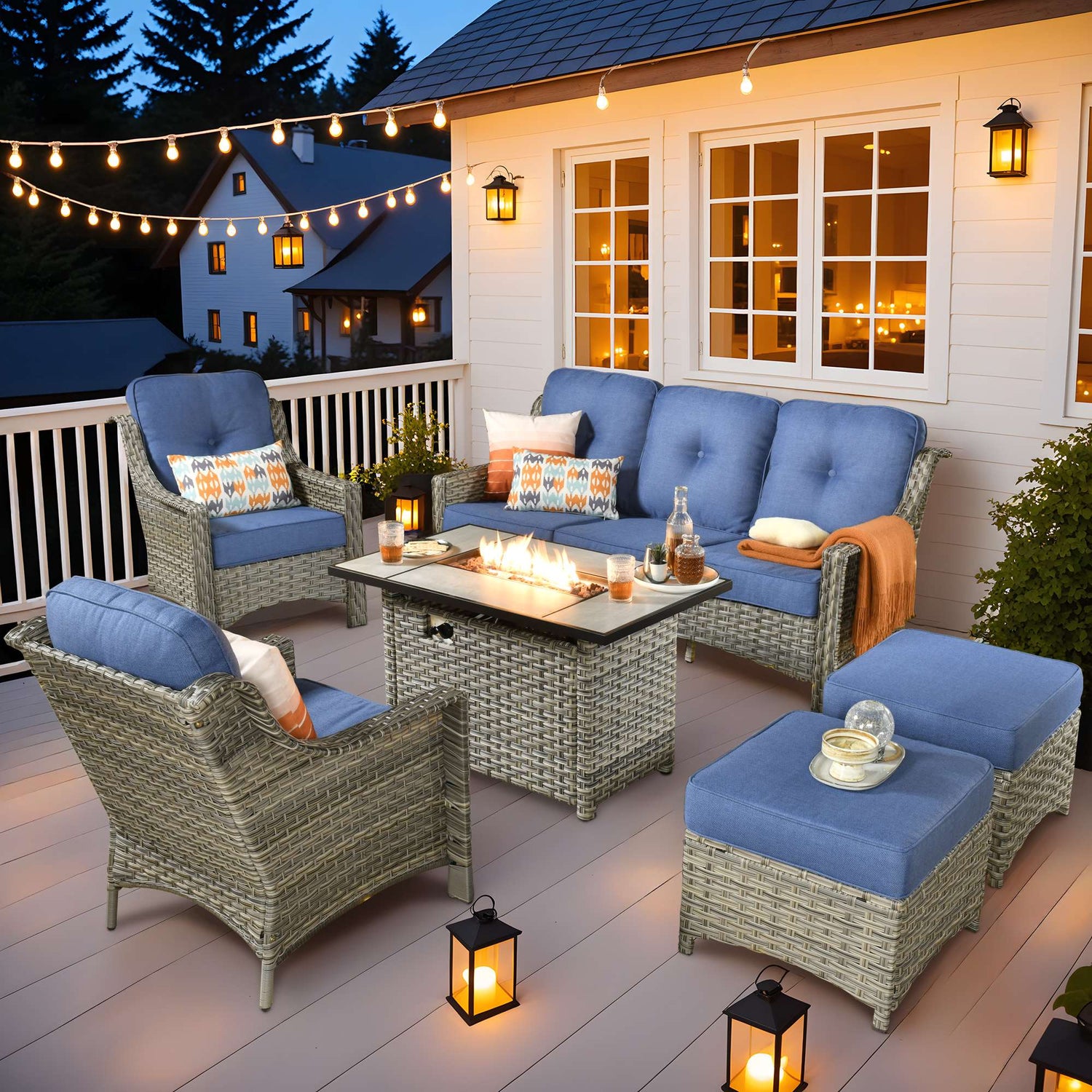
Pairing a fire pit table with an outdoor sectional creates a warm, social centerpiece for your patio, but getting the size, height, and placement right is essential for both comfort and safety. The key is to treat the fire pit table as a focal point that enhances conversation without crowding the seating or violating clearance rules. By measuring your space first and following conservative spacing guidelines, most homeowners can create a balanced layout that feels inviting rather than cramped or risky.
Whether you have an L-shaped sectional or a modular design, the right fire pit table size depends on your patio dimensions, the number of seats, and how you plan to use the area. Following a few practical rules helps avoid common mistakes like blocking traffic flow or placing the feature too close to combustible materials.
Why Proper Sizing and Placement Matter for Sectionals and Fire Pit Tables
An outdoor sectional offers flexible seating for families and guests, but adding a fire pit table changes the dynamics of the space. The table becomes both a heat source and a visual anchor, so its dimensions must complement the sectional's footprint rather than compete with it. Poor sizing can make the area feel unbalanced, reduce usable seating, or create safety concerns.
Official guidance emphasizes keeping fire features at safe distances. As the National Fire Protection Association explains, fire pits should be used outdoors only and placed at least 10 feet from anything that can burn. This baseline applies even when integrating furniture, meaning your entire patio layout must accommodate that buffer where required.
Additionally, outdoor appliances need open-air placement. Similar logic from fire safety standards for cooking equipment stresses avoiding enclosed spaces, which reinforces the importance of proper patio ventilation and clearances when designing around a gas fire pit table.
Safety First: Essential Clearances and Placement Rules
Safety forms the foundation of any successful outdoor room. Before considering aesthetics, confirm your layout meets basic requirements. Place the fire pit table on a level, stable surface to prevent tipping or uneven burning. Keep the entire setup in an open area rather than under low overhangs or near walls.
The 10-foot rule from NFPA serves as a conservative starting point for combustible materials. While furniture itself may not always trigger the full distance, err on the side of caution around cushions, umbrellas, or nearby structures. Always review your specific fire pit table's manufacturer instructions, as gas models often include additional guidelines.
For families with children or frequent entertainers, prioritize layouts that prevent accidental contact with the flame area. Leave clear pathways so guests can move freely without squeezing past the fire feature.

How to Measure and Size a Fire Pit Table for Your Sectional
Start by mapping your sectional's footprint. Measure the full length and depth of your L-shaped or modular sofa, then add at least 3 to 4 feet of clearance on all sides for comfortable legroom and circulation. This extra space prevents knees from hitting the table while allowing easy movement.
Typical fire pit tables range from 40 to 60 inches in length. For a standard 5- to 7-seat L-shaped sectional, a 50- to 58-inch rectangular or square table often provides good proportion without overwhelming the area. Round tables can work well in symmetrical setups but may reduce usable surface space for drinks or plates.
Height matching is crucial for comfort. Most outdoor sectionals sit 16 to 20 inches high at the seat. Choose a fire pit table with a surface height around 18 to 24 inches so it functions naturally as a coffee table extension. Too high, and the flames may feel intrusive; too low, and the table loses its serving utility.
Consider your patio's total usable area. In spaces under 200 square feet, a compact 40-inch table paired with a smaller sectional keeps the layout open. Larger patios above 300 square feet can accommodate a 60-inch table as a true centerpiece.
Here is a practical checklist to screen options before buying:
- Can the full layout maintain at least 10 feet from any burnable materials where required?
- Is the patio surface completely level and stable under both the sectional and table?
- Does the arrangement leave at least 3 feet of walkway around the group for easy access?
- Will the table height align with seat height without forcing awkward leg positions?
- After placing the furniture, does the space still feel open rather than crowded?
If your space fails any of these, reconsider the table size or sectional configuration.
Choosing the Right Shape and Style for Cohesive Design
The shape of your fire pit table should complement the sectional's lines. Rectangular tables pair naturally with L-shaped sectionals, creating clean sightlines and efficient surface area for snacks or decor. Square tables suit more symmetrical modular arrangements, while round designs encourage equal conversation but can waste perimeter space against straight sofa edges.
As explored in comparisons of fire features, patio fire tables offer distinct advantages over traditional pits because they double as functional tables while containing the flame safely.
Material and finish should match your sectional for a unified look. Wicker or aluminum sectionals often pair best with stone, concrete, or tiled fire pit tables in neutral tones. This coordination makes the outdoor room feel intentionally designed rather than assembled piecemeal.
Optimal Placement Options for L-Shaped and Modular Sectionals
Placement determines whether your setup becomes a cozy gathering spot or an awkward afterthought. For L-shaped sectionals, two main configurations work well: centering the fire pit table in the open angle of the L, or offsetting it toward the longer side to preserve an entry path.
Centering creates an intimate conversation zone ideal for smaller groups. However, in narrow patios, this can restrict movement. Offsetting the table toward the open side often improves traffic flow while still allowing everyone seated to enjoy the warmth and ambiance.
Avoid placing the fire pit table directly between seating arms or in tight corners, as these spots tend to feel cramped and increase contact risks. Instead, position it so the primary viewing angle faces the longest stretch of seating.
For modular sectionals, flexibility is an advantage. Arrange pieces in a U-shape around the table for maximum engagement, or keep a linear layout with the table slightly offset as a shared coffee feature.
Fire Pit Table Placement: Center vs. Offset Scenarios
Illustrative placement zones only. Built from conservative safety and circulation guidance, not a measured site plan.
View chart data
| Category | Safety fit | Circulation fit | Visual balance | Recommended use |
|---|---|---|---|---|
| Centered near sectional | 2.0 | 2.0 | 3.0 | 2.0 |
| Offset to open side | 3.0 | 3.0 | 2.0 | 3.0 |
| Tight corner placement | 1.0 | 1.0 | 1.0 | 1.0 |
| Between seating arms | 2.0 | 2.0 | 2.0 | 1.0 |
Derived from bounded heuristic reading of threshold_table and writer evidence: use a conservative 10 ft burnable-clearance baseline, keep circulation paths open, and avoid cramped layouts. Scores are illustrative 1-3 fit levels, not measurements.
This chart illustrates relative suitability across common placements using a simple 1-3 scale. Offset positioning generally scores higher for circulation and overall recommendation in most patio scenarios.

Common Layout Mistakes to Avoid
Many buyers place the fire pit table too close to the sectional, forcing guests to lean awkwardly or risking heat damage to cushions. Others choose an oversized table that dominates the space, making the sectional feel secondary.
Crowding the feature into a corner blocks natural pathways and can violate open-air requirements. Similarly, ignoring height differences creates an uncomfortable experience where the flames sit at eye level or the table surface feels unreachable.
Overlooking local codes or manufacturer warnings is another frequent pitfall. While the 10-foot guideline provides a solid baseline, always verify specific rules for your area and product.
Step-by-Step Guide to Planning Your Outdoor Room
- Measure your patio's full dimensions and mark permanent features like walls or posts.
- Outline your sectional's intended footprint, leaving 3-4 feet around it.
- Position the fire pit table in your preferred spot and test the 10-foot clearance to combustibles.
- Sit in the sectional to check sightlines, legroom, and heat comfort.
- Walk around the arrangement to confirm circulation paths remain open.
- Adjust until the layout feels balanced and functional for your typical group size.
This process helps first-time buyers avoid costly returns and creates a space that works for both relaxing and entertaining.
When to Choose a Fire Pit Table Over Other Fire Features
Fire pit tables excel in sectional arrangements because they provide a flat surface for practical use while delivering ambiance. Traditional pits work better in dedicated fire zones away from seating. As noted in guides comparing the two, fire tables often suit smaller patios where multi-functionality matters.
If your sectional is primarily for dining, consider whether a dedicated fire table rated for food service is necessary. Most models function best as conversation and lounge features rather than full dining surfaces.
Selecting Complementary Outdoor Sectionals
Look for sectionals with weather-resistant materials like olefin fabrics and rust-proof frames. Modular designs offer the most flexibility for rearranging around a fire feature over time. Resources on choosing the best outdoor sectional highlight key factors like cushion comfort and modular connectivity.
For families, larger sectionals with storage or swivel options enhance versatility in fire pit layouts.
Final Tips for a Cohesive and Functional Outdoor Living Area
Focus on proportion over perfection. A slightly smaller table with excellent spacing often feels more comfortable than a larger one squeezed into the space. Test your layout with temporary markers or cardboard cutouts before purchasing.
Incorporate lighting and accessories thoughtfully. Low-voltage landscape lights can highlight pathways while keeping the fire pit as the evening focal point.
Remember that this article discusses comfort and layout guidance only. It does not constitute professional design, engineering, or medical advice. Fire safety involves variables like local codes, wind conditions, and specific product ratings. Consult manufacturer instructions, a qualified professional, or local authorities for your particular setup. If you experience any concerns with outdoor heating equipment, seek expert assistance.
By applying these sizing, spacing, and placement principles, you can confidently create an outdoor sectional and fire pit table combination that looks intentional, feels welcoming, and prioritizes safety. The result is a versatile patio space ready for memorable evenings with family and friends.


Leave a comment
This site is protected by hCaptcha and the hCaptcha Privacy Policy and Terms of Service apply.