



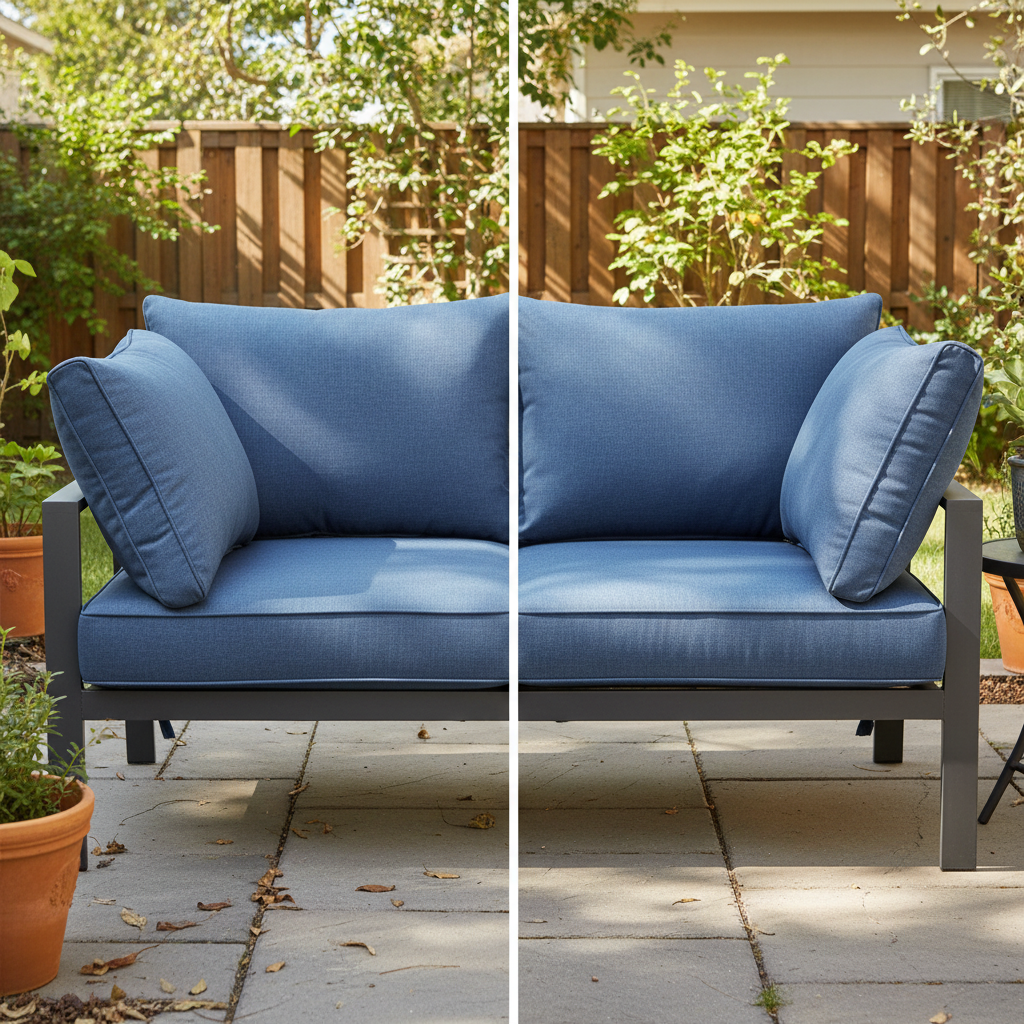
Replacing your patio cushions instead of buying a whole new furniture set can save you 50-70% of the cost while keeping a high-quality frame out of the landfill. The key is knowing when your existing foam is still salvageable, measuring accurately for an exact fit (especially on sectionals), and choosing weather-resistant materials like Olefin that match your climate and ownership horizon.
Is Your Patio Set Ready for a Refresh or a Full Replacement?
Many patio sets look tired because the cushions are faded or mildewed, but the frame itself may still be structurally sound. Replacing only the cushions typically costs 30-50% of a full new set, delivering a like-new feel while reducing waste. This "replacement economy" approach works best when the frame shows no rust, wobble, or broken welds.
Start with a simple two-part test: press firmly on the seat and back. If the foam quickly rebounds and feels supportive, a new cover or full cushion set is usually worthwhile. Persistent dampness, strong odors, or flat spots that don't recover signal that the foam has degraded and needs full replacement. For standard polyurethane foam, which often loses shape within 1 to 3 seasons, refreshing covers alone late in its life is usually poor value. High-quality reticulated or high-resilience foam, by contrast, can last 5 to 10 years with proper care, making a refresh far more economical.
This decision also carries environmental benefits by extending the life of durable frames instead of sending them to landfills. If your set is only a year or two old and the frame is solid, replacement cushions almost always make sense. Older sets require checking the foam condition first.
The Secret to Long-Lasting Patio Furniture: The Replacement Cushion Ecosystem explores how this approach creates a sustainable cycle for outdoor seating.
How to Measure Your Frame for a Perfect Fit
Accurate measurement prevents the common frustration of cushions that gap, overhang, or shift. For standard chairs and sofas, measure the seat width from the inside of one arm to the inside of the other, the depth from the front edge to the base of the backrest, and the backrest height from the seat surface to the top of the back frame. Always use the "inner-to-inner" rule to account for frame thickness.
Sectionals and modular pieces demand extra care. Measure every segment individually because seat depth, back height, and width can vary across the same set. Corner wedges and curved modules should be treated as their own category; standard 24x24 inch cushions rarely fit them without gaps or overhangs. Note strap placement, tie locations, and whether the cushions use boxed or knife-edge seams, as these details affect how the new pieces will sit.
For odd-sized or non-standard frames, double-check all three dimensions and consider ordering samples when possible. Even a correct size can sit incorrectly if straps or frame geometry interfere. This step eliminates most fit regrets and avoids the expense of returns.
Choosing the Right Weather-Resistant Fabrics for 2026
For 2026 replacements, Olefin stands out for high-traffic patios. As this technical assessment of olefin fabrics shows, modern Olefin-based fabrics offer roughly twice the tensile strength of traditional polyester yarns, improving resistance to abrasion and mechanical wear.
Solution-dyed fabrics like Olefin and Acrylic also excel in UV resistance. According to Vartest Laboratories industry methods, these materials maintain high colorfastness after 1,200 to 1,500 hours of UV exposure testing, far outperforming piece-dyed alternatives that fade faster. This makes them ideal for sunny locations where color retention matters.
Breathability and quick drying further reduce the "cushion commute" fatigue of constantly moving pieces indoors. Look for ACT performance icons on labels, as explained in the ACT Voluntary Performance Guidelines, to confirm standards for abrasion, lightfastness, and other durability factors. These icons help separate marketing claims from verified performance.
Short ownership horizons may tolerate lower-cost polyester, but longer horizons or heavy sun exposure make Olefin the better long-term investment. Always align the fabric choice with your expected remaining use of the frame.
Waterproof vs. Water-Resistant: Choosing the Right Fill
"Waterproof" claims on outdoor cushions usually mean water-resistant; true immersion-proofing is rare for standard patio use. The real differentiator is the fill. Open-cell reticulated foam, often marketed as Dry-Fast, drains water instantly rather than absorbing it, making it the clear choice for humid or rainy climates where mold prevention is critical.
High-resilience (HR) foam offers better long-term support and comfort than standard polyester fiberfill, though it costs more. When the existing foam feels flat, has lost loft, or shows signs of mold or persistent odor, replace the entire cushion rather than just the cover. A cover-only refresh on failing foam is typically a waste of money.
In high-humidity areas, reticulated foam combined with water-resistant Olefin fabric minimizes moisture traps and extends usable life. For drier climates with shorter replacement cycles, standard foam may suffice if you accept more frequent refreshes. Check for dampness or odor as a hard stop before investing in new covers alone.
Where to Buy Replacement Patio Cushions That Fit Your Style
Retail options range from big-box stores offering standard sizes to specialists providing custom or exact-fit replacements. For non-standard or sectional pieces, measuring precisely matters more than matching a brand name. Many manufacturers note that their cushions are "not suitable" for certain frames, reinforcing the need to verify dimensions independently.
Specialist brands and direct-to-consumer options often allow greater customization of size, fabric, foam density, and even strap placement. When shopping, create a checklist: exact measurements, preferred fabric (Olefin for durability), foam type (reticulated for wet areas), density for support, and the seller's return policy. This reduces the risk of ordering pieces that look good online but fail to fit.
Our Outdoor Accessory collection includes Olefin replacement sets in common sizes designed for easy refresh projects. For wicker-specific needs, see our guide on How to Find Exact-Fit Replacement Cushions for Wicker Sets. Always confirm measurements rather than relying solely on model names.
Repair vs. Replace: 2026 Upholstery Decision Guide
Use this as a decision aid: the best choice depends on whether the foam is still salvageable, whether the frame is a standard or sectional layout, how long you expect to keep the piece, and how exposed the fabric will be to sun, moisture, or heavy daily use.
View chart data
| Category | Repair | Replace |
|---|---|---|
| Foam salvageable, standard sofa, 3+ year horizon, moderate climate | 2 | 1 |
| Foam salvageable, sectional, 3+ year horizon, high sun/moisture | 3 | 2 |
| Foam worn out or frame issues, any layout, short horizon | 1 | 4 |
| Standard sofa, 1–3 year horizon, low exposure | 2 | 2 |
| Sectional, 3+ year horizon, family/pet use | 3 | 2 |
Built from a bounded 2026 upholstery trade-off frame that weighs foam condition, layout complexity, ownership horizon, and exposure; the bars encode relative fit rather than measured performance.
The chart above visualizes typical repair-versus-replace patterns across common scenarios. Higher bars indicate stronger suitability. It clarifies how foam condition, sectional complexity, time horizon, and exposure interact to flip the best choice.
Maintaining Your New Cushions for Maximum Longevity
Proper care extends the life of even the best replacement cushions. For washable covers, follow the "no-shrink" rule: air dry completely rather than using a dryer, which can damage zippers or cause shrinkage that ruins the fit. Spot clean Olefin and polyester fabrics promptly with mild soap and water to prevent stains from setting.
Storage matters as much as cleaning. Use ventilated deck boxes that allow airflow instead of sealed plastic bins that trap moisture. During off-season, elevate cushions slightly and ensure they stay dry. Avoid leaving them compressed for long periods, which can degrade foam resilience.
For more tips on installation and long-term care, review our guide Revive Your Patio: The Ultimate Guide to Replacement Cushions and Covers or the deep dive into Olefin Fabric: The Outdoor Furniture Material You Need to Know About. Consistent maintenance prevents the cycle of rapid fading or mildew that leads many people to replace their entire set unnecessarily.
FAQs
How Do I Know If I Should Replace Just the Covers or the Entire Cushion?
Check the foam first. If it springs back quickly when pressed and shows no mold, odor, or permanent compression, new covers are sufficient. If the foam is flat, damp, or crumbling, replace the entire cushion. Standard foam often needs full replacement after 1-3 seasons, while high-resilience or reticulated foam may last much longer with care.
Can I Find Exact Replacement Cushions for a Sectional With Odd-Sized Pieces?
Yes, but you must measure each section separately, including corner wedges. Standard sizes rarely fit curved or angled modules perfectly. Specialist retailers and custom options are often required. Strap placement and seam style also affect final fit, so note these details when ordering.
Is Olefin Fabric Worth the Extra Cost Over Polyester in 2026?
For long ownership horizons or high sun and traffic exposure, yes. Olefin typically offers greater tensile strength, superior color retention, and better stain resistance. For short-term use in milder conditions, polyester can be adequate and more budget-friendly. Align the choice with how long you plan to keep the furniture.
Are Outdoor Cushions Truly Waterproof or Just Water-Resistant?
Most are water-resistant rather than fully waterproof. Reticulated "Dry-Fast" foam provides the best defense by allowing rapid drainage and reducing mold risk. Combine it with solution-dyed Olefin or Acrylic covers for optimal performance in wet climates. Always bring cushions indoors during heavy storms for longest life.
Is Replacing Cushions Cheaper Than Buying a New Patio Set?
Almost always. Quality replacement cushion sets typically cost 30-50% of a comparable new furniture set. The savings grow when the existing frame is still in good condition. Factor in the environmental benefit of keeping usable frames in service rather than discarding them.
How Do I Prevent New Cushions From Developing Mold Quickly?
Choose reticulated foam for humid areas, ensure covers dry completely after rain or cleaning, and store them in ventilated containers. Clean spills immediately and avoid leaving cushions compressed or in sealed plastic. Proper airflow and quick-drying materials are the most effective defenses.
What Should I Look for When Shopping for Replacement Patio Cushions Online?
Prioritize exact dimensions over brand names, preferred fabric type (Olefin for durability), foam density and style, and clear return policies. Check for ACT certification marks and read recent customer reviews specifically about fit on similar frames. Ordering a single test cushion can prevent costly mistakes on a full set.

Leave a comment
This site is protected by hCaptcha and the hCaptcha Privacy Policy and Terms of Service apply.