



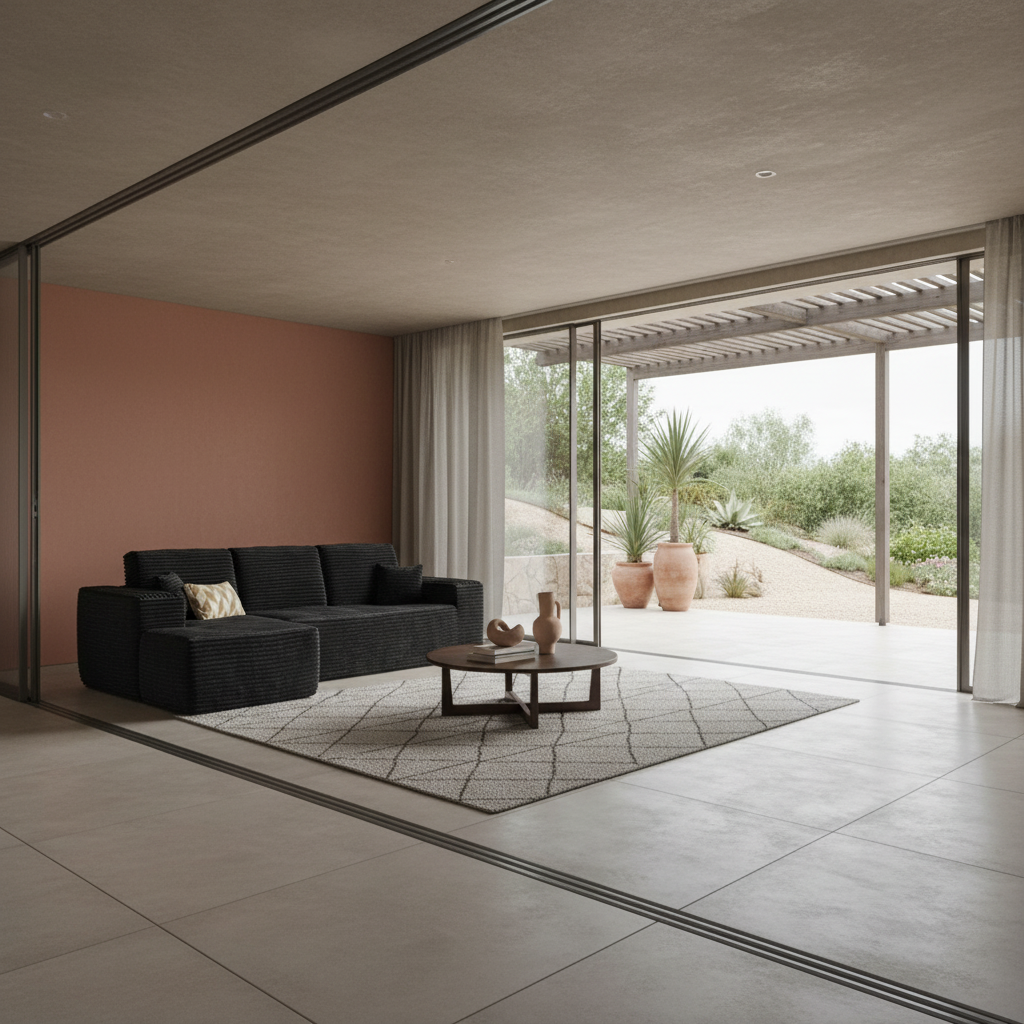
In 2026, the line between indoor and outdoor living continues to blur, driving demand for sofas that deliver living-room refinement while standing up to the demands of covered patios and sunrooms. A true indoor/outdoor sofa uses performance fabrics such as solution-dyed olefin paired with quick-dry open-cell foam and a rigid frame, enabling one piece to serve both spaces without rapid fading, mold, or sagging. This works best in climate-controlled or covered transition zones; it is not a fit for uncovered exposure where rain or intense UV will degrade even the best materials.

What defines a true indoor/outdoor sofa in 2026?
The 'Indoor-Outdoor Fluidity' trend treats sunrooms and covered patios as extensions of the main living area rather than separate zones. Traditional indoor sofas often fail here because fabrics absorb moisture and break down under intermittent UV, while classic outdoor sofas feel stiff and lack the plush comfort people expect indoors. The 2026 solution is performance indoor furniture that combines outdoor-grade fibers with indoor-level textures such as chenille or corduroy.
This setup suits homeowners with apartments, condos, or houses that have connected sunrooms or covered patios. It fails when the space sees direct rain, prolonged uncovered exposure, or high humidity without proper ventilation. Check your primary conditions first: if the area is mostly protected yet experiences occasional sun or splash, a dual-space sofa can replace separate indoor and outdoor pieces. For reference on flexible layouts, see our guide to What is Modular Patio Furniture and Why Should You Care? and ideas for Outdoor Patio Decorating With Limited Space.
Technical Red Lines: How to Verify Dual-Space Durability
To confirm a sofa will actually last in both environments, focus on measurable benchmarks rather than marketing claims. Industry guidelines define high-traffic residential durability as fabrics capable of withstanding 30,000+ double rubs (Wyzenbeek method) or 40,000 cycles (Martindale method). Below these thresholds, the fabric risks pilling or wearing through under normal use on a covered patio or in a busy sunroom.
UV resistance is equally critical. Manufacturers recommend a minimum lightfastness grade of 4 after 40 hours of UV exposure to maintain appearance in sun-drenched rooms, as detailed in Kvadrat's key fabric performance indicators. Lower grades lead to noticeable fading within one to two seasons. Foam density should meet or exceed 1.8 lb/cu ft; anything lighter tends to pancake within 12–24 months.
2026 Dual-Space Sofa Red Lines
- A sofa should clear at least 30,000 Wyzenbeek double rubs or 40,000 Martindale cycles before it can be considered high-traffic capable.
- For sunrooms and covered patios, lightfastness should be at least Grade 4 after 40 hours of UV exposure; below that, fading risk becomes a practical design failure.
- Foam should be quick-dry or open-cell if the space has humidity or intermittent wetting; closed, slow-drying cores are the wrong choice for moisture-prone rooms.
- Seat foam density below 1.8 lb/cu ft is a red line for support longevity because it tends to pancake within 12–24 months.
These thresholds turn shopping from style-driven to pass/fail. If a candidate misses any, treat it as indoor-only. For high-traffic homes with pets or children, cross-check against our guide to Pet-Proof and Kid-Proof: Choosing a Performance Sofa for High-Traffic Homes.
Material Selection: Why Olefin and Open-Cell Foam Matter
Olefin stands out as a leading choice for 2026 because its inherent resistance to moisture, mildew, and UV fading often outperforms standard polyester in transitional settings. As explained in comparisons of performance textiles, olefin fibers resist water absorption at the molecular level, reducing the chance of stains or mildew even after occasional splash on a covered patio.
Cushion construction matters as much as the cover. Standard polyurethane foam can trap moisture like a sponge in humid sunrooms, leading to odor or mold. Quick-dry or open-cell foam allows air and moisture to pass through, preventing the internal buildup common in transition spaces. This heuristic is widely recommended by upholstery guides, though it is not a formal industry standard and depends on local humidity.
Choose olefin covers with open-cell foam when your space experiences temperature swings or periodic dampness. In consistently dry, climate-controlled sunrooms, basic high-density foam may suffice but will not offer the same forgiveness if conditions change.
The 'Boneless' Dilemma: Is a Foam-Only Sofa Right for Your Transition Space?
Boneless (frameless) modular sofas appeal for their portability and zero-assembly design, yet they introduce real friction in sunrooms or covered patios. Without a rigid frame they can slide on smooth tile or concrete—the 'ice rink effect'—especially when people shift position during entertaining.
The Boneless Sofa Exclusion Rule
- Do not buy boneless if the room has periodic humidity spikes, condensation, or damp air: foam can retain moisture and become a mold/odor risk.
- Do not buy boneless if the sofa will sit on smooth tile, concrete, or patio flooring: the lack of a rigid frame can make it slide or separate under use.
- Do not buy boneless if the space gets meaningful sun exposure: UV and heat can accelerate fading, pilling, and material fatigue, even in 'covered' areas.
- Do not buy boneless if you need a normal seat height or firm rise assistance: the low ~16.5-inch profile can feel especially low in a casual sunroom or patio setting.
These warnings are strongest where humidity, sun, or airflow fluctuations occur. Framed modular designs avoid these issues while still offering reconfiguration flexibility. See our notes on Modular Sofa Separation for layout strategies that maintain stability.
Styling for Cohesion: Making One Sofa Work in Two Worlds
Modular sectionals bridge small living rooms and balconies by letting you rearrange pieces as needs change. For 2026, earthy neutrals—warm greys, taupes, and soft terracotta—create visual continuity between indoor and outdoor zones while hiding minor wear. Textured performance fabrics add indoor refinement without looking overtly 'outdoor.'
In compact apartments, reversible chaises or storage ottomans maximize utility. Place the sofa so it faces the transition opening; this visually connects the spaces and encourages fluid use. Our guides to Styling an Upscale Micro-Patio with Compact Balcony Furniture and How to Design a Backyard Patio: Layout Ideas for Small and Large Spaces offer practical diagrams and scale rules.

Maintenance and Limits: Protecting Your Investment in Covered Spaces
Even performance fabrics benefit from the 'cushion commute'—moving or covering them during extreme weather or off-season. Spot cleaning with mild soap is usually more reliable than machine washing, which can cause shrinkage or pilling despite manufacturer claims. These sofas are not designed for uncovered rain or extreme UV; prolonged exposure will shorten lifespan regardless of material.
Vacuum regularly, address spills immediately, and store cushions in a dry place during heavy rain seasons. For seasonal guidance, review How to Prepare Your Outdoor Living Space for Changing Seasons. Proper care extends usable life but cannot eliminate the need for eventual refresh.
How to Choose the Right Dual-Space Sofa for Your Home
Begin with your specific environment. Climate-controlled sunrooms favor indoor-performance construction with emphasis on comfort. Covered patios that see occasional moisture or sun require true dual-space builds that meet the red lines above. Use this chart to compare construction types against your conditions.
Which Construction Type Fits the Environment Best?
Tiered comparison for durability, UV resistance, moisture handling, and longevity across three construction types.
View chart data
| Category | Durability | UV Resistance | Moisture Handling | Longevity |
|---|---|---|---|---|
| Indoor-Only Performance | 2.0 | 1.0 | 1.0 | 2.0 |
| True Dual-Space | 3.0 | 2.0 | 3.0 | 3.0 |
| Outdoor-Only | 2.0 | 3.0 | 2.0 | 3.0 |
Based on ACT guidance, Kvadrat-style outdoor material guidance, and bounded foam-selection rules used to compare typical construction fit across exposure conditions.
Checklist
- Verify abrasion rating ≥30,000 double rubs.
- Confirm UV lightfastness ≥Grade 4.
- Check foam density ≥1.8 lb/cu ft and open-cell construction for any humidity risk.
- Prefer aluminum or treated steel frames over pure fabric-covered foam for patios.
- Prioritize modularity for future layout changes.
For versatile options that meet these criteria, explore our OVIOS Cloud Sectional Couch with Comfy Chaise, OVIOS Modular Sectional Sofa Couch with Oversized Chaise, or the full Sectionals collection. Prioritize the technical red lines above style; a sofa that passes them will look good in both rooms for years.
Frequently Asked Questions
Are indoor outdoor sofas truly waterproof? No. Performance fabrics resist moisture and dry quickly, but they are not designed for standing water or uncovered rain. Always use covers or move cushions during heavy storms.
What is the best fabric for a performance fabric indoor outdoor sofa? Olefin is the leading choice in 2026 for its built-in resistance to UV, mildew, and stains. Pair it with quick-dry foam for best results in transitional spaces.
Can I use a boneless modular sofa on a covered patio? Only in consistently dry, climate-controlled areas. On tile or concrete with any humidity or sun, framed modular designs prevent sliding and moisture trapping.
How do I clean an indoor outdoor sectional furniture? Vacuum regularly and spot-clean spills immediately with mild soap and water. Avoid machine washing covers unless the manufacturer explicitly rates them for it, as shrinkage is common.
What seat height works best for sunrooms and patios? Aim for 18–20 inches. Lower boneless profiles around 16.5 inches can feel difficult to rise from, especially for older users or in casual entertaining settings.
Do indoor outdoor sofas fade in sunrooms? They can if UV lightfastness is below Grade 4. Choose fabrics tested to this standard and rotate or cover pieces that receive more than a few hours of direct sun daily.

Leave a comment
This site is protected by hCaptcha and the hCaptcha Privacy Policy and Terms of Service apply.