



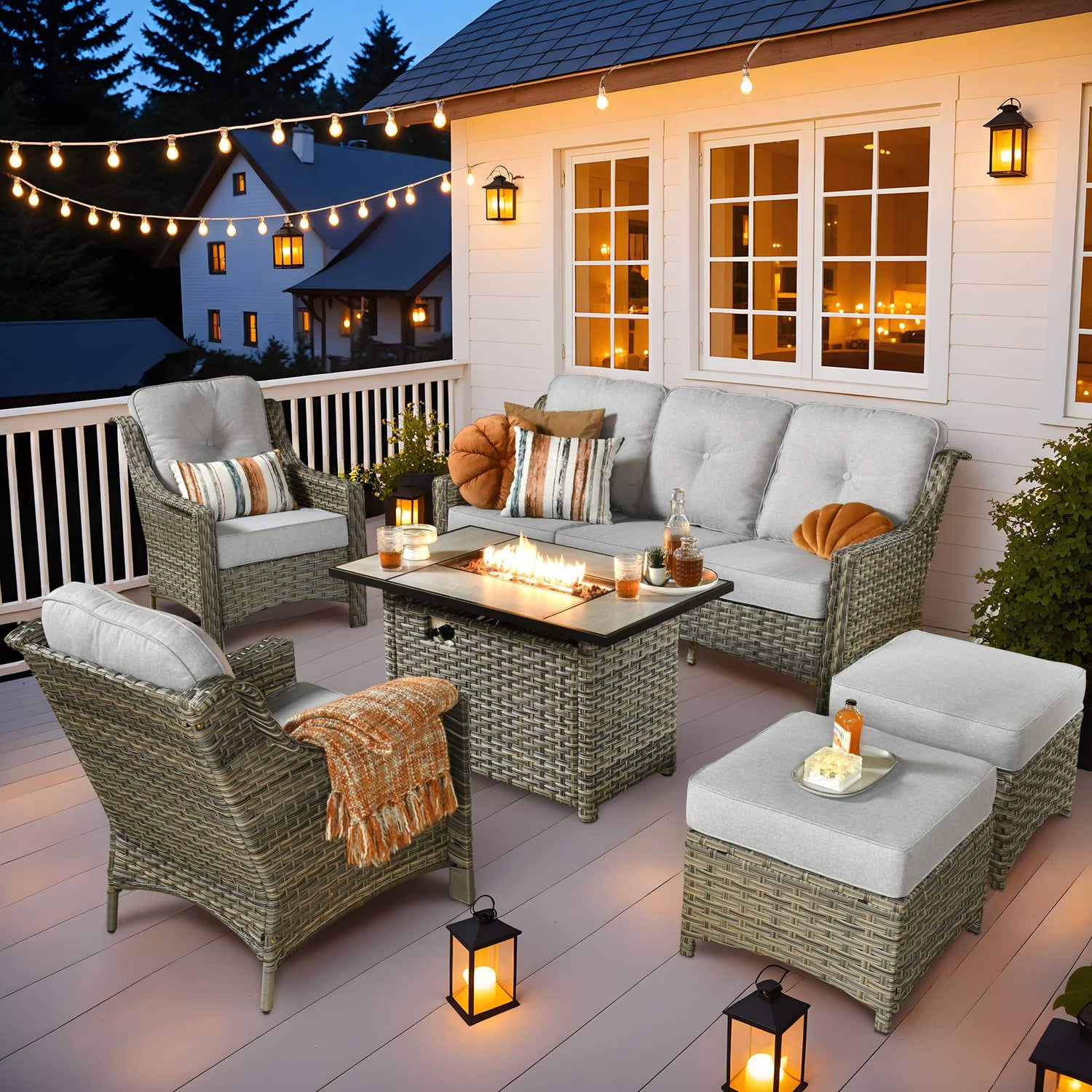
Many patio chairs look stylish but leave your back unsupported after 30 minutes of sitting. High-back ergonomic outdoor seating changes that by delivering continuous support from the lower back up through the shoulders and neck, making long outdoor sessions far more comfortable for tall users and anyone sensitive to posture strain.
Why Appearance-Only Patio Chairs Fail for Posture and Long Sitting
Standard low-back patio chairs often encourage a rounded “C-curve” in the spine because they stop well below the shoulder blades. This design forces the shoulders and neck to work harder to stay upright, leading to fatigue during conversations around the fire pit or while reading on the deck.
Proper sitting posture requires maintaining the natural inward curve (lordosis) of the lumbar spine to minimize pressure on spinal discs and prevent muscle fatigue, as explained by Cornell University ergonomics guidance. Without that support, even attractive patio furniture becomes uncomfortable after an hour or two, especially for taller people whose upper back and neck remain unsupported.
This mismatch explains why many buyers regret appearance-focused purchases when they actually spend time outdoors. High-back designs address the gap by extending support higher, reducing the muscular effort needed to maintain good posture during typical 1- to 3-hour outdoor sessions.
Why High-Back Patio Chairs Are the Secret to Outdoor Comfort
What Makes a Patio Chair 'Ergonomic'? Key Features to Look For
An ergonomic patio chair translates laboratory principles into real-world outdoor comfort through four measurable design elements.
The most important is back height. A true high-back chair should reach at least the scapula area so the shoulders and upper back receive continuous contact. For users 6'0" and taller, anything shorter often leaves the neck unsupported and creates strain.
Lumbar support matters next. A gentle curve or built-in bolster in the lower back area helps preserve the natural lordosis instead of letting the spine flatten against a straight frame. Seat depth and angle complete the picture: a depth of roughly 22 inches or more gives thigh support for taller sitters while leaving 2–3 fingers of clearance behind the knees to avoid pressure on the legs.
Finally, cushion density determines whether the frame geometry actually delivers on its promise. Cushions below about 1.8 lbs per cubic foot tend to compress quickly, letting the sitter sink through to the harder frame and negating ergonomic benefits.
These features work together. A tall backrest paired with soft cushions will still disappoint, while a well-matched set of dimensions and firm foam makes long outdoor lounging genuinely relaxing.
The Mechanics of Comfort: Deep Seating Patio Chairs Explained
High-Back vs Low-Back Chairs: Where Fit Shifts by User Height
A threshold view of when higher back support and deeper seating become a better fit for taller users, versus when a lower backrest is usually enough for upright use.
View chart data
| Category | Low-back fit | High-back fit | Need for deeper seat | Need for recline (100-110°) |
|---|---|---|---|---|
| Shorter users | 3.0 | 1.0 | 1.0 | 1.0 |
| Mid-height users | 2.0 | 2.0 | 2.0 | 2.0 |
| Taller users | 1.0 | 3.0 | 3.0 | 3.0 |
Built from planner notes and ergonomic guidance on shoulder-blade support, seat depth clearance, and slightly open recline angles; values are grouped into conservative fit tiers for planning use.
High-Back vs. Low-Back: Which Is Better for Long-Term Comfort?
Low-back chairs work well for quick outdoor meals or purely decorative seating, but they fall short when you plan to linger. High-back designs distribute weight across the entire back, reducing pressure on the lower spine and allowing the shoulders and neck to relax.
The practical difference shows most clearly for sessions longer than an hour. High-back chairs let users maintain an open posture around 100–110 degrees—often cited as optimal for reducing spinal disc pressure—without constant muscle effort. Low-back options typically force a more upright or slouched position that tires the upper back faster.
The trade-off is visual footprint. High-back seating takes slightly more space and can look more substantial, but the added utility makes it the stronger choice for fire-pit conversations, reading, or all-day backyard gatherings. For shorter visits or very compact balconies, a low-back chair may still be the better practical fit.
High-Back vs. Low-Back Patio Furniture: The Ergonomic Difference
Who Benefits Most: A Guide for Tall and Back-Sensitive Users
Tall users (6'0" and above) face the clearest mismatch with standard patio furniture. Most low- or mid-back chairs stop below the scapula, leaving the neck and upper back unsupported and creating fatigue or discomfort within an hour.
Back-sensitive sitters benefit when the chair provides consistent lumbar contact and allows a gentle recline. Body mass index can influence preferred lumbar height, according to an NIH study on lumbar support preferences, so firmer cushions and adjustable or contoured frames often feel more supportive for different body types.
Not every tall person needs the tallest chair on the market, but a backrest that clearly reaches shoulder-blade level combined with adequate seat depth dramatically improves comfort. Those who sit outdoors for reading, coffee, or evening relaxation notice the difference most quickly.
Mid-Back vs. High-Back Office Chair: Which One Is Better?
A Practical Buying Checklist for Ergonomic Outdoor Seating
Use this checklist to evaluate any high-back patio chair before purchase:
- Scapula Test: Sit in the chair. Does the backrest reach or pass your shoulder blades? If it stops noticeably lower, the chair will likely leave your neck unsupported.
- 2-Finger Rule: With your back against the chair, can you slide two fingers between the seat edge and the back of your knees? Less clearance creates pressure; more may mean inadequate thigh support.
- Cushion Density Check: Press firmly into the seat and lumbar area. Quality cushions (roughly 1.8 lbs per cubic foot or higher) resist bottoming out and maintain support over time.
- Recline Angle: Look for a frame that naturally settles around 100–110 degrees for relaxed upright lounging rather than forcing a straight-up or overly deep recline.
- Material Durability: Prefer PE wicker over PVC for better UV and weather resistance; high-quality PE typically lasts 3–5 years with less fading and brittleness.
- BIFMA Compliance: Check for references to BIFMA OF-2025 or similar standards that confirm the furniture meets safety and performance benchmarks for outdoor use.
The BIFMA Ultimate Test for Fit offers additional guidance on evaluating seat depth and adjustment ranges to ensure the chair accommodates your dimensions.
Finding Your Best Fit: Selection Guidance for Your Outdoor Space
Prioritize high-back sets for areas where you spend the longest—fire pits, conversation corners, or poolside reading spots. Modular designs let you configure deep-seat sections exactly where needed.
On smaller balconies or decks, look for high-back loveseats or compact sectional pieces that deliver ergonomic support without overwhelming the space. Balance the taller silhouette with open layouts so the area still feels airy.
For larger patios, a full high-back sectional creates a comfortable gathering zone that supports good posture for every guest. Focus first on back height and cushion quality, then match the set size to your actual seating needs.
How to Maximize Comfort on a Small Apartment Balcony
Are high-back patio chairs better for back support?
Yes, when the backrest reaches the scapula and the cushion density preserves lumbar contact. High-back chairs reduce the muscular effort needed to stay upright compared with low-back designs, making them a stronger choice for sessions longer than an hour. The benefit depends on matching the chair dimensions to your height and preferred recline.
What height backrest do tall people need for outdoor chairs?
Users 6'0" and taller generally need a backrest that extends to or above the shoulder blades. Standard low-back chairs often fall short, leaving the neck unsupported. Look for high-back models with seat depths of 22 inches or more to provide full thigh support without pressure behind the knees.
How important is cushion density in ergonomic patio seating?
Very important. Cushions that compress too easily allow the sitter to sink through to the frame, canceling the ergonomic advantages of the chair’s shape. Higher-density foam (around 1.8 lbs per cubic foot or firmer) maintains support longer and prevents the “bottoming out” that causes discomfort during extended use.
Do high-back outdoor chairs work well on small balconies?
They can when you choose compact loveseats or modular sections rather than oversized sofas. The taller backrest adds presence, so pair it with open layouts, lightweight side tables, and neutral colors to keep the space feeling spacious. Focus on pieces that offer the ergonomic benefits without dominating the footprint.
What is the ideal recline angle for outdoor lounge chairs?
A recline of roughly 100–110 degrees is frequently recommended for balanced upright lounging because it reduces disc pressure while still allowing easy conversation and reading. Deeper recline may suit pure relaxation but can reduce lumbar contact unless the cushion and frame geometry actively support the lower back.
How does lumbar support differ between indoor and outdoor ergonomic chairs?
Outdoor versions must withstand weather while still delivering the same lordosis-preserving curve. Look for weather-resistant foam wrapped in quick-dry fabric and a frame that incorporates a gentle lumbar contour rather than relying solely on removable pillows that may shift or flatten over time.

Leave a comment
This site is protected by hCaptcha and the hCaptcha Privacy Policy and Terms of Service apply.