



The 2026 Master Guide to Scaling Your Outdoor Room with Modular Sectionals
Modular patio sectionals let you scale an outdoor room from intimate family dinners to large neighborhood gatherings by choosing the right piece count for your actual space and use case. The key is protecting circulation paths and treating weather resistance as a maintenance-dependent feature rather than a set-and-forget solution.
In 2026, homeowners are shifting away from rigid, fixed patio sets toward modular systems that adapt to changing needs. The core challenge is not simply buying more pieces, but understanding how many modules actually deliver usable comfort without crowding walkways, doors, or focal points such as a fire pit.
Why Modular Sectionals Are the 2026 Outdoor Room Upgrade
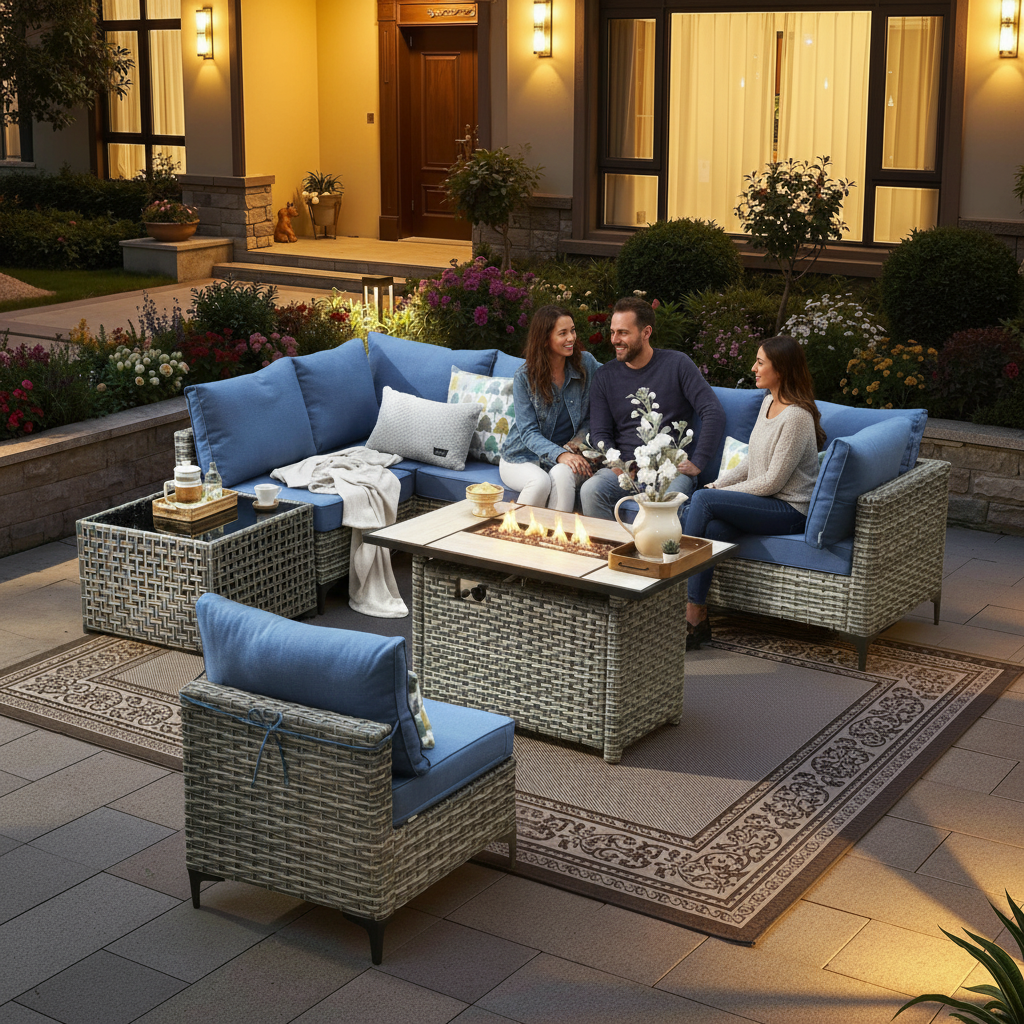
Homeowners upgrading patios into full outdoor living rooms increasingly favor modular patio sectionals because these systems let you rearrange pieces as your entertaining needs evolve. Rather than committing to one fixed layout, you can start with a compact conversation set and later expand into a room-defining arrangement that seats more guests while still leaving clear paths for movement.
The main problem most shoppers face is layout uncertainty. They know they want a large outdoor sectional but struggle to determine how many pieces fit their specific patio dimensions and guest patterns. This guide walks through sizing, measurement, arrangement, and long-term care so you can create a practical, scalable outdoor room instead of an overcrowded or underused space. This article on building a complete outdoor room with modular patio furniture systems explores similar footprint and zoning principles.
How Many Pieces Do You Actually Need?
Choose your piece count by matching it to your primary use case and available circulation space. Based on common layout patterns, a 6-piece layout works well for compact patios or secondary seating zones where the goal is a simple conversation area. These configurations tend to fit contained spaces without dominating the room.
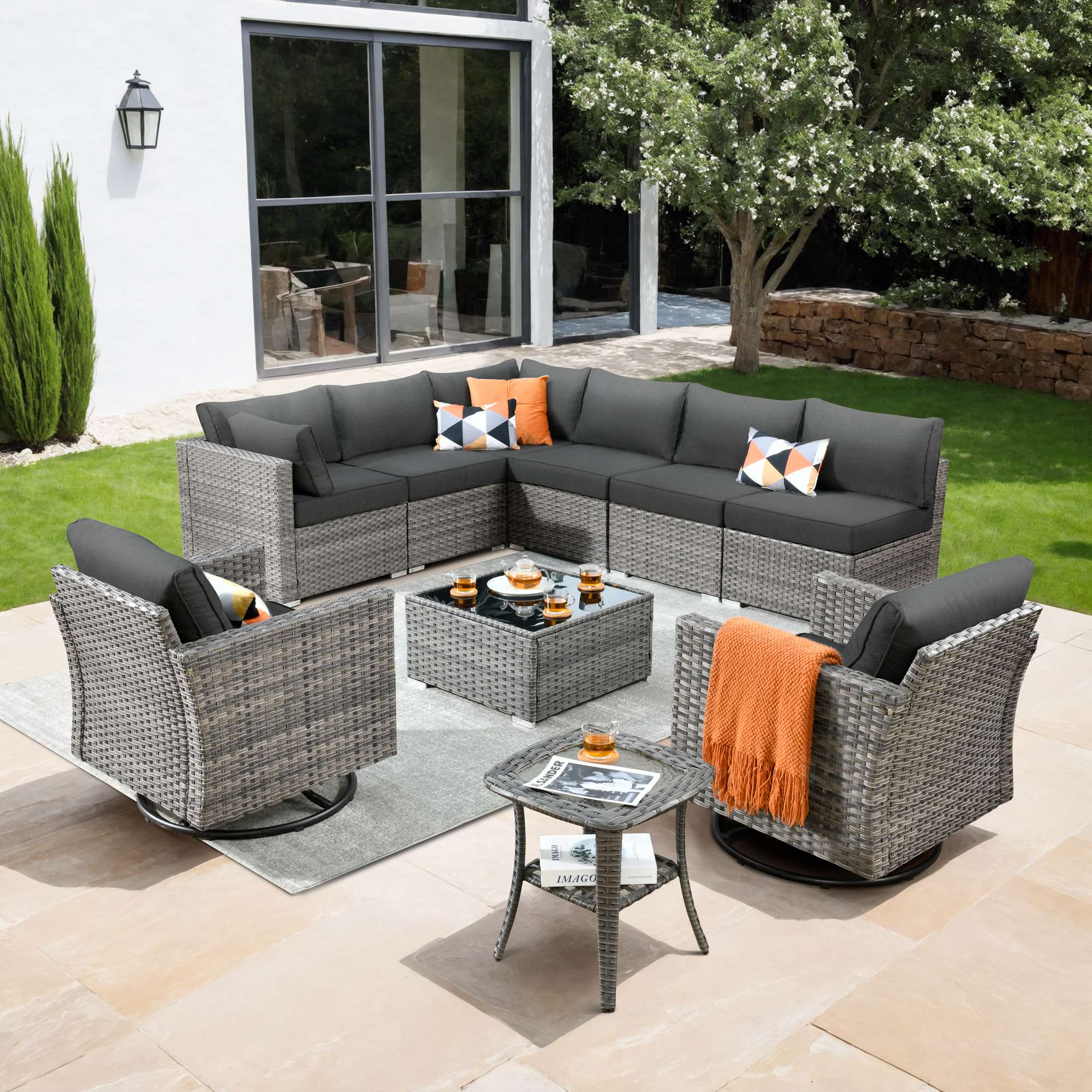
A 9-piece sectional often serves as the practical "sweet spot" for a main seating zone. It creates a more substantial anchor for everyday family use while still leaving room for movement. Moving up to 12 pieces makes sense when your patio footprint can accommodate a deeper seating area without sacrificing walk paths. In tighter spaces, the extra modules can quickly reduce usable circulation.
15-piece layouts suit large outdoor rooms that need multiple zones or longer runs. The added flexibility helps define separate lounging and passing areas, but only if the room geometry supports it. More pieces do not automatically improve comfort if they block doors or focal points.
The chart below helps visualize these tiered fits across common scenarios.
Modular Patio Sectional Fit by Use Case
Modular Patio Sectional Fit by Use Case chart.
View chart data
| Category | 6-piece | 9-piece | 12-piece | 15-piece |
|---|---|---|---|---|
| Compact / secondary zone | 3.0 | 2.0 | 0.0 | 0.0 |
| Main seating zone | 1.0 | 3.0 | 2.0 | 0.0 |
| Deeper footprint allowed | 0.0 | 1.0 | 3.0 | 2.0 |
| Large multi-zone room | 0.0 | 0.0 | 1.0 | 3.0 |
Based on typical patio planning guidance and scenario-based piece-count fit notes from the planning packet.
This visualization clarifies the trade-off: larger configurations provide more shape control and zoning but increase circulation pressure unless your patio has sufficient scale. Learn more about arranging modular patio furniture for different gathering sizes.
How to Measure the Space Before You Choose a Set
Measure circulation paths, door swings, and the usable footprint before selecting any modular patio sectional. Start by mapping the primary walkways people will use to enter and exit the space. A common design rule of thumb is to preserve clear circulation and access around seating areas, rather than just maximizing seat count.
Check wall clearance and traffic lanes as carefully as the sectional footprint itself. A practical tip is to walk the intended layout with temporary markers or painter's tape on the ground. If two people cannot comfortably pass each other or if a door cannot open fully, the configuration is likely too large for the space. Treat the sectional as one element within an outdoor room rather than the entire room.
How to Arrange a Modular Sectional Around a Fire Pit
Place a fire pit as a focal point only after reserving a clear buffer zone so seating does not crowd the heat source. Standard safety guidelines recommend keeping open space around fire pits and ensuring modular layouts do not block safe movement.
The best arrangements often use offset or partially open configurations instead of perfect symmetry. When circulation is the higher priority, treat the sectional as a boundary element along the edges of the outdoor room rather than a tight enclosure around the fire pit. This approach maintains both conversation focus and practical access.
What Makes a Modular Patio Sectional Comfortable on a Covered Deck?
Covered decks generally provide a more forgiving environment than fully exposed patios because they reduce direct moisture exposure. This protection can make weather-resistant modular furniture easier to maintain over time, though regular cleaning and seasonal care remain necessary.
The lower exposure helps preserve cushion condition and frame finishes, but it does not eliminate the need for protective covers during off-season periods or after heavy storms. Consider covered decks a practical advantage for larger sectionals, yet still plan for routine upkeep to prevent dust and pollen buildup.
Weather Resistance, Maintenance, and Replacement Economy
Weather-resistant materials improve tolerance to outdoor conditions but do not equal "weatherproof" performance or zero-maintenance use. Experience shows that outdoor furniture still requires regular cleaning and weather protection to remain in good condition over multiple seasons.
Look for rustproof hardware and protective finishes as useful comparison cues when evaluating modular patio sectionals. More important for long-term value is whether individual cushions, covers, and modules can be replaced separately. A lower initial price can become expensive if small failures force you to replace the entire set. Prioritize designs that support part-level replacement and plan seasonal care as part of ownership.
How to Choose the Best Layout Path for Your Patio
Begin your decision by clarifying whether your patio will primarily host everyday family use, frequent entertaining, or multi-zone gatherings. Once you know the dominant scenario, select piece count only after confirming that circulation paths, fire-pit buffers, and maintenance tolerance all remain practical.
A simple self-check framework asks three questions:
- Can two people pass comfortably in the planned layout?
- Does the fire pit (if used) have adequate clearance?
- Are replacement parts and care routines realistic for the set size?
Answering "yes" to these points usually indicates a suitable configuration. For compact everyday setups, consider a 6- to 9-piece arrangement. For larger entertaining spaces that must accommodate both lounging and movement, explore 12-piece or 15-piece options that preserve open zones. Collections sized for 12 pieces or 15 pieces can provide concrete examples of scalable systems.
FAQs
How many people can a 12-piece modular patio sectional comfortably seat? A typical 12-piece configuration seats 8 to 10 adults depending on module depth and arrangement. The exact capacity depends more on layout geometry and circulation space than on the piece count alone.
Should I choose a larger sectional if my patio is covered? Covered decks often support slightly larger arrangements because reduced moisture exposure eases maintenance. Still verify that walk paths and door access remain clear before committing to extra modules.
How much clearance is needed around a fire pit when using a modular sectional? Maintain a clear buffer zone so guests can move safely and the heat does not affect seating. Offset or open layouts often work better than fully enclosed ones.
Do weather-resistant modular sectionals require covers in winter? Yes. Even weather-resistant materials benefit from protective covers and periodic cleaning to prevent long-term wear from UV, moisture, and debris.
Is it worth paying more for modular sets with replaceable cushions? When you plan to keep the furniture for several seasons, easy access to replacement cushions and covers usually improves long-term value compared with sets that require full replacement after minor damage.
Can I rearrange a modular sectional after the initial setup? Most modular systems are designed for reconfiguration. This flexibility lets you adapt the layout for different guest counts or seasonal changes without buying new pieces.
What is the smallest practical modular sectional for a standard patio? A 6-piece set often works for smaller or secondary zones focused on casual conversation. Larger main areas usually benefit from at least a 9-piece configuration to feel like a true outdoor-room anchor.

Leave a comment
This site is protected by hCaptcha and the hCaptcha Privacy Policy and Terms of Service apply.