



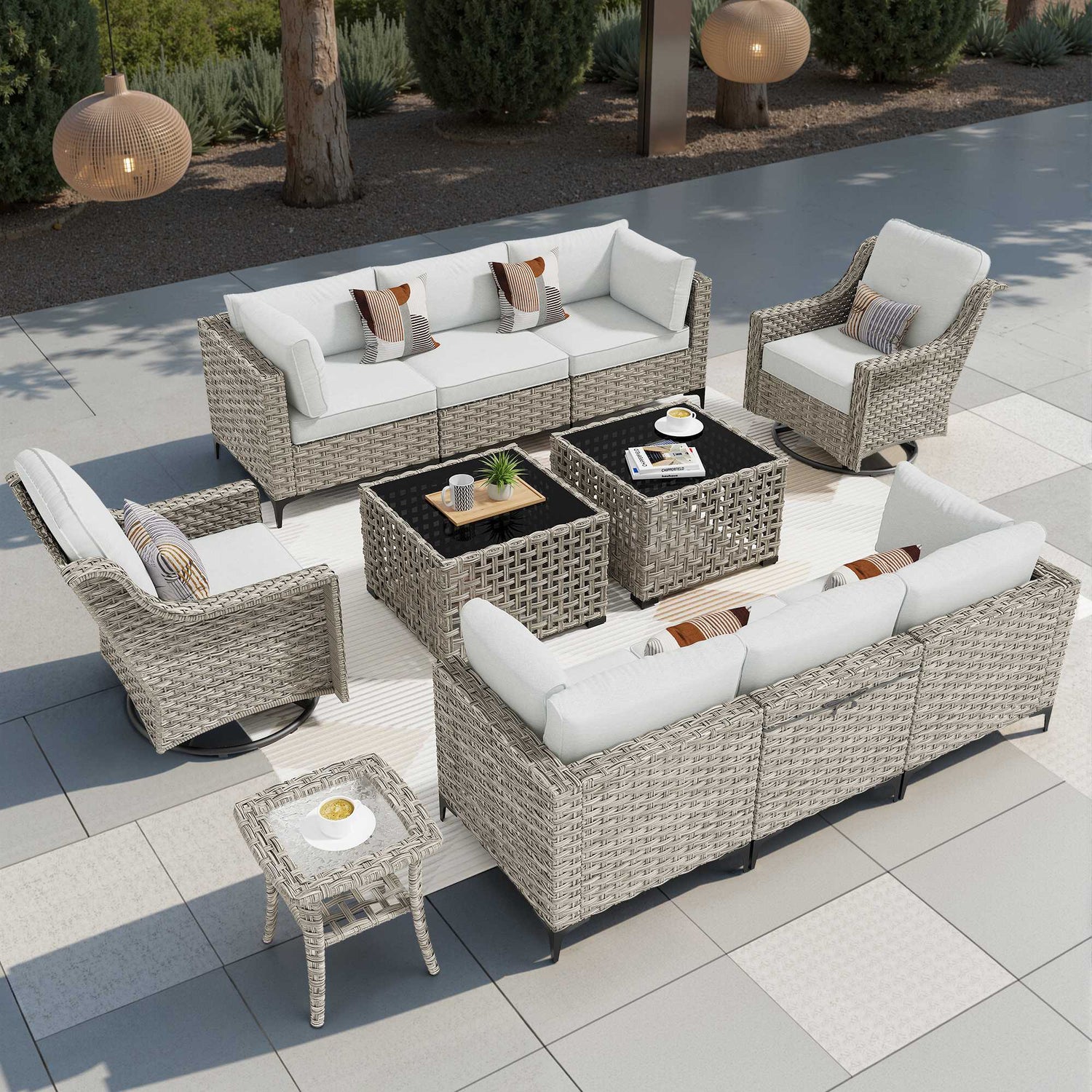
Modular patio furniture uses separate, movable pieces like corner sofas and ottomans to fit your specific space. Unlike heavy, traditional couches, these sections rearrange easily to match your guest list. You can build a large sectional for parties or pull pieces apart for small, quiet chats. This flexibility helps your deck adapt to any event in minutes. Using these configurable units makes your outdoor area more functional, giving you the right seating for both morning coffee and big family barbecues.

The Practical Benefits of Using Modular Outdoor Patio Furniture
Choosing a versatile seating setup changes how you use your backyard. These sets offer several advantages that standard fixed benches or heavy wrought-iron sets simply cannot match for social events.
Highly Flexible Layouts
The biggest draw of modular outdoor patio furniture is how easily it grows or shrinks. If you have a small family but occasionally host relatives, you can keep a few pieces in storage and bring them out when guests arrive. You can expand your seating by adding middle sections to a sofa or contract it by moving pieces to different corners of the yard.
Adaptable to Space and Activity
Modular sets allow you to shift from intimate conversations to larger social gatherings without buying new items. For a movie night, you can line the pieces up in a row. For a cocktail party, you can pull the modules apart so people can walk between them. This adaptability ensures your furniture works for the activity at hand, rather than forcing the activity to fit the furniture.
Encourages Interaction
The way you arrange your chairs affects how people talk. Outdoor sectional patio sets are great for social flow because they can form U-shapes or circles. These curved or angled layouts facilitate face-to-face communication. When people sit in a circle, everyone feels included in the conversation.

Start With a Solid Plan for Your Patio
You need a plan before you start moving heavy cushions around. It will save you a lot of physical work in the long run to think about your room and your habits now.
Measure Your Space
Get a tape measure and find the exact dimensions of your patio or deck. It is easy to overestimate how much room you have. You need to know the width and length to ensure your patio furniture fits comfortably.
As you plan, look at where your doors and walkways are located. You do not want a sofa section blocking the path to the grill or the door into the house. Leave enough "breathing room" around the edges so the area feels open rather than cluttered.
A good rule is to keep main paths clear of any furniture legs or corner pieces.
Define Your Gathering Types
Think about the groups of people you usually host. Do you mostly have 2–4 people over for drinks? Or do you frequently have 5–8 friends for a weekend barbecue? Maybe you host huge holiday events with 9 or more guests.
Write down these numbers and think about how you use the space. If you mostly eat dinner outside, you will want a layout that supports tables. If you mostly lounge and talk, focus on deep seating and footrests.

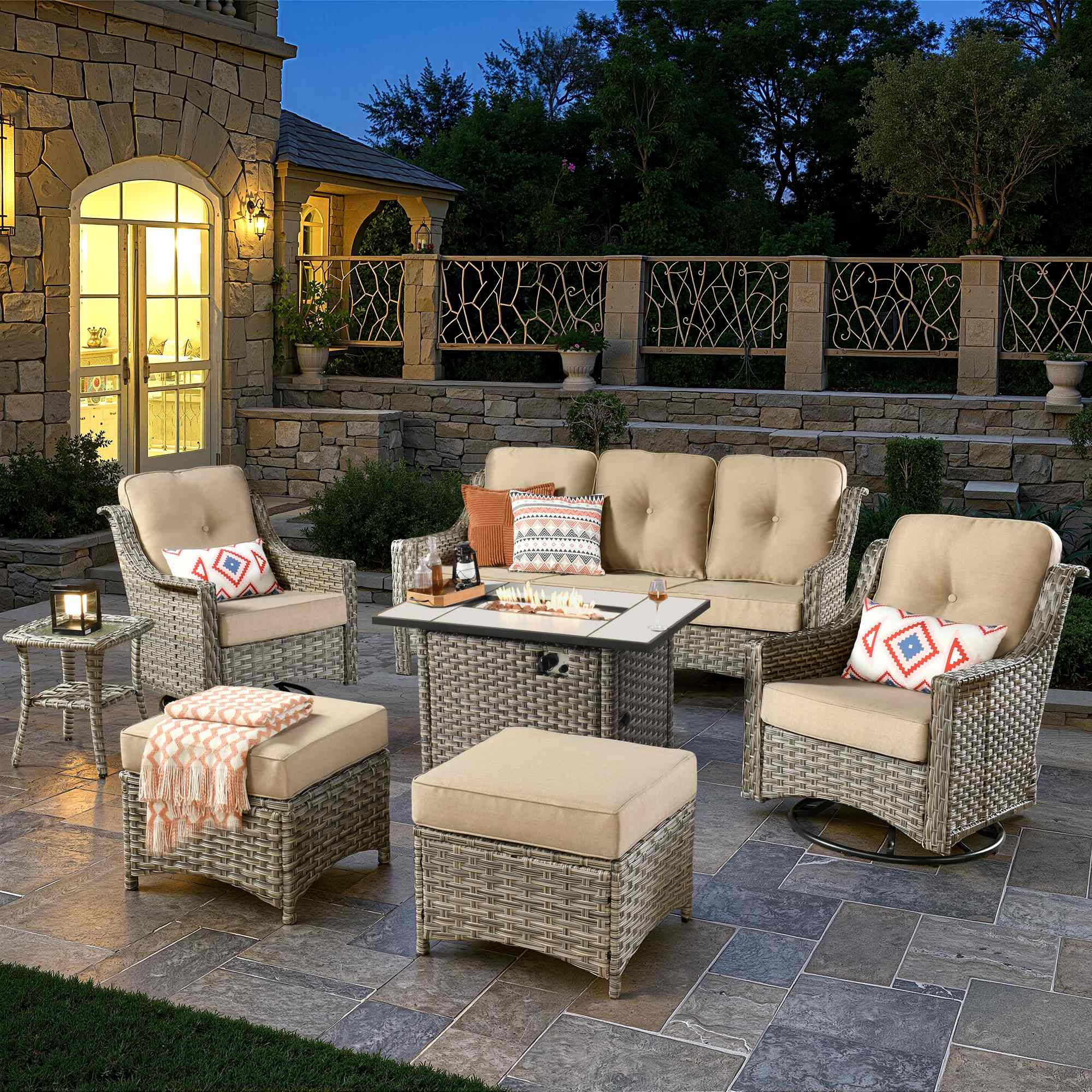
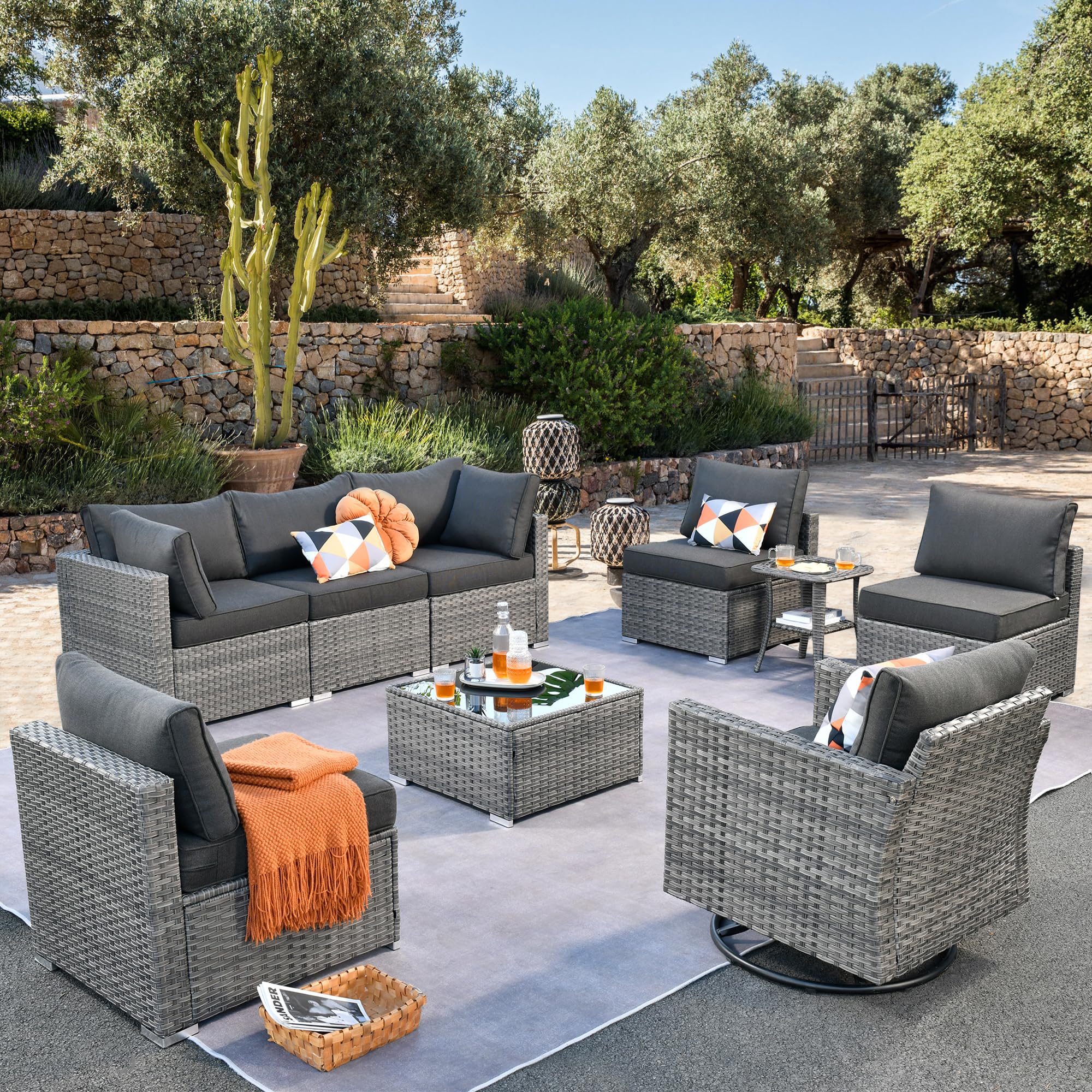
OVIOS 4-Piece Outdoor Patio Set with Swivel Chairs
Layout Ideas for Various Group Sizes
Different crowds require different setups to feel comfortable. Use these specific configurations to make the most of your modular pieces based on how many people are visiting your home.
Small Gatherings (2–4 People)
For a small group, the goal is to create a cozy and private feeling. Keep the seating tight and close together. An L-shaped configuration tucked into a corner is perfect for three or four people. If there are only two of you, try placing two chairs facing each other with a small table in between.
Using an ottoman or a small coffee table as a shared centerpiece keeps the space feeling "anchored." This gives everyone a spot to set a drink or a book, which makes the area feel functional. Keeping the pieces close together makes it easy to talk quietly without having to raise your voice across a wide gap.
Medium Gatherings (5–8 People)
When you have a medium-sized group, you need to prevent the "split-off" effect where people break into tiny, separate groups because they can't all see each other. Arrange your modular patio furniture into a U-shape or a large semi-circle. This keeps everyone part of the same circle.
Pay attention to the spacing between pieces. Make sure there is enough room for people to get in and out of their seats. Aim for about 18–24 inches between the edge of a seat and a central table. This provides enough legroom for guests to sit comfortably while still keeping them close enough to hear the conversation.
Large Gatherings (9+ People)
Providing outdoor seating for large groups requires a different approach. Instead of trying to fit everyone into one giant circle, use your modular pieces to create multiple zones. You might have one long bench against a wall for casual perching, a lounge area in the center, and a separate dining area.
Breaking the space into zones allows guests to spread out. Some people can talk loudly near the fire, while others have a quieter chat in a corner. You can also pull in lightweight chairs, stools, or even the ottomans from your wicker modular outdoor furniture set to act as extra seats. These "floater" pieces are easy to move wherever the crowd is thickest.
Practical Tips to Improve Comfort and Social Flow
The little things are what make the room really livable once the big things are set up. Adding the right finishing touches ensures your guests stay comfortable for hours and move around easily.
Establish a Clear Focal Point
Every seating area needs a center. This could be a coffee table, a fire pit, or even a beautiful planter. A focal point gives guests a natural place to look and gather. It anchors the furniture so the pieces don't look like they are floating aimlessly on the patio. When you rearrange patio furniture, always start by placing your focal point first, then build the seating around it.
Leave Clear Walkways
Ensure there are clear paths between the seating and other areas like the lawn, the pool, or the kitchen. Leave 30–36 inches of space for high-traffic walkways. This allows two people to pass each other without having to turn sideways.
Use Accessories to Define Your Zones
Accessories are not just for looks; they help organize the space. An outdoor rug can "frame" a seating area, signaling to guests where the conversation zone begins and ends. Use cushions to add back support and side tables to give every guest a place for their glass. Lighting, like string lights or lanterns, can also help define the perimeter of your gathering space after the sun goes down.
Consider Shade and Weather
If you are hosting during the day, remember that people will move to follow the shade. Use umbrellas, pergolas, or fabric sails to protect your guests from the sun. Modular pieces are great here because if the sun moves, you can simply slide a chair or a sofa section into a cooler, shaded spot without much trouble.
Rearrange Modular Patio Furniture for Any Event
Modular furniture gives you the power to change your backyard whenever you want. By starting with a clear plan, measuring your space, and using shapes like U-clusters or separate zones, you can handle any guest list. Whether it is a small morning coffee or a big summer bash, these flexible pieces ensure your patio is always ready.
FAQs about Outdoor Furniture Arrangement
Q1: What's the best layout for small patio gatherings?
For 2–4 guests, stick to cozy shapes. An L-shaped sectional or two chairs facing each other works best. This creates a sense of intimacy and makes it easy for everyone to talk without feeling lost in a large space.
Q2: How much space should I leave for traffic flow around furniture?
Try to leave about 30–36 inches for main walkways so people can walk freely. For the space between a seat and a coffee table, 18 to 24 inches is a comfortable range — enough legroom without making the table hard to reach.
Q3: How can modular furniture help during large gatherings?
Modular pieces are great because you can separate them to create different "chat stations" or "zones." You can also line them up to create long benches or use ottomans as extra stools when the guest list grows unexpectedly.
Q4: Do I need a focal point when arranging modular furniture?
Yes. A focal point like a fire pit or a central table acts as an anchor. It gives the furniture a sense of purpose and naturally draws people together into a central spot.

Leave a comment
This site is protected by hCaptcha and the hCaptcha Privacy Policy and Terms of Service apply.