



Open floor plans make homes feel big and connected. But without walls, defining spaces is hard. Your furniture must do the work. An L-shaped sectional sofa acts as an anchor. It organizes the room naturally. With smart placement, this sofa defines distinct zones and keeps the house feeling comfortable.

Why L‑Shaped Sofas Work Well in Open Floor Plans
Picking the right seat is the first step to fixing a big room. Here is why this specific shape works better than straight couches in wide spaces.
Natural Zoning
In open layouts, furniture acts like a wall. We call this living room zoning. The sofa back creates a clear line. Anything in front is for relaxing. Anything behind belongs to the dining area. It divides space without blocking light or views.
Flexible Layout Options
These sofas are very adaptable. You can push them into a corner to save floor space. In a larger house, you can place them in the center. Many styles are modular. You can move pieces to change the shape. This fits your life instead of forcing you to adapt to the furniture.
Social and Functional
Open floor plans are for gathering. An L‑shaped sofa fits many people for movie nights. The right angle helps people face each other. It creates better conversation than a straight couch where everyone sits in a row.

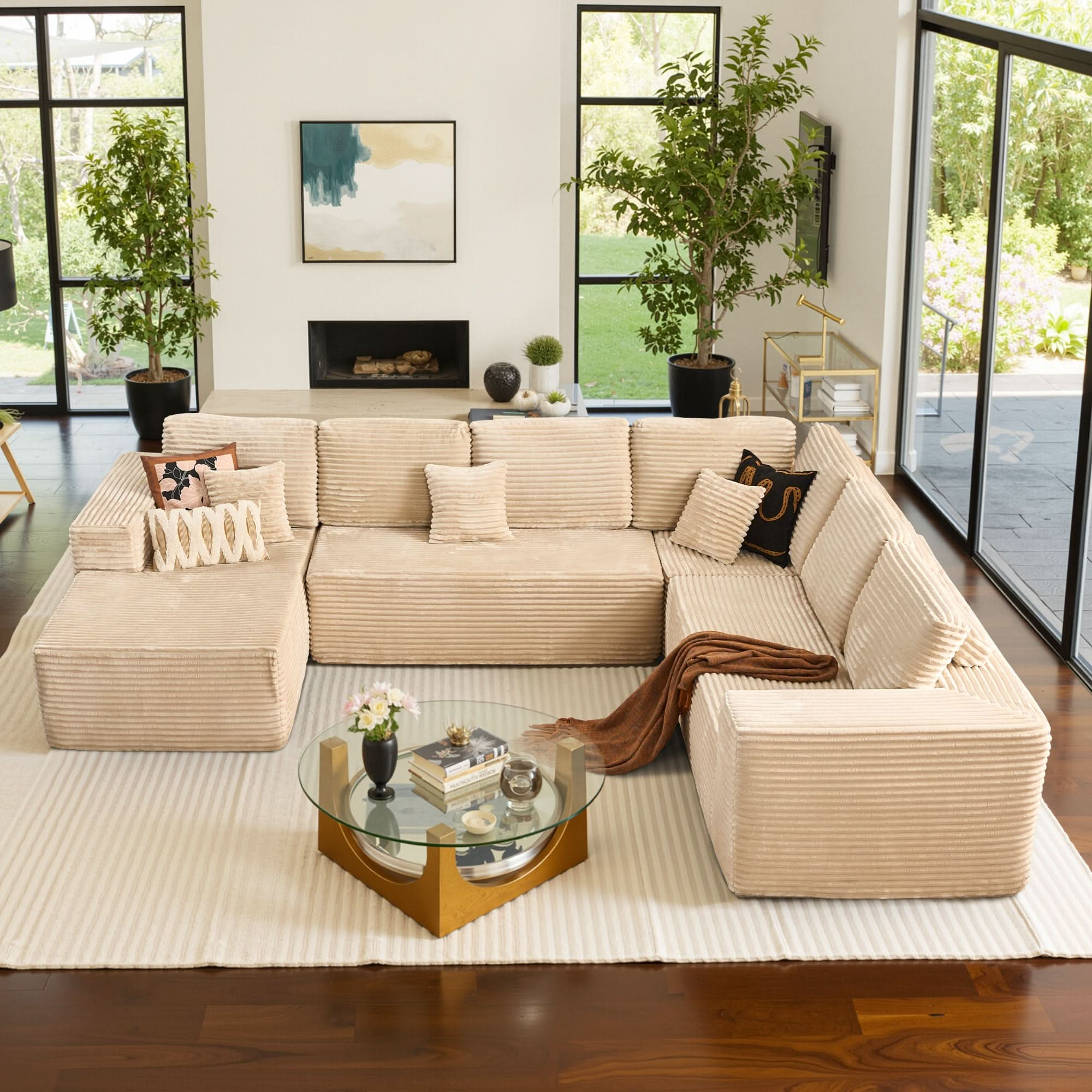
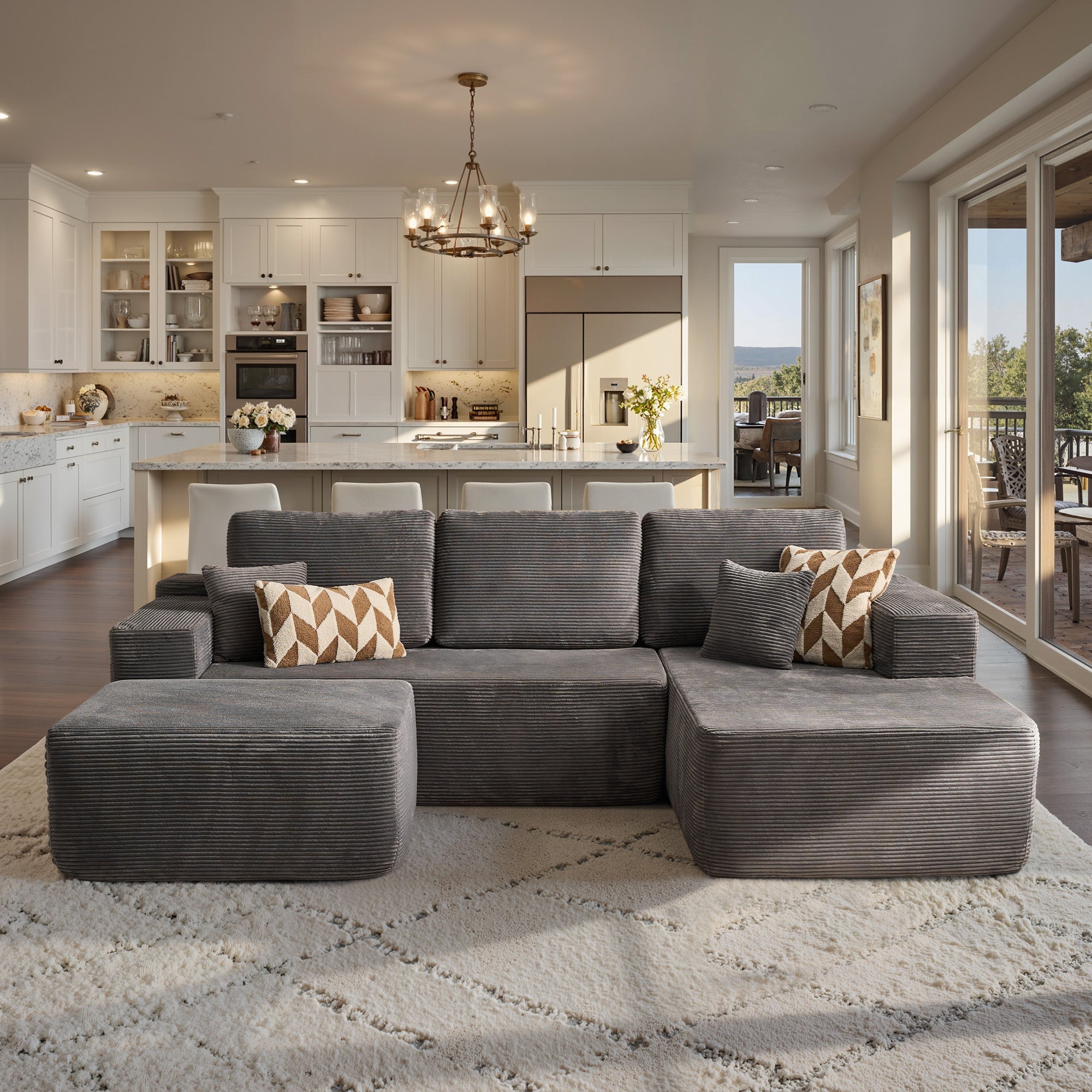
Ovios 130.7" Modular Sectional Sofa Couch, L-Shaped Minimalist Couches with Convertible Chaise
Smart Placement Strategies for Your L-Shaped Sectional
Location depends on your room shape and daily habits. These four spots usually work best to get the most from your floor plan.
1. Against a Wall to Open Up Space
Small rooms need a clear center. Putting your L-shaped sectional sofa against a wall helps. This works well if you face a TV or fireplace. It keeps the middle floor open for walking or playing. It prevents the furniture from taking over the room.
2. Using the Sofa as a Zone Divider
Face the sofa toward the TV but turn its back to the dining area. The long side acts as a divider. You feel like you are in a separate, cozy room. Yet, you can still see the kitchen. This balance keeps the home connected but organized.
3. Floating the Sofa for Central Focus
In huge rooms, walls are too far away. Float the furniture in the middle. A large modular sectional has the size to stand alone. It creates a comfortable island. People can approach from any side. This looks intentional and high-end.
4. Corner Placement for Cozy Nooks
Use natural corners to save space. Tucking the sofa here creates a "lounging pit." It leaves the main walkways clear. This spot feels quiet and protected from kitchen noise. It is great for reading or napping.

How to Enhance Flow and Functionality with Open Floor Plan Furniture
After picking a spot, you must fix the details. Good design focuses on how you move and how pieces fit together in the space.
Maintain Clear Walkways
Don't squeeze past furniture. Think about traffic flow in living room layouts. Keep 30 to 36 inches of space clear. If the path is tight, the room feels small. Make sure you can walk easily from the kitchen to the hallway.
Give the Furniture Breathing Room
Don't push furniture tight against walls. Pull it out a few inches. This makes the room look bigger.
Open floor plan furniture looks best with space around it. Crowding pieces together makes the design look messy.
Anchor with a Rug
Use a rug to define the zone. Front legs should sit on the rug. It groups the sofa and table together. Without a rug, furniture looks like it is drifting on the floor. It visually separates the living area from the dining area.
Layer Your Lighting
Overhead lights can be harsh. Add specific lamps for the sofa area. A floor lamp behind the corner works well. Turning off kitchen lights focuses attention on the living space. It makes the large room feel cozy at night.
Pair with the Right Coffee Table
Round tables often work best here. Curves break up the straight lines of the sofa. They are also safer for shins when walking into the seating nook. Make sure the table is within reach of every seat.
Common Mistakes to Avoid When Positioning Your Sofa
It is easy to miss practical details when buying new furniture. Avoiding these errors keeps your room functional and helps it look professional.
Blocking Natural Pathways
Don't put the long arm across a main path. Walking around the whole sofa to get to the kitchen is annoying. Always look at the direct lines between doors. Keep these paths clear for easy movement.
Choosing the Wrong Scale
Size is critical. A huge sofa eats the room. A small one looks lost. Use tape on the floor to test the size before buying. A large modular sectional fits a grand room, not a small apartment.
Creating a "Wall of Fabric"
A high sofa back facing the entry looks uninviting. It says "keep out." If you must place the back toward the entry, put a console table behind it. Add some decor. This makes the view interesting.
Neglecting Balance
These sofas are heavy on one side. Balance it with an accent chair on the open side. This completes the shape. Without it, the layout feels lopsided. It ensures everyone has a spot to sit and talk.
Blocking Light Sources
Don't cover windows. Natural light makes open plans great. If you must be near a window, pick a low-profile sofa. Keep the sightlines clear. Let the sun shine in.
Define Your Space with an L-Shaped Sectional Sofa
The L‑shaped sectional sofa is a powerful tool for open floor plans. It defines space without closing it off. You can float it in the center or tuck it in a corner to suit your lifestyle. The goal is to respect the home's flow. Watch your walkways and balance the layout carefully. This turns a large, undefined room into an inviting home.
FAQs
Q1: Should my L‑shaped sofa always go against a wall?
Not necessarily. While wall placement maximizes floor space in smaller apartments, "floating" the sofa is often better for open floor plans. Using the back of the sofa as a divider helps separate your lounge from the dining area. This creates distinct zones while keeping the room's flow open and airy.
Q2: How far should the sofa be from the TV?
A simple rule is to sit about 1.5 to 2.5 times the diagonal width of your screen away. For a standard 65-inch TV, aim for roughly 8 to 9 feet. If you have a massive screen (over 75 inches), push back to 10–12 feet. This ensures a sharp picture without causing eye strain.
Q3: How do I know if a sectional is too big for my room?
Try the "painter's tape test." Mark the sofa's exact dimensions on your floor with tape. Then, walk around it. If you have less than 30 inches of walkway space, or if it blocks the path to a door, it is too large. The furniture should anchor the space, not choke it.
Q4: Can I use two L‑shaped sofas in one room?
You can, but only in very large spaces. Placing two facing each other creates a cozy conversation pit. However, for most open layouts, a single sectional paired with one or two accent chairs is a smarter choice. It offers more flexibility and keeps the visual weight balanced.

Leave a comment
This site is protected by hCaptcha and the hCaptcha Privacy Policy and Terms of Service apply.