



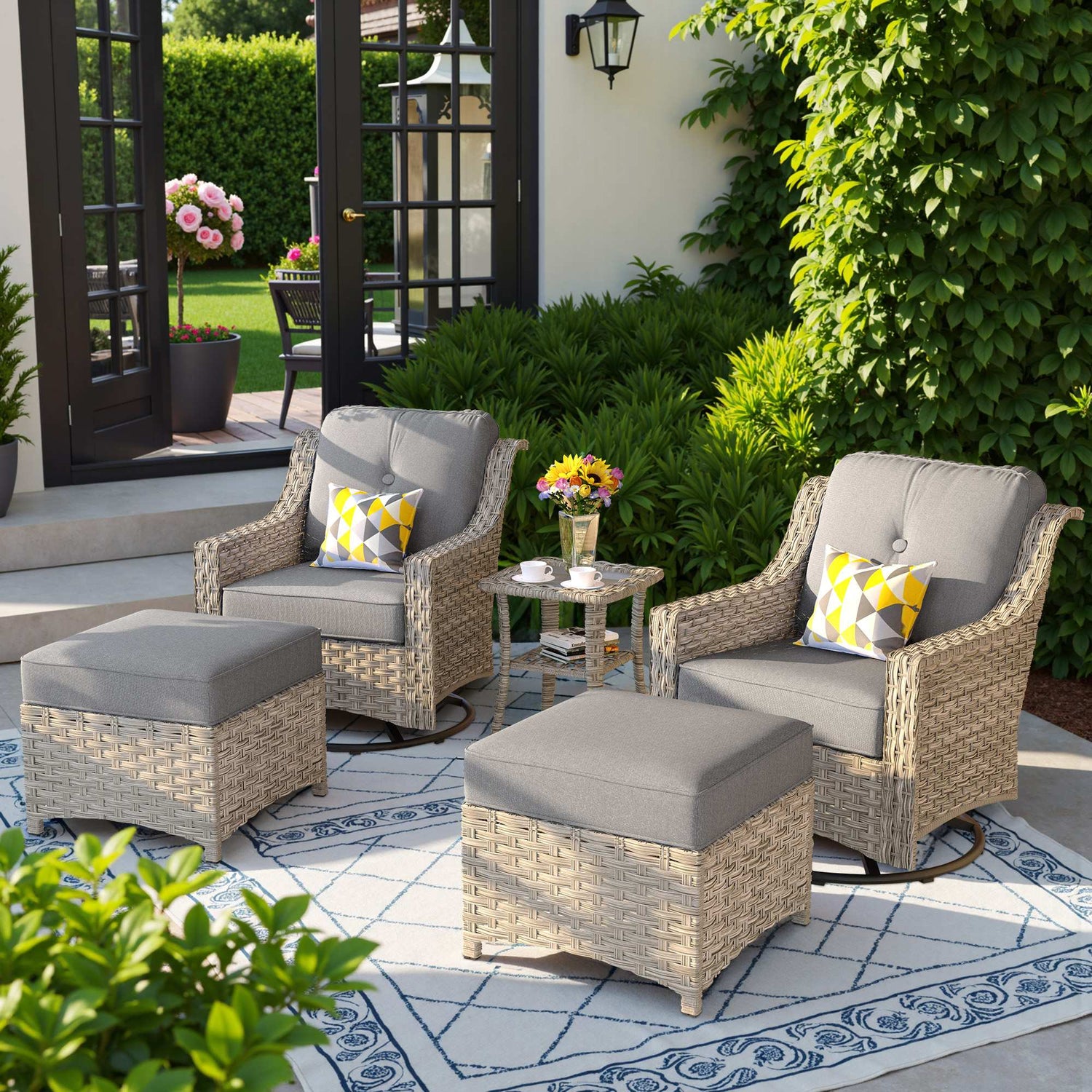
True outdoor relaxation comes down to more than soft cushions or stylish looks. Deep seating patio chairs are engineered specifically for lounging, reading, and extended sitting sessions that feel closer to your living room sofa than a standard dining chair. By combining deeper seat dimensions, thicker high-density cushions, and supportive high-back angles, these designs help maintain natural posture while letting you stretch out comfortably outdoors.

Choosing the right chair avoids the common regret of shallow seating that forces you to perch upright or slide forward, leaving your back unsupported after 20 minutes. The mechanics that create genuine comfort are measurable: seat depth, cushion construction, and back geometry. Understanding them helps you select oversized patio chairs that deliver lasting support rather than temporary style.
What Makes a Chair "Deep Seating" Instead of a Standard Patio Dining Chair?
Deep seating patio chairs belong to a lounging-oriented category designed for relaxation rather than upright dining. While typical outdoor dining chairs feature seat depths around 17-20 inches to keep users positioned properly at a table, deep seating models often provide 22-28 inches or more of depth. This extra room lets your thighs fully support and allows you to sink back naturally without your knees hanging off the edge.
The distinction goes beyond size. Deep seating prioritizes a relaxed posture with room to shift positions, cross your legs, or tuck feet underneath. Dining chairs, by contrast, favor a more formal, feet-flat-on-floor stance that works for meals but quickly becomes tiring for reading or casual conversation. This design choice explains why many shoppers seeking the best patio chair for lounging not dining turn to oversized options that mimic indoor comfort.
As this official ergonomics guidance notes, chairs that properly support the back and maintain natural spine curvature tend to feel more comfortable during longer sessions. Deep seating achieves this through intentional geometry rather than simply adding padding to a dining frame.

How Seat Depth Creates Lounge-Like Leg Support
Seat depth directly influences how long you can sit without shifting or losing circulation. In deep seating patio chairs, the longer platform allows your entire thigh to rest fully supported, reducing pressure points behind the knees. This setup encourages a slight recline that feels natural for reading or unwinding with morning coffee.
Standard dining-style chairs often stop short, forcing you to either perch on the edge or let your lower legs dangle. The result is fatigue during activities like extended outdoor reading or remote work. Deeper seats generally create a more relaxed, lounge-like feel with more room to stretch out, which is why they dominate setups meant for lingering rather than quick meals.
When shopping, treat seat depth as one of the most important dimensions to check. Measure your typical sitting posture: if you prefer to lean back with legs extended, aim for at least 22 inches. Smaller balconies may still accommodate a compact deep seat model if the primary use is lounging rather than table dining. For apartment dwellers, this guide to maximizing comfort on a small apartment balcony offers practical layout strategies that pair well with appropriately scaled deep seating.
Cushion Density and Thickness: The Foundation of Long-Term Comfort
Cushions make or break the indoor-like experience outdoors. Deep seating often uses thicker, separate seat and back cushions—frequently 3-6 inches or more—with substantial loft that feels plush yet supportive. These contrast sharply with the thin pads commonly found on dining chairs.
Higher-density foam plays a critical role here. It generally retains support and shape better than lower-density foam over time, resisting the flattening that turns a once-comfortable chair into a sagging disappointment. This performance characteristic matters especially for readers and remote workers who may sit for an hour or longer.
Look for cushions with high-resilience foam cores wrapped in softer layers. Many premium deep seating options also feature water-resistant covers with zippers for easy cleaning, extending both comfort and lifespan. Separate seat and back measurements allow precise replacement if needed, unlike one-piece dining pads that wear unevenly.
This foam performance overview from the Polyurethane Foam Association explains the science behind why density matters for retaining supportive qualities. In practice, plush deep-seating cushions often feel more like indoor furniture than a thin outdoor pad, transforming your patio into an extension of your living room.
The Role of Back Angle and High-Back Design for Reading and Reclining
High-back designs distinguish true lounging chairs from lower-profile options. Taller backs—often 30-40 inches—provide upper and lower back support that helps maintain natural spine curvature during extended sessions. This becomes particularly valuable for comfortable outdoor chairs for reading, where poor support quickly leads to neck strain or slouching.
A moderate recline angle, typically paired with generous depth, lets you settle in without fighting the chair. Ergonomic high-back seating supports both posture and relaxation, making it easier to focus on a book or enjoy evening conversations without constant readjustment.
Official resources reinforce this principle. According to California's Easy Ergonomics guide, a chair that fits the body and supports both the upper and lower back performs better for longer sitting sessions. While written for office environments, the biomechanics translate directly to outdoor use where you might spend similar amounts of time.
Many deep seating models incorporate wide armrests for added stability when rising or holding a drink, further enhancing the living-room-chair sensation. Our related article on why ergonomic high-back seating is essential for outdoor living rooms explores these benefits in greater detail.
Visual Comparison of Deep Seating vs. Standard Dining Chairs
Typical Ranges for Comparison: Deep Seating vs Dining-Style Outdoor Chairs
Illustrative comparison using typical industry ranges and scenario-fit logic; use as a mechanical guide, not a measured product benchmark.
View chart data
| Series | Seat depth | Cushion thickness | Back height | Recline angle | Lounging suitability | Upright dining suitability |
|---|---|---|---|---|---|---|
| Deep seating patio lounging chair | 5.0 | 5.0 | 5.0 | 4.0 | 5.0 | 2.0 |
| Standard dining-style outdoor chair | 2.0 | 2.0 | 3.0 | 2.0 | 2.0 | 5.0 |
Illustrative heuristic model based on typical industry ranges and cited mechanics: dining seat depth ~17–20 in, deep seating ~22–28 in+; deep seating cushions often ~3–6 in+ and separate seat/back cushions are common; higher backs support longer sitting comfort. Scores are relative planning signals, not measured product data.
This radar chart models typical mechanical patterns using industry ranges as planning signals. Deep seating scores higher on lounging factors while dining chairs excel at upright utility. Scores represent relative differences for decision-making, not laboratory test results. Actual comfort still depends on your body proportions, patio layout, and specific product quality.
Scenario Matrix: When Deep Seating Chairs Make the Most Sense
The best choice depends heavily on how you actually use your outdoor space. Deep seating patio chairs generally outperform standard dining chairs when your patio serves as a relaxation zone rather than a dining area.
Consider these common scenarios:
- Reading or focused work outdoors: Deep seating with high-back support wins. The extra depth and cushioning let you settle in for 45+ minutes without readjusting, while high backs reduce neck strain.
- Morning coffee or evening wind-down: Oversized patio chairs that feel like living room furniture create an inviting atmosphere for solo relaxation or couple conversations.
- Creating conversation corners near a fire pit or pool: Plush deep seating encourages lingering. Wide armrests and rocking or swivel bases (available in many models) enhance social flow.
- Small balcony or covered porch: Here the decision flips. If space is extremely limited and the area doubles as dining space, a compact dining-style chair may fit better. However, if the primary goal is comfort over utility, a scaled deep seat model can still work when paired with thoughtful layout.
Conversely, choose standard outdoor dining chairs when meals are the main activity, when you need to tuck chairs fully under a table, or when frequent rearranging and storage matter more than plush comfort. The scenario matrix from our analysis shows that the main flip occurs based on sitting duration and posture needs rather than aesthetics alone.
For those exploring swivel functionality to enhance these scenarios, benefits of swivel chairs for outdoor lounging provides additional insights on improving both comfort and conversation dynamics.
How to Assess and Choose the Right Deep Seating Patio Chair for Your Needs
Translating mechanics into a practical buying checklist helps avoid regret. Follow these checkpoints in order:
- Measure your space and primary use: Calculate available depth and width. If lounging for reading or relaxation occupies more than 60% of planned use time, prioritize deep seating. For mixed dining and lounging, consider modular conversation sets that adapt.
- Test seat depth against your height: Sit in similar chairs if possible. Your thighs should rest fully supported with 2-4 inches of clearance behind your knees. Taller users generally benefit from 24+ inch depths.
- Evaluate cushion construction: Press firmly on the seat and back. Higher-density foam should spring back quickly without bottoming out. Check for separate, zippered cushions at least 4 inches thick for deep seating models.
- Check back height and angle: Ensure the back rises high enough to support your shoulders when reclined. A slight recline angle (roughly 10-20 degrees from vertical) promotes comfort without forcing you too far back for reading.
- Review materials for durability: Look for UV-resistant wicker or aluminum frames paired with weatherproof fabrics. High-quality builds maintain both appearance and comfort through seasons.
- Consider accessories and features: Wide armrests, gentle rocking motion, or 360° swivel can significantly enhance the lounging experience in models designed for it.
This checklist turns abstract features into executable steps you can apply while shopping online or in-store. For broader context on long-term value, our lifecycle economy of outdoor furniture discusses repairability and total cost of ownership.
Common Myths About Comfortable Outdoor Chairs
Several misconceptions can lead to disappointing purchases. First, many assume any padded outdoor chair will feel equally comfortable. In reality, thin dining pads compress quickly and lack the loft needed for true lounging. Second, some believe deeper always equals better. Excessive depth without proper back support can cause slouching or difficulty rising, particularly for shorter users or those with mobility considerations.
Another myth suggests that all high-back chairs provide equivalent ergonomic benefits. Actual support depends on the angle, cushion density, and how the design aligns with your spine. Finally, many overestimate the “set it and forget it” durability of outdoor cushions. Even high-density foam benefits from proper storage during extreme weather and regular fluffing.
Recognizing these myths helps set realistic expectations. Deep seating patio chairs can deliver living-room levels of comfort outdoors, but only when the specific mechanics match your body, space, and usage patterns.
Creating Your Outdoor Living Room with Deep Seating
Once you understand the mechanics, integrating deep seating becomes straightforward. Position oversized patio chairs in conversational groupings rather than strictly around a dining table. Add side tables within easy reach for books, drinks, or devices. Consider pairing with complementary pieces from patio conversation sets that maintain consistent cushion quality and style.
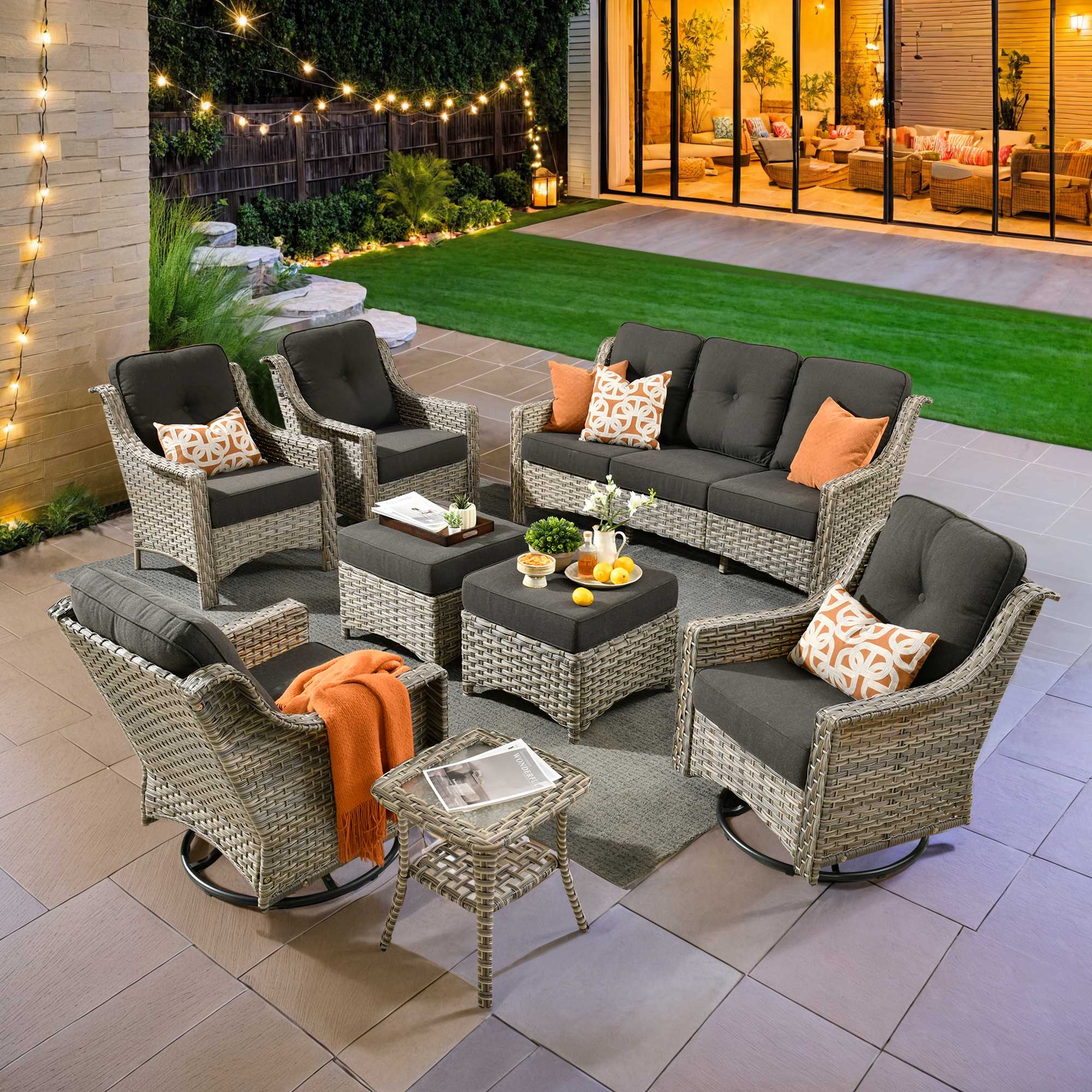
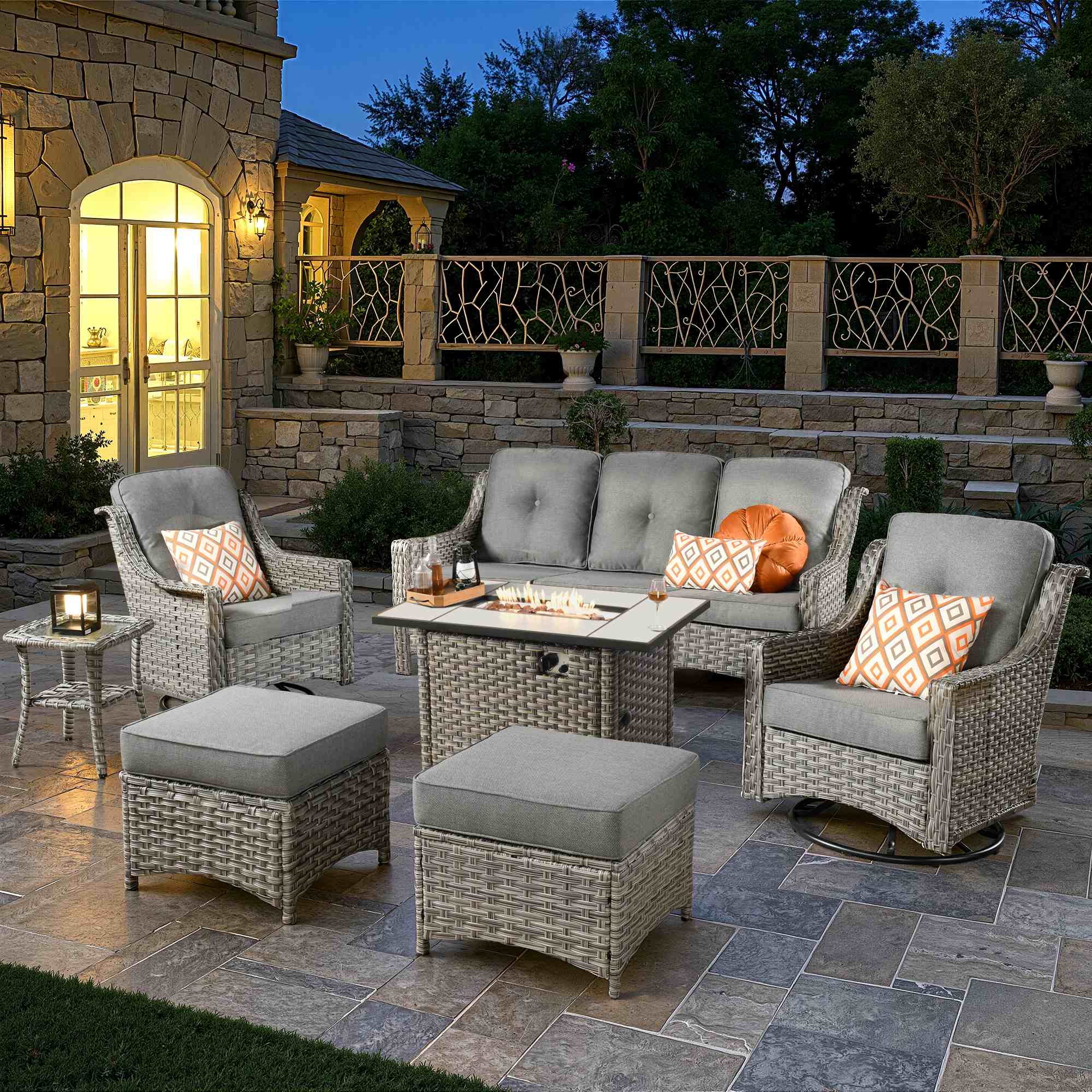
For those seeking specific recommendations, explore OVIOS Outdoor Conversation Set with 7.68" Extra-Wide Armrests and Rocking Chairs or the OVIOS 4-Piece Outdoor Patio Set with Swivel Chairs. These incorporate many of the mechanical advantages discussed—generous depth, supportive high backs, thick cushions, and smooth motion features that enhance long-term comfort.
Many buyers also appreciate the versatility of swivel chairs within deep seating collections, allowing easy direction changes without dragging heavy furniture.
Final Considerations Before Buying
Deep seating patio chairs excel at transforming outdoor spaces into genuine relaxation zones. Their deeper dimensions, substantial cushioning, and ergonomic high-back designs address the core problems of poor posture, quick fatigue, and inadequate support that plague many standard outdoor seats.
However, they may not suit every situation. Very small footprints, primary dining use, or frequent storage needs might favor more compact dining-style options. Always match the chair mechanics to your dominant activities and available space rather than following trends alone.
This article discusses comfort and setup considerations for outdoor furniture only. It does not constitute medical advice, diagnosis, or treatment. If you experience persistent discomfort, have existing back conditions, or concerns about posture, consult qualified healthcare or ergonomics professionals for personalized guidance.
With the right deep seating choice, your patio, deck, or balcony can become the comfortable extension of your home you’ve been seeking—perfect for reading, unwinding, or simply enjoying the outdoors in a chair that finally feels right.
Comfort Disclaimer: Individual experiences with chair comfort vary based on body type, weight, posture habits, and specific product construction. The thresholds and comparisons here are illustrative planning tools derived from typical industry patterns and general ergonomic principles. Test in person when possible, and consider return policies for online purchases. What feels luxurious to one person may feel too soft or deep for another.

Leave a comment
This site is protected by hCaptcha and the hCaptcha Privacy Policy and Terms of Service apply.