



Maximizing Micro-Patios: The Ultimate Guide to Small-Space Modular Furniture
You do not need a large backyard to enjoy a comfortable, upscale outdoor retreat. With the right modular outdoor furniture for small spaces, even a narrow apartment balcony or micro-patio can become a functional extension of your living area that balances seating, circulation, and style.
Explore More Small-Space Styling Tips
- Styling an Upscale Micro-Patio with Compact Balcony Furniture
- Designing a Luxury Micro-Patio: High-End Furniture Solutions for Urban Balconies
- Turning a Tiny Balcony into a Luxury Retreat with Upscale Modular Seating
- Best Space-Saving Patio Furniture for Small Apartment Balconies
- How to Maximize Comfort on a Small Apartment Balcony

Urban dwellers often face the challenge of fitting comfortable seating into tight footprints without making the space feel cramped. The key is to treat the area as a distinct outdoor room, measure carefully, and choose flexible pieces that preserve movement while delivering the comfort and durability you want. This guide delivers practical thresholds, layout rules, and selection criteria so you can maximize your small patio without common regrets.
Why Measure Your Micro-Patio Before Shopping
Successful small-space patio ideas with sectional seating begin with accurate dimensions rather than product photos. Measure the full footprint, including door swing, railing overhang, and any fixed features. Then sketch the intended activity zone and required circulation paths.
As this Oklahoma State University fact sheet on creating outdoor rooms explains, you should define the activity zone first and then select furniture sized to the actual space and intended use. Mapping the layout on paper prevents buying a set that technically fits the catalog dimensions but leaves no room to move.
Use these planning thresholds as a general rule-of-thumb to screen options quickly:
- Aim for at least 30–36 inches of clear walking path around or beside the seating. Narrower paths can quickly make the patio feel crowded.
- In balconies roughly 4–6 feet deep, shallow modular profiles typically work best when traffic flow remains straight.
- Keep an activity zone of approximately 36–48 inches wide for comfortable seating without blocking access.
These values serve as illustrative screening boundaries drawn from standard outdoor planning guidance and circulation principles. Actual comfort still depends on your specific door placement, railing design, and how many people typically move through the area.
Micro-Patio Threshold Fit Guide
Planning guide for deciding whether a modular micro-patio layout will feel spacious or cramped.
View chart data
| Category | Good Fit | Marginal | Avoid |
|---|---|---|---|
| Balcony Depth (ft) | 6.0 | 4.5 | 3.0 |
| Walking Path Width (in) | 36.0 | 30.0 | 24.0 |
| Activity Zone Size | 48.0 | 36.0 | 24.0 |
Illustrative threshold chart based on standard outdoor planning rules and municipal/ADA circulation guidance: clear walking path 30–36 inches; compact modular layouts are workable around 4–6 ft balcony depth; oversized furniture can crowd circulation. Values are for layout screening and planning, not measured performance data.

Best Modular Outdoor Furniture Formats for Tight Footprints
Modular designs shine in small spaces because individual pieces can be rearranged as needs change. Look for lightweight sections, corner units, or movable chairs rather than one large fixed sofa. Our patio sectional collections offer configurations that adapt well to narrow balconies while maintaining upscale cushion comfort and weather-resistant construction.
In narrow footprints, prioritize slim profiles or stackable chairs that hug the railing or wall. Square or slightly wider micro-patios can accommodate a compact lounge set that creates distinct zones without sacrificing flow. Flexible, movable seating helps the area adapt, a common pattern seen in comfortable outdoor sitting spaces that emphasize variety and mobility over single bulky arrangements.
When choosing, favor materials such as UV-resistant PE wicker and quick-dry cushions that stand up to balcony wind and moisture. Our 4 Pieces sets, including options with 360° swivel chairs, deliver durability without excessive weight, making seasonal reconfiguration practical.
How to Choose Modular Pieces for Flexibility, Comfort, and Durability
Select modular outdoor furniture for small spaces by matching piece depth and width to your measured thresholds first. Then evaluate cushion thickness, back height, and frame strength for real-world comfort. High-back designs often feel more supportive in exposed balcony settings, while deep seating suits relaxed lounging when space allows.
Durability matters more in small areas because every piece gets frequent use. Look for rust-resistant frames, fade-resistant fabrics, and removable cushion covers that simplify cleaning. Avoid very low seating in tight footprints because it can feel harder to rise from and may visually shrink the space.
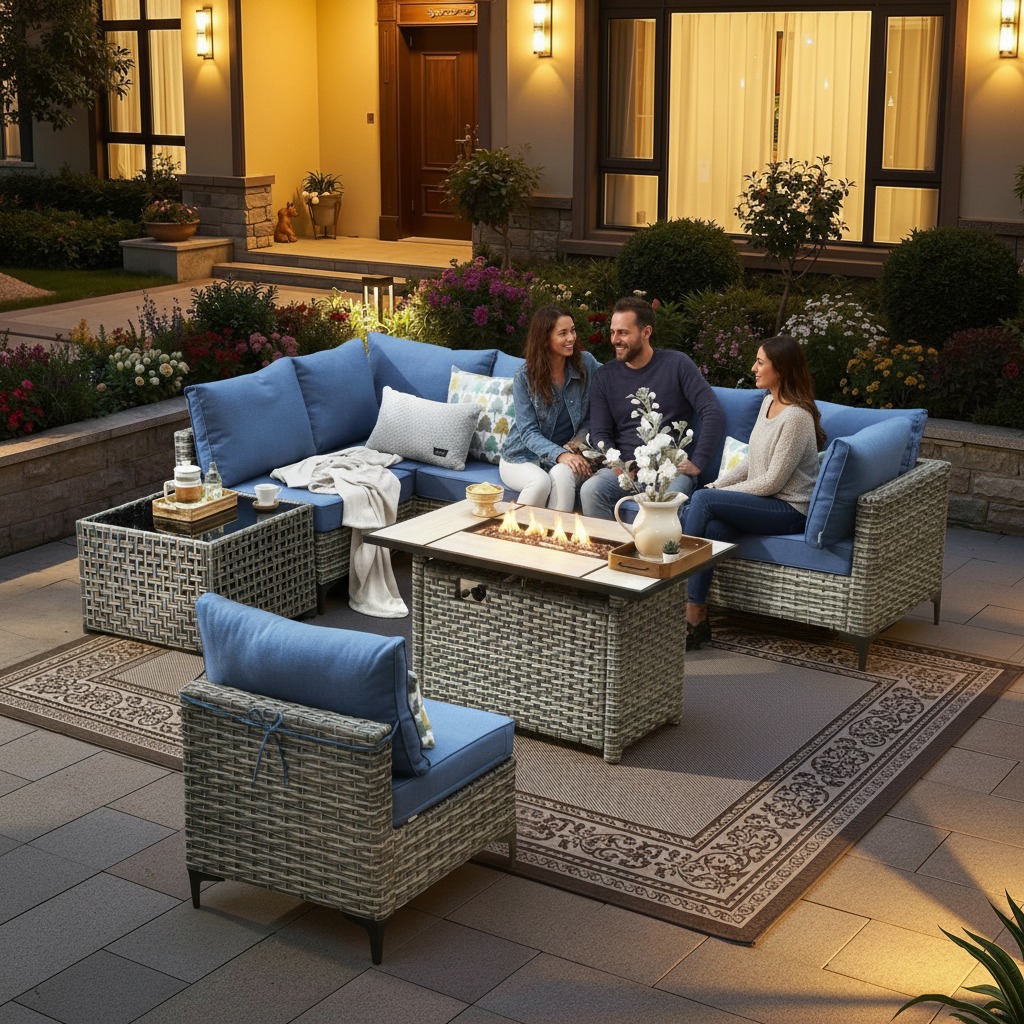
Our OVIOS 4-Piece Outdoor Patio Set with Swivel Chairs combines high-back support, plush spill-resistant cushions, and modular flexibility that many urban users find ideal for micro-patios. Similarly, the OVIOS Patio Furniture Set 3-Piece with Swivel Chairs and Side Table Kenard offers a compact footprint perfect for narrower balconies.
Optimal Layouts for Outdoor Seating on Apartment Balconies
Arrange furniture to create a clearly defined seating pocket while leaving an unobstructed circulation path. Place the main seating against a wall or railing so the open side faces the longest view or doorway. In very narrow balconies, a linear arrangement of two chairs and a small table often preserves flow better than an L-shaped sectional.
For multi-use micro-patios, position a compact lounge set on one side and keep the opposite side open for occasional dining or plant stands. This approach follows the principle of treating the balcony as an extension of indoor living space that remains adaptable.
Leave at least 30 inches clear beside or in front of seating so the area never feels like an obstacle course. As many municipal outdoor seating guidelines note, preserving pedestrian circulation prevents the space from feeling cramped rather than inviting.
Common Layout Mistakes to Avoid in Micro-Patios
One frequent error is buying visually compact sets that still reduce walking paths below comfortable levels once cushions and leg room are added. Another is ignoring door swing or railing clearance, which turns a usable patio into a navigation challenge.
Avoid filling every inch with furniture. Leaving some open area for airflow and light keeps the micro-patio feeling upscale instead of cluttered. Oversized pieces that crowd the walkway are a top regret, according to urban design resources that stress maintaining visual openness and movement space.
Do not choose fixed, non-modular furniture when your use pattern changes seasonally or daily. Users often find that low seating in tight spaces proves less practical for repeated entry and exit. Finally, skip heavy pieces if you lack easy storage, because seasonal removal becomes burdensome.
Maintenance and Storage Tips for Small-Space Outdoor Furniture
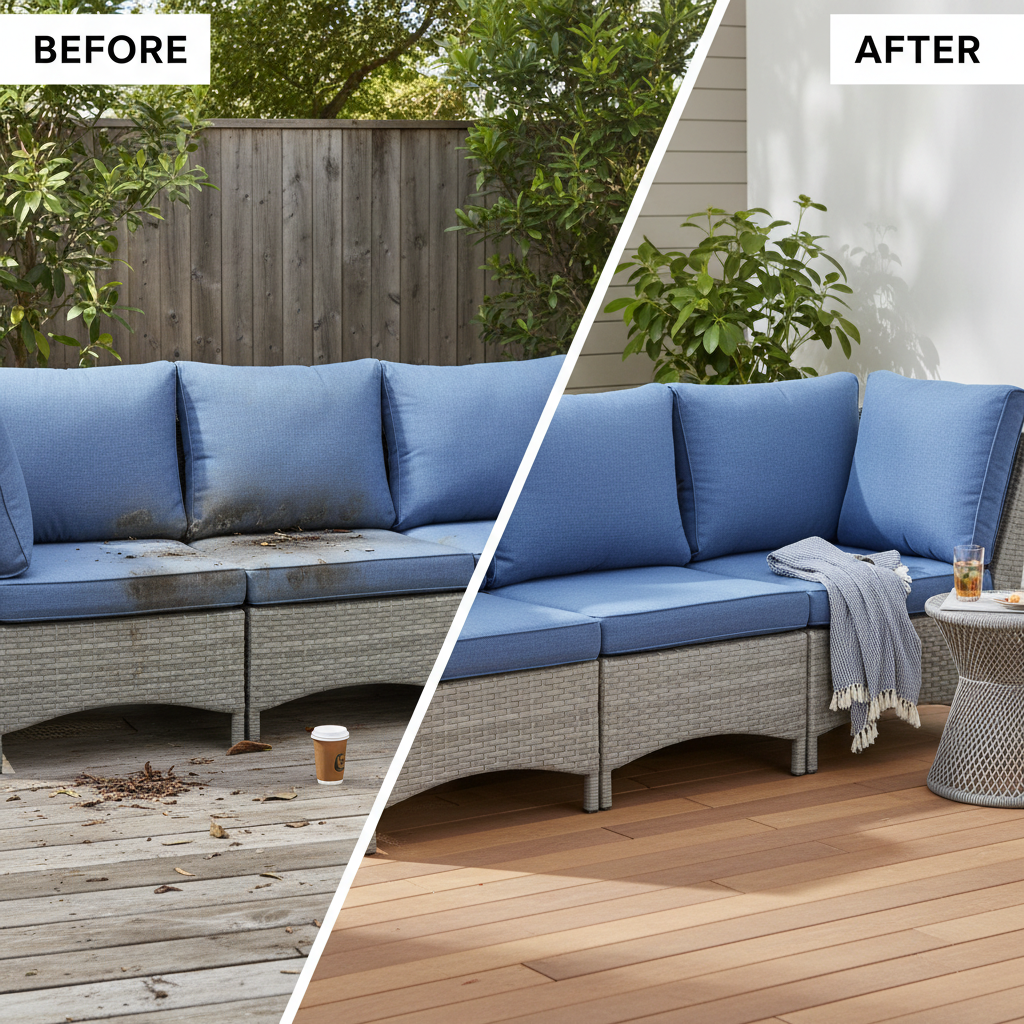
Choose pieces with removable, washable cushions and weather-resistant wicker that resist mildew and fading. In windy balcony settings, opt for lightweight modular units that can be brought inside during storms or stacked for winter.
Clean frames and fabrics regularly to extend lifespan. Many of our conversation sets feature quick-dry foam and UV-protected materials that simplify upkeep in compact urban environments. When space is limited, look for nesting or stackable designs within the 2 Pieces or 1–2 Seats collections.
Next Steps: Create Your Own Micro-Patio Plan
Start by measuring your balcony or patio today and sketching at least two possible layouts that maintain the 30–36 inch circulation guideline. Compare modular options against your specific scenario—narrow linear space versus multi-use square footprint—to decide between slim fixed seating and fully rearrangeable sectionals.
Review your priorities for comfort, storage, and seasonal flexibility, then explore targeted collections such as Patio Conversation Sets or individual high-back swivel chairs that fit tight footprints. With careful planning and the right small patio furniture, your compact outdoor area can deliver the upscale retreat you want without sacrificing usability or style.
This article discusses comfort and layout advice for outdoor spaces only. It does not constitute medical, safety, or architectural advice. Persistent discomfort, wind safety concerns, or questions about local building codes should be addressed by qualified professionals.
Frequently Asked Questions
What Is the Minimum Balcony Size for Comfortable Modular Seating?
Most users find 4–6 feet of depth workable when circulation paths stay at 30 inches or wider. Narrower balconies often perform better with two slim chairs and a small table rather than a full sectional. Always map your exact dimensions and door swing before purchasing.
Should I Choose Sectionals or Individual Chairs for a Narrow Balcony?
Choose individual or small modular chairs when the balcony primarily serves as a pass-through or single-use lounge. Sectionals work better on slightly wider micro-patios that can be reconfigured for different activities. The decision hinges on whether flexibility or a fixed compact footprint matters more in daily use.
How Can I Make a Tiny Patio Feel More Luxurious?
Define a clear seating zone with cohesive colors, layered cushions, and strategic greenery that frames rather than fills the space. High-quality weather-resistant materials and thoughtful lighting add perceived value without consuming extra floor area. Focus on comfort and circulation first so the space feels intentionally designed instead of crowded.
What Materials Hold Up Best on Windy Apartment Balconies?
UV-resistant PE wicker over powder-coated or rust-resistant frames combined with quick-dry, water-repellent cushions typically perform well. Lightweight yet sturdy construction allows easy movement or storage during high winds. Check product specifications for wind ratings when available.
Can Modular Furniture Be Used for Both Seating and Dining on a Micro-Patio?
Yes, when you select pieces that can be rearranged or paired with a compact multi-function table. Many users create a lounge zone that converts to casual dining by moving one or two modules. Test the layout on paper first to confirm that both configurations preserve adequate circulation.
How Do I Avoid Buyer’s Remorse When Shopping for Small Patio Furniture?
Measure twice, map the layout with actual clearances, and prioritize circulation over seat count. Read return policies carefully and consider starting with a two- or three-piece set rather than a large collection. Focus on versatile, durable pieces that match your real usage pattern instead of idealized catalog scenes.

Leave a comment
This site is protected by hCaptcha and the hCaptcha Privacy Policy and Terms of Service apply.