



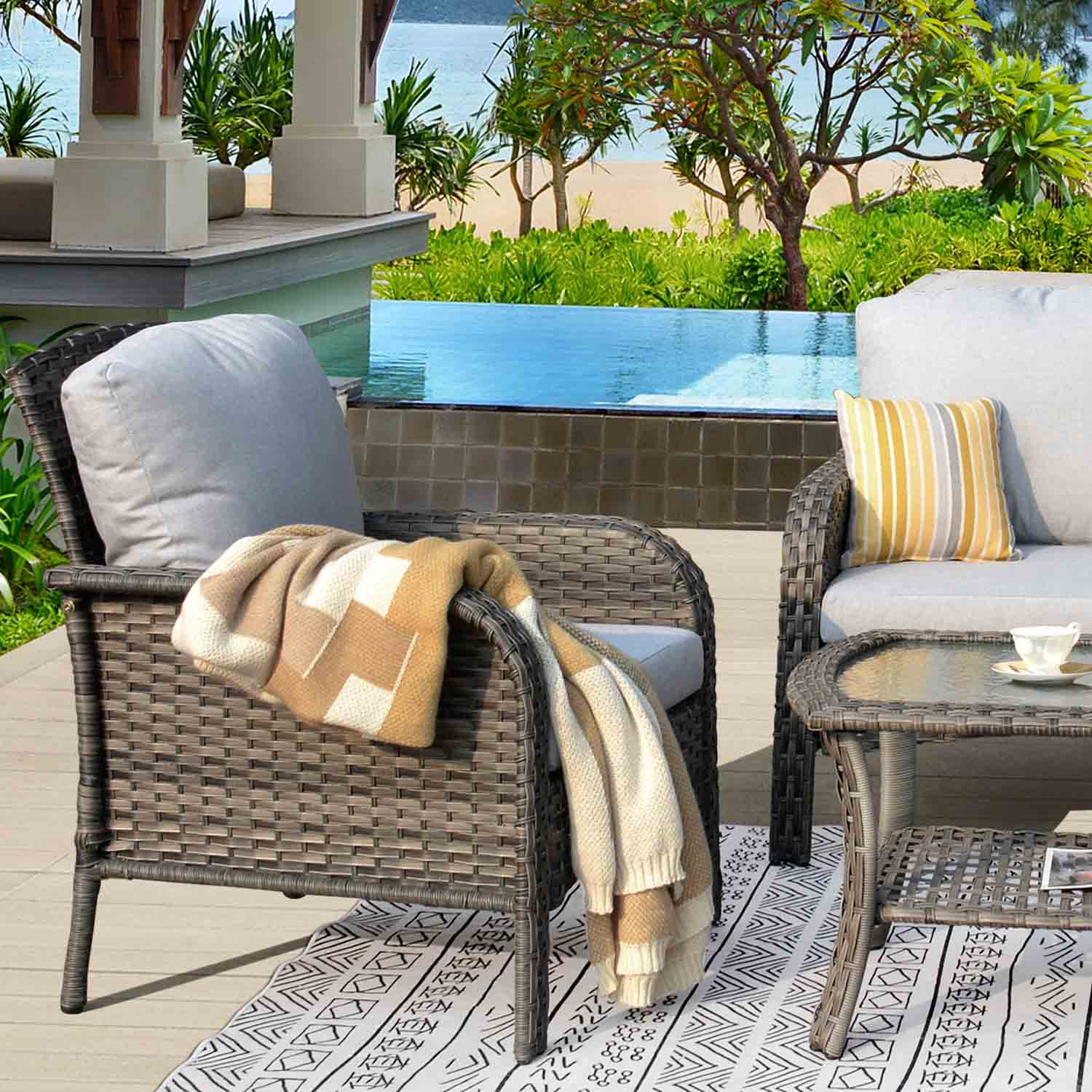
Replacing the cushions on your wicker patio set is often the smartest way to refresh outdoor seating without buying an entire new frame. When the wicker structure remains solid, exact-fit replacement cushions can restore comfort, update the look, and save significant money compared with a full set purchase. The key is accurate measurement, understanding standard versus custom sizing, and selecting fade-resistant outdoor fabrics that stand up to 2026 sun and weather conditions.
Many homeowners discover that their existing wicker frames outlast the original cushions by years. Sun exposure causes outdoor textiles to fade and degrade faster, making fabric choice critical for longevity. Routine cleaning and proper storage further extend cushion life, so a thoughtful replacement can keep your set looking new for several more seasons.

Why Measurement Comes First
The single biggest cause of disappointment with replacement patio cushions is incorrect sizing. Before comparing fabrics or colors, confirm whether your wicker set uses standard or custom dimensions. Sets with repeatable rectangular or square seats often accept standard replacements, while curved fronts, unusual corner radii, angled backs, or mixed chair sizes usually require custom work.
Treat “one size fits all” claims with caution. This phrase typically means the cushion fits many common frames with similar geometry, but small differences in seat depth, corner shape, or back angle can cause sliding, overhang, or gaps that expose the wicker frame. Measure each seating position separately rather than assuming uniformity across the set.
A practical first filter helps avoid wasted shopping time. If your seats are regular rectangles or squares and the measurements repeat, start with standard sizes. If the shape is irregular or the set mixes multiple sizes, move directly to custom options. This constraint-first approach prevents comparing fabrics on products that will never fit properly.
How to Measure Patio Furniture Cushions for an Exact Fit
Accurate measurement prevents the most common returns. Use a flexible tape measure and record each dimension twice to confirm. Focus on the usable seat footprint rather than the old cushion’s outer edge, especially if the existing foam has compressed or the cover has stretched.
Follow this checklist:
- Measure seat width and depth at the widest usable points where a person sits, not just the cushion cover edges.
- Record thickness with the cushion uncompressed if possible; typical outdoor seat cushions range from 3 to 5 inches.
- Note front edge shape, corner radius (commonly 1 to 2 inches), and whether the backrest is straight or angled.
- Check for attachment features such as ties, Velcro strips, or non-slip backing so the replacement matches these details.
- Photograph the old cushion and frame from multiple angles for reference when ordering.
Common mistakes include measuring only the compressed old cushion, ignoring rounded corners, or ordering one size for an entire mixed set. If current cushions are badly deformed, consider creating a cardboard template of the seat area for the most precise match.

This official guide to measuring for new patio furniture cushions offers additional diagrams that align with the practical workflow described above.
Choosing Fade-Resistant and Weather-Resistant Fabrics
Once dimensions are confirmed, fabric performance determines how long the new cushions will look fresh. Outdoor textiles can fade and degrade faster under UV exposure, so selecting fabrics designed for UV resistance, weather resistance, and mildew resistance is important.
Prioritize performance fabrics such as solution-dyed olefin or acrylic blends. These materials resist UV rays, water, and stains better than traditional upholstery. Look for measurable traits rather than marketing adjectives alone: compare specified UV resistance, water repellency ratings, and colorfastness guidance. Industry resources emphasize standardized testing for durability in exposed settings.
For 2026 conditions with increasing sun intensity in many regions, olefin fabrics stand out for their ability to resist fading while remaining easy to clean. The ultimate guide to outdoor fabric explains why these performance characteristics matter for long-term patio use. Always verify care instructions, because color transfer, bleeding, or crocking remain real risks if fabrics are not properly colorfast.
Our Ultimate Guide to Olefin and Performance Fabric Furniture explores why these materials dominate modern outdoor and even indoor applications.
Understanding Fill Density, Thickness, and Comfort Trade-offs
Cushion comfort depends on foam density, thickness, and construction. High-density foam (typically 1.8–2.5 lb/ft³ for outdoor use) holds shape longer than lower-density options but may feel firmer initially. Thickness between 3.5 and 5 inches generally provides balanced support for wicker seating without looking oversized.
Compare replacement options by actual specifications rather than subjective “plush” labels. Seat cushions usually need higher density than back cushions. If your original set had 3.5-inch high-density cushions, match that profile closely to maintain the intended seating height and visual proportion.
Our OVIOS Outdoor Accessory collection offers olefin-covered replacements in multiple sizes with attention to density and weather resistance. For complete refresh projects, browse Patio Conversation Sets that demonstrate well-matched cushion profiles.
Attachment Details and Shape Compatibility
Beyond dimensions, verify how the cushion attaches to the wicker frame. Many replacements include ties, Velcro, or non-slip bottoms. Mismatched attachment styles cause shifting during use. Also confirm seam profiles and piping details if your set has a specific tailored look.
Avoid ordering the wrong corner radius or tapered shape. A cushion that is slightly too large tends to buckle and overhang, while one that is too small slides and exposes frame edges. When in doubt, order a sample or request return-friendly policies from reputable sellers.
Decision Guidance: Standard vs Custom Replacement Cushions
The chart below illustrates a bounded heuristic model for deciding between standard and custom cushions. Scores reflect relative guidance based on typical wicker patio replacement patterns: standard replacements often provide good speed and cost advantages for repeatable rectangular seats, while custom exact-fit options deliver higher confidence when shapes are irregular or precision avoids sliding and visual gaps.
Decision Guidance Model for Wicker Cushion Replacement
Decision guidance model based on typical wicker sets: choose standard when dimensions are repeatable and rectangular; choose custom when shape is irregular, curved, or fit precision matters more than speed and budget.
View chart data
| Category | Fit confidence | Cost / speed advantage |
|---|---|---|
| Standard replacement | 4.0 | 5.0 |
| Custom exact-fit | 5.0 | 2.0 |
Bounded heuristic model based on common wicker patio replacement patterns and the provided decision rules: standard suits repeatable rectangular seats and faster, lower-cost purchase; custom suits irregular or curved seats, high-value sets, and cases where sliding or overhang would be unacceptable. Typical seat sizes used only as illustrative categories: about 20-24 in width, 18-22 in depth, 3-5 in thickness. Values are relative guidance scores, not measured market statistics.
This model is illustrative and based on common patterns. Standard cushions make sense for budget-conscious buyers with common rectangular frames who value quick delivery. Custom cushions become preferable for high-value wicker sets, irregular shapes, or situations where even minor sliding or overhang would be unacceptable. Typical seat dimensions fall around 20–24 inches wide, 18–22 inches deep, and 3–5 inches thick—use these only as starting reference points.
Care Tips to Extend the Life of Your New Cushions
Proper maintenance dramatically improves longevity. Routine cleaning and covering during severe weather help outdoor cushions last longer. Use methods that preserve fabric protection and repellency, following manufacturer instructions to avoid damaging water-repellent treatments.
Store cushions indoors or in a dry, covered area during off-season months. Periodic spot cleaning with mild soap and water, followed by thorough drying, prevents mildew. Our How to Protect and Maintain All-Weather Wicker Patio Furniture and How to Extend the Life of Your Wicker Furniture: Essential Maintenance Tips provide detailed seasonal care routines that complement new cushion investments.
The IICRC S300 Standard for Professional Upholstery Cleaning offers professional guidance on methods that maintain fabric performance.
When Replacement Is Not the Best Choice
Replacement cushions deliver excellent value when the wicker frame remains structurally sound and measurements allow a good fit. However, if the frame shows significant cracking, rust on metal components, or widespread degradation, investing in cushions alone may not be practical. In those cases, consider complete sets such as the OVIOS 9-Piece Outdoor Patio Set with Swivel Chairs that include coordinated high-density cushions from the start.
Our deeper exploration in The Secret to Long-Lasting Patio Furniture: The Replacement Cushion Ecosystem explains how a modular approach to cushions fits into the broader lifecycle economy of outdoor furniture.
Final Buying Checklist
Before placing an order, run through these checkpoints:
- Confirm exact width, depth, thickness, and shape for every unique seating position.
- Verify fabric specifications for UV, water, and mildew resistance rather than relying on color alone.
- Match attachment style (ties, Velcro, non-slip) and note any piping or seam requirements.
- Compare return policies, especially for custom orders.
- Factor in total cost of ownership: higher initial quality in fabric and fill usually reduces replacement frequency.
- Read care instructions and plan for seasonal storage to protect your investment.
By measuring carefully, choosing performance fabrics, and matching the right sizing approach to your specific wicker set, you can achieve a refreshed, comfortable outdoor space that looks intentional rather than patched together. This approach aligns with the replacement economy—extending the useful life of durable frames while minimizing waste and expense.
Important Note on Comfort and Setup: This article discusses practical measurement, fabric selection, and setup advice for replacement cushions. It does not constitute medical advice, diagnosis, or treatment. Cushion comfort is highly individual and depends on personal preference, body type, and specific health conditions. If you experience persistent discomfort or have existing musculoskeletal or other health concerns, consult qualified healthcare professionals for personalized guidance.
References:
- Appendix K: Curatorial Care of Textile Objects
- Performance Guidelines
- Maintenance of Outdoor Furniture
- How to Clean Your Deck and Outdoor Furniture


Leave a comment
This site is protected by hCaptcha and the hCaptcha Privacy Policy and Terms of Service apply.