



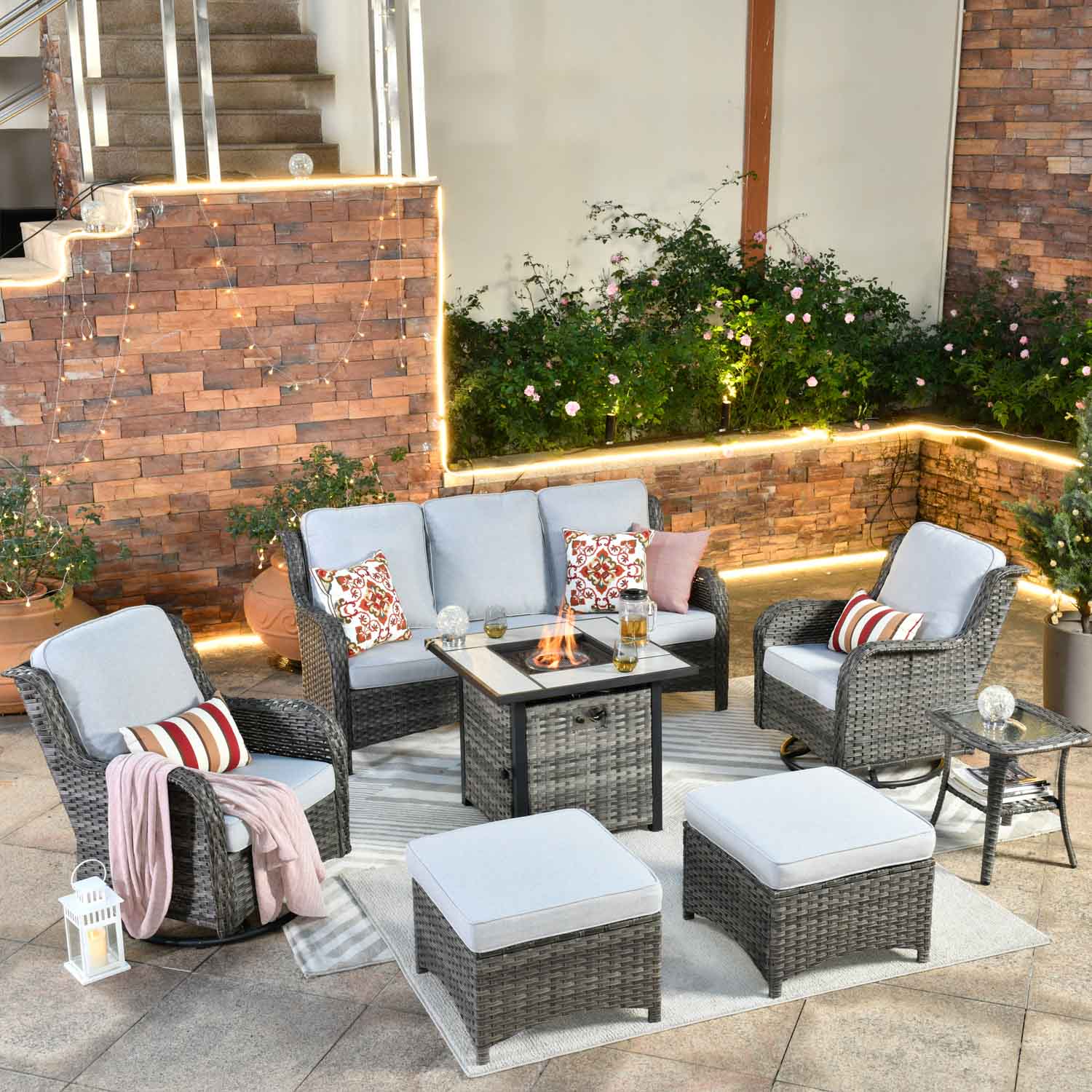
Nothing completes an outdoor living space like cozy patio furniture arranged on plush, verdant grass. But most homeowners worry about potential damage to their carefully maintained lawns when placing furniture directly on grass. Likewise, constant exposure to soil moisture can deteriorate furniture over time. You can safely use patio sets on your lawn without harming either yourself or them by making smart choices and arranging them properly.

How Furniture Impacts the Health of Your Grass?
The primary concerns when placing heavy furniture on grass include soil compaction, shading, and concentrated foot traffic. However, these issues can be minimized with proper precautions.
1. Soil Compaction
The weight of outdoor furniture compresses the grass and underlying soil. Compacted soil restricts air circulation and drainage, making it harder for roots to access oxygen and nutrients like nitrogen. This can stunt grass growth. Furniture with narrow legs increases pressure on specific نقاط.
2. Lack of Sunlight
Turf grass typically needs 4–8 hours of direct sunlight daily. Furniture and umbrellas block sunlight, limiting photosynthesis and leading to yellow or thinning patches. Rotating furniture placement helps grass recover.
3. Increased Foot Traffic
When seating is concentrated in one area, foot traffic intensifies. Grass becomes flattened and struggles to bounce back. Moving furniture periodically distributes wear more evenly across the lawn.

OVIOS Outdoor 6 Pieces Coversation Set with Swivel Rocking Chair
How Grass Damages Patio Furniture?
While lawn damage is a concern, grass and moisture can also significantly impact patio furniture durability over time.
1. Rust Damage
Constant exposure to moisture accelerates corrosion on metal patio furniture. Materials like steel and iron can develop rust, weakening the structure and appearance.
2. Rotting Wood
Untreated wood absorbs moisture easily. Prolonged contact with damp grass causes swelling, cracking, and eventually wood decay. Mold and fungal growth further accelerate deterioration.
3. Warping Risk
Materials such as wicker, wood, and unsealed composites can warp when exposed to uneven moisture. This leads to bent frames, loose joints, and distorted shapes. Learn more about weather-resistant patio materials.
4. Staining Potential
Grass and soil contain natural pigments and oils that can stain surfaces. These stains may appear as green discoloration, dark spots, or fading on furniture finishes.
5. Instability Issues
Grass creates an uneven and soft base, causing furniture to wobble or shift. This instability increases the risk of tipping and reduces overall comfort and safety.

Strategic Solutions for Protecting Your Lawn and Furniture
With the right strategies, you can maintain a healthy lawn while preserving your outdoor furniture.
1. Elevate Furniture Off the Grass
Use pavers, gravel, or wooden platforms to create a barrier between furniture and grass. Options like outdoor flooring tiles provide a stable and dry foundation.
2. Use Protective Pads Under Furniture
Outdoor rugs, rubber mats, or tarps help distribute weight and act as moisture barriers. These also protect both grass and furniture from damage. Explore water-resistant materials for better protection.
3. Perform Regular Lawn Care
Routine maintenance, like aeration, watering, and fertilizing, helps reduce soil compaction. Allowing grass to grow slightly taller, as explained in this mowing guide, improves resilience.
4. Choose All-Weather Furniture
Opt for powder-coated metals, synthetic wicker, and treated wood. These materials resist rust, mold, and moisture. See this durability guide for more insights.
5. Use Widely Spaced Furniture Legs
Furniture with broader bases or evenly distributed support reduces pressure on the grass and minimizes soil compression.
6. Embrace Lightweight Designs
Lightweight materials like aluminum or resin reduce strain on the lawn and make repositioning easier.
7. Rotate Seating Areas Periodically
Move furniture regularly to prevent long-term damage and allow grass to recover naturally.
Protect Your Lawn and Patio Furniture
By taking proactive steps, your lush lawn and comfortable patio furniture can coexist beautifully. With proper placement, protective measures, and smart material choices, you can fully enjoy your outdoor living space without compromise.


Leave a comment
This site is protected by hCaptcha and the hCaptcha Privacy Policy and Terms of Service apply.