



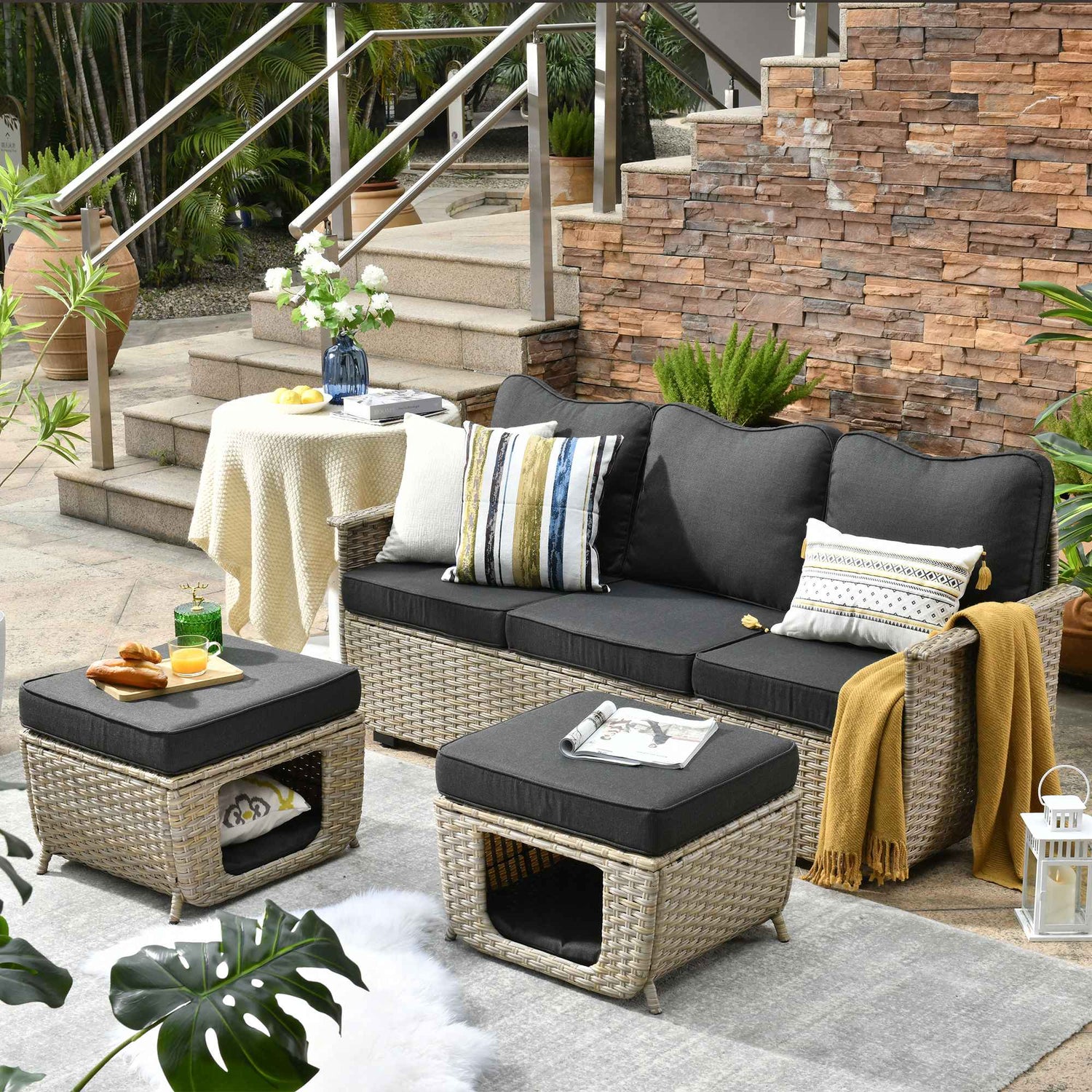
Selecting the right material for your patio furniture is key to ensuring it can withstand the outdoors, is easy to care for, and gives you the aesthetic you want. Two highly popular choices are natural rattan and PE wicker, but they each possess their own unique traits. This article dives into the distinct differences between these two materials, analyzing factors such as their ability to hold up to the weather, visual styles, comfort levels, and environmental impact. By the end of this guide, you will have a clear idea of which option—rattan or PE wicker—best fits your needs for creating a perfect outdoor living oasis that looks great for years to come.
What are Natural Rattan and PE Wicker?
Natural Rattan
This material is sourced straight from nature, crafted from the vines of palm plants found in tropical regions around the globe. Rattan is a fantastic choice because it is incredibly sturdy yet has a slight flex, making it highly comfortable to sit on. It brings an earthy, organic vibe with its unique handcrafted feel; no two pieces look exactly the same due to natural variations in shading and patterns. Investing in natural rattan means you are getting a one-of-a-kind piece of furniture every time.
PE Wicker
On the other hand, PE wicker is the modern alternative—relying on the durability of high-quality synthetic materials. Crafted from polyethylene, it is an absolute champion at weathering harsh outdoor elements. It is designed to mimic the classic woven look of traditional wicker, but because it is plastic-based, it easily resists rain and intense sun exposure. Furthermore, it can be molded into various shapes and designs, allowing manufacturers to create a wide array of colors and intricate weaves. Whether you prefer a traditional look or a bold, contemporary aesthetic, PE wicker has you covered.

How Weather-Resistant are They?
Natural Rattan's Stamina
Rattan is quite strong for a natural material, but it does not respond well to being constantly soaked by rain or baked in the sun day after day. You will need to provide regular maintenance to prevent it from degrading over time:
- Apply a high-quality sealant or varnish annually—acting as a protective layer for your furniture.
- Store it indoors or use heavy-duty protective covers when severe weather strikes.
- With proper care, you can easily get a good half-decade or more of comfortable outdoor lounging.
Without adequate protection, rattan can quickly deteriorate, developing cracks, severe warping, and even mold if left fully exposed to the elements.
PE Wicker's All-Weather Endurance
PE wicker is truly the superhero of outdoor materials—it effortlessly withstands harsh weather conditions. This highly durable synthetic contender offers some serious advantages:
- It features built-in UV resistance, preventing the vibrant colors from fading under direct sunlight.
- It is completely waterproof, meaning heavy rain will not compromise its structural integrity.
- It can withstand freezing temperatures without shattering or becoming dangerously brittle.
For those seeking convenience, PE wicker is exceptionally low-maintenance. A quick wipe down with mild soap and water is all it takes to keep it looking pristine, eliminating the need for winter storage. High-quality PE wicker furniture can maintain its sharp appearance for a decade or more, making it a highly reliable long-term investment.

The Aesthetics of Natural Rattan and PE Wicker Outdoors
Natural Rattan's Charming Looks
There is an inherent quality to natural rattan that feels completely timeless. It effortlessly captures a relaxed, boho vibe with varied shades and tactile textures that only Mother Nature can provide. Every chair or table boasts distinct visual patterns and subtle color variations. Thanks to its authentic handwoven character, natural rattan brings an exotic touch that blends seamlessly into both tropical and traditional patio designs. Those minor irregularities in the weave are not flaws; they are distinctive features that add immense personality and organic charm to your space.
PE Wicker's Style Flexibility
Conversely, PE wicker is all about providing limitless design options. While initially created to imitate classic natural wicker, it has evolved significantly. Looking to mix up your outdoor aesthetic? PE wicker is available in vibrant, modern colors or highly sophisticated weave patterns that look like modern art. Because of the precision involved in its manufacturing process, PE wicker furniture easily adapts to almost any design theme, making it an incredibly versatile choice for matching your desired outdoor décor.
How Comfortable and Practical are They?
The Cozy Factor with Natural Rattan
There is no denying that natural rattan pieces, with their inherent flexibility and gentle curves, are remarkably comfortable, especially when paired with plush seating cushions. However, remember that rattan is highly responsive to its environment. On a damp day, it might feel slightly moist, while during a severe heatwave, it can become dry and rigid. Furthermore, rattan naturally expands and contracts with temperature shifts, which may eventually loosen the intricate weave over several seasons.
Regarding mobility, rattan furniture is typically lightweight and easy to reposition. It is incredibly practical if you frequently rearrange your patio layout. For the most consistently comfortable experience, natural rattan is best suited for covered patios or mild climates.
PE Wicker's All-Season Comfort
PE wicker is incredibly reliable, offering steady comfort regardless of the season. This synthetic material does not react drastically to temperature changes, ensuring the seating remains comfortable whether it is the peak of summer or a chilly autumn evening. It also does not absorb moisture, so you will never have to deal with a soggy frame after a heavy rainstorm. PE wicker retains its structural shape year-round, completely avoiding the brittleness associated with natural vines.
Additionally, PE wicker furniture remains exceptionally lightweight and easy to move, allowing you to revamp your patio layout without hassle. Pair it with high-quality, weather-resistant cushions, and you will have a deeply comfortable seating area ready for relaxation in any weather condition.

Environmental Impacts to Consider
Natural Rattan's Renewability
Natural rattan is an inherently renewable and biodegradable resource. When carefully managed, rattan cultivation is highly sustainable, as the fast-growing vines replenish naturally. However, unethical overharvesting in wild forests has sparked significant environmental concerns, presenting severe threats to biodiversity and delicate ecosystems. Additionally, there are notable carbon emissions associated with shipping heavy rattan furniture internationally. While old rattan can eventually be composted, it may take several years to decompose fully. Ensuring responsible sourcing and supporting ethical harvesting practices is vital for minimizing rattan's overall environmental footprint.
PE Wicker's Plastic Composition
Conversely, PE wicker is neither biodegradable nor compostable at the end of its lifespan. It is manufactured from polyethylene, a non-renewable, petrochemical-derived plastic. There are also valid concerns regarding the energy consumption required during the manufacturing process and the potential for chemical additives, like UV inhibitors, to slowly degrade over time. Nevertheless, PE wicker is fully recyclable into other functional plastic products once it is no longer suitable for furniture. Its incredibly long, durable lifespan—when properly maintained—significantly offsets a large portion of its initial environmental impact.
Choosing Between Natural and Synthetic Outdoor Furniture
When choosing between natural rattan and synthetic PE wicker patio furniture, you must weigh the pros and cons of each material. Rattan delivers a stunning, handcrafted aesthetic and is highly renewable, yet it demands strict maintenance and is easily damaged by severe weather. PE wicker, however, is highly durable, extremely low-maintenance, and available in countless modern styles, though its plastic composition carries a distinct environmental cost. Ultimately, the best choice depends on whether you prioritize the organic beauty of natural rattan or the unmatched convenience and resilience of PE wicker. Select the material that perfectly aligns with your design preferences, daily lifestyle, and environmental values to create your ideal outdoor living space.


Leave a comment
This site is protected by hCaptcha and the hCaptcha Privacy Policy and Terms of Service apply.