




Your living room sofa is likely the most used item in your house. It is where you relax after work, watch movies with family, and host guests. Because it is often the most expensive piece of furniture you own, viewing it as a long-term investment makes sense. Taking care of it properly saves you money by delaying the need for a costly replacement. Here is a practical look at the simple habits, cleaning secrets, and easy protections that will keep your favorite seat in the house in perfect condition for years to come.

Building Better Sofa Maintenance Habits Every Week
Establishing a routine is the most effective way to keep your furniture looking new. Small efforts made once a week prevent dirt and wear from becoming permanent problems that ruin the comfort of your home.
Vacuum the Fabric Regularly
Many people think vacuuming is only for floors, but it is a critical part of sofa maintenance. Dust, crumbs, and hair are abrasive. When you sit down, these tiny particles act like sandpaper, rubbing against the fabric and cutting the individual fibers. Over time, this makes the material thin and leads to holes. Use a soft brush attachment to clean the main surfaces and a crevice tool to reach deep into the corners where debris hides.
Rotate and Fluff Your Cushions
If you always sit in the same spot, that part of the couch will eventually sag. This happens because the internal filling, whether it is foam, feathers, or fiber, gets compressed. You can fix this by rotating your cushions every week. Move the left cushion to the right and flip them over if they are double-sided. Additionally, give your back pillows a good "fluff" or shake. This redistributes the filling and helps the sofa keep its original shape and support.
Control Sunlight Exposure
Strong sunlight is a silent enemy of furniture. UV rays cause fabric colors to fade and can make leather dry out and crack. If possible, place your living room sofa away from windows that get direct sun. If the layout of your room doesn't allow that, keep your blinds or curtains closed during the brightest parts of the day. This simple step adds years to the vibrancy of the upholstery.

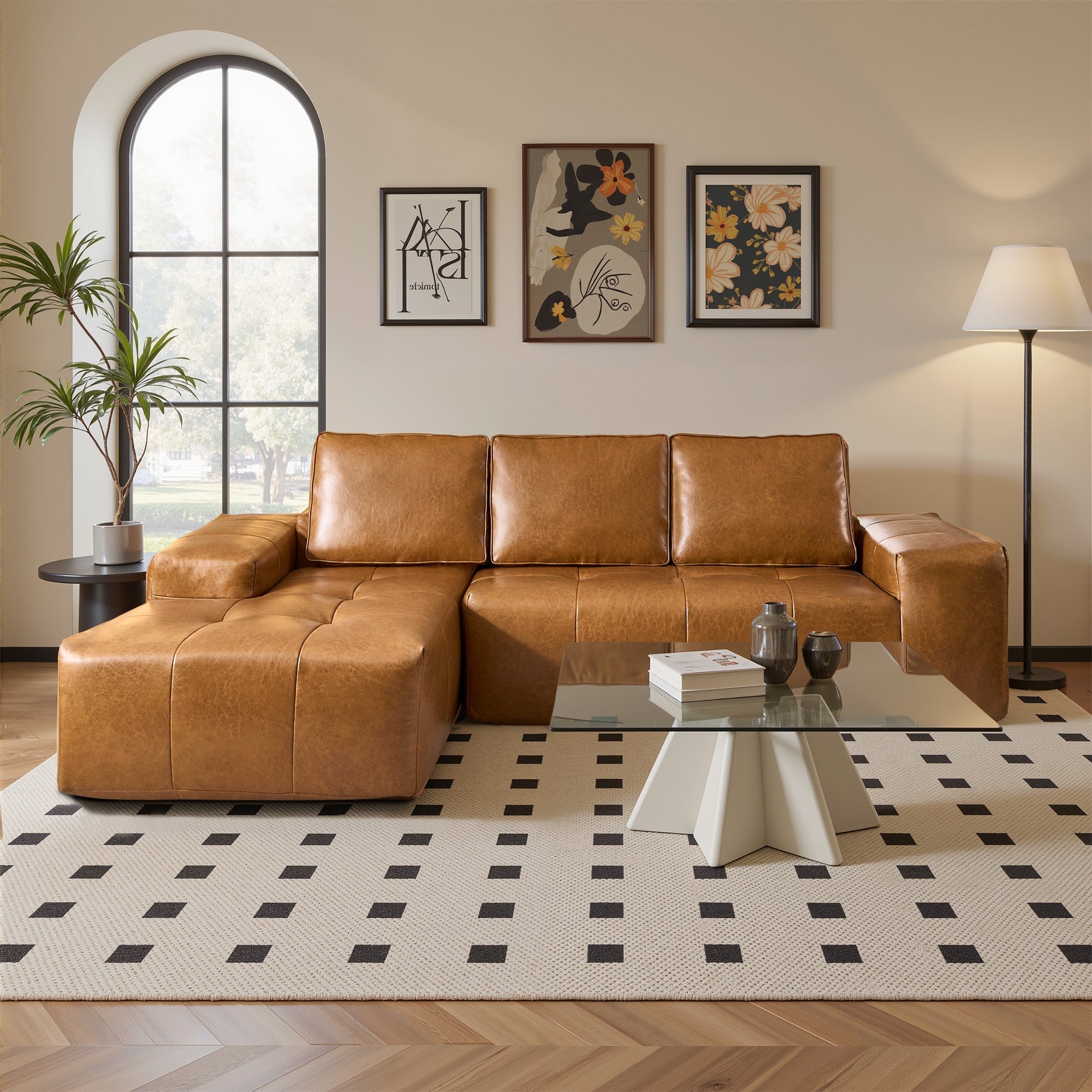
Ovios 130.7" Modular Sectional Sofa Couch, L-Shaped Minimalist Couches with Convertible Chaise
Using the Right Cleaning Methods for Your Sofa Fabric
Different materials have different needs. Using the wrong method on a specific fabric can cause more harm than good, so it is important to tailor your approach to what your couch is made of.
Clean Your Fabric Sofa Carefully
"Pilling" occurs in common fabrics such as polyester, cotton blends, and linen. These are the small fuzz balls that develop on the surface. To remove these, use a battery-operated fabric shaver to trim them away. For removing stains from couch cushions, the rule of thumb is to blot the stain and not to rub. Rubbing spreads the liquid and pushes it deeper into the padding. Use a clean white cloth to soak up as much as possible immediately.
Keep Leather Supple and Strong
Leather is essentially skin, which means it can lose its natural oils and become brittle. To prevent cracking, apply a high-quality leather conditioner every 6 to 12 months. This keeps the material soft and flexible. For regular cleaning, a lightly damp microfiber cloth is usually enough to wipe away dust. Avoid using harsh soaps that can strip the finish off the leather.
Care for Velvet and Delicate Piles
Velvet has a "nap," which is the direction the fibers lie. If heavy items sit on velvet for too long, the pile can become crushed or creased. A handheld steamer is a great tool to lift these fibers back up. After steaming, use a soft clothing brush to gently brush the fabric in one direction. This restores the smooth, luxurious look that makes velvet so popular.

Checking the Sofa Cleaning Codes on the Tag
The small white tag tucked under your cushions contains the most important information for sofa maintenance. These letter codes tell you exactly which cleaning agents are safe to use without ruining the material.
- Code W (Water-based): You can use water-based foam or upholstery shampoo. These fabrics are the easiest to clean, but you should still avoid soaking the material to prevent mildew.
- Code S (Solvent-based): This means the fabric should only be cleaned with water-free solvents, similar to what a dry cleaner uses. If you use water on an "S" rated sofa, it will likely leave a permanent ring or cause the fabric to shrink. These chemicals can be strong, so always ensure the room is well-ventilated when using them.
- Code WS or SW (Combined): These fabrics are versatile. You can use either water-based cleaners or dry-cleaning solvents safely. However, you should still test a small, hidden area first.
- Code X (Vacuum Only): This is the most delicate rating. It means you should only use a vacuum or a soft brush. Never use any liquids or chemicals on a Code X sofa, as they will cause immediate damage.
Checking this code first is the best way to avoid mistakes while removing stains from couch cushions.
Following Prevention Steps to Protect Your Investment
Preventing damage is easier than fixing a broken frame or damaged seam. Adjusting some household behaviors can greatly extend furniture life.
Maintain Structural Integrity
A sofa is built for sitting, not for high-impact activity. The "no jumping" rule is not just for safety; it protects the wooden frame and the S-springs or webbing that provide support. When people jump on the couch, it puts extreme stress on the joints. Similarly, avoid sitting on the armrests. Armrests are not designed to hold the full weight of an adult, and doing so can cause the frame to snap or the fabric to stretch and sag.
Live Peacefully with Pets
Pets are part of the family, but their claws and fur can be hard on furniture. To protect your living room sofa, use stylish throws or washable covers on the spots where your pets like to sleep. This makes cleaning much easier since you can just throw the cover in the wash. Also, keeping your pet's claws trimmed prevents them from snagging fabric loops or leaving deep scratches in leather.
Key Takeaways for Long-Lasting Furniture Care
A great-looking home requires consistency. Follow a few basic tips to keep your chairs comfy and stylish for years.
- Consistency Wins: Spending ten minutes vacuuming every week is much better than trying to fix a year's worth of ground-in dirt with a deep clean.
- Always Check the Tag: Never guess how to clean fabric sofa surfaces. Always look for the W, S, WS, or X code before applying any liquid.
- Rotation is Vital: Flipping and moving cushions prevents the "sinking" feeling and keeps the wear even across the whole piece of furniture.
- Act Fast: The faster you address a spill, the higher your chances of successful stain removal.
FAQs About Sofa Care and Repair
Q1: How often should I have my sofa professionally cleaned?
For most homes, a professional deep clean every 12 to 18 months is sufficient. However, if you have multiple pets, young children, or allergy sufferers in the house, you should consider a professional cleaning every 6 months to remove deep-seated dust and dander.
Q2: Can I use baby wipes to clean a leather sofa?
No, you should avoid baby wipes. Even though they seem gentle, many brands contain alcohol or alkaline ingredients that can eat away at the protective top coat of the leather. This leads to peeling and discoloration. Use a damp microfiber cloth or a product specifically made for leather instead.
Q3: How do I get rid of an indentation in my carpet from the sofa legs?
If you move your sofa and find deep dents in the carpet, there is an easy fix. Place an ice cube in the dent and let it melt completely. The moisture helps the carpet fibers swell. Once it is dry, use the edge of a spoon or a fork to gently fluff the fibers back up.
Q4: What should I do if my sofa starts squeaking?
A squeak usually means something is loose or rubbing. First, check the legs to ensure they are screwed in tight. If the noise is coming from inside the base, it could be a loose spring or a joint that has dried out. For manual or power recliners, you may just need to apply a small amount of lubricant to the metal moving parts.
Keep Your Living Room Sofa Looking New
Taking care of your furniture will keep your home warm and wallet-friendly. Follow these steps to keep your favorite seat in the house spotless and away from damage. If you want a couch that can withstand kids and pets, you can look for high-performance materials to make it durable. Start these habits today to enjoy a beautiful, comfortable home for years!


Leave a comment
This site is protected by hCaptcha and the hCaptcha Privacy Policy and Terms of Service apply.