



Modular leather sofas are the top investment for 2026. They blend high-end luxury with the flexibility modern homes need. These adaptable pieces shift easily from quiet relaxation to hosting large groups. A modular leather sofa provides a durable, pet-friendly leather sofa option that stays stylish for years. You will learn how to master layouts, pick perfect colors, and mix textures to create a high-end look that feels both expensive and comfortable.

Why Modular Leather Sofas Dominate Contemporary Design
As people move toward more flexible living, the modular sofa has become a popular choice of modern furniture design. These items are durable and can be used in many different ways, which is something that fixed-frame furniture just can't do.
The Perfect Marriage of Form and Function
Modern life is unpredictable. One day you might need a cozy corner for a movie night, and the next, you might need separate seating areas for a cocktail party or a temporary home office. Modular pieces allow you to pull sections apart or clip them together to fit the specific needs of the moment. This adaptability makes them ideal for people who move frequently or enjoy refreshing their room layout without buying new furniture.
Timeless Material and Long-term Value
Leather is one of the few materials that actually improves with age. Unlike many fabrics that may pill or stain easily, high-quality leather develops a beautiful patina over time. It carries a natural warmth and texture that feels more "lived-in" as the years pass. In an era focused on sustainability, choosing a piece that lasts for decades rather than seasons is a responsible and stylish choice.
2026 Trend Alignment: Investment Furniture
The current design movement favors "slow interiors." This means homeowners are moving away from cheap, disposable items and toward well-made furniture. A modern leather sectional fits this movement perfectly. It feels substantial and expensive, providing a sense of permanence in an open-concept living space.

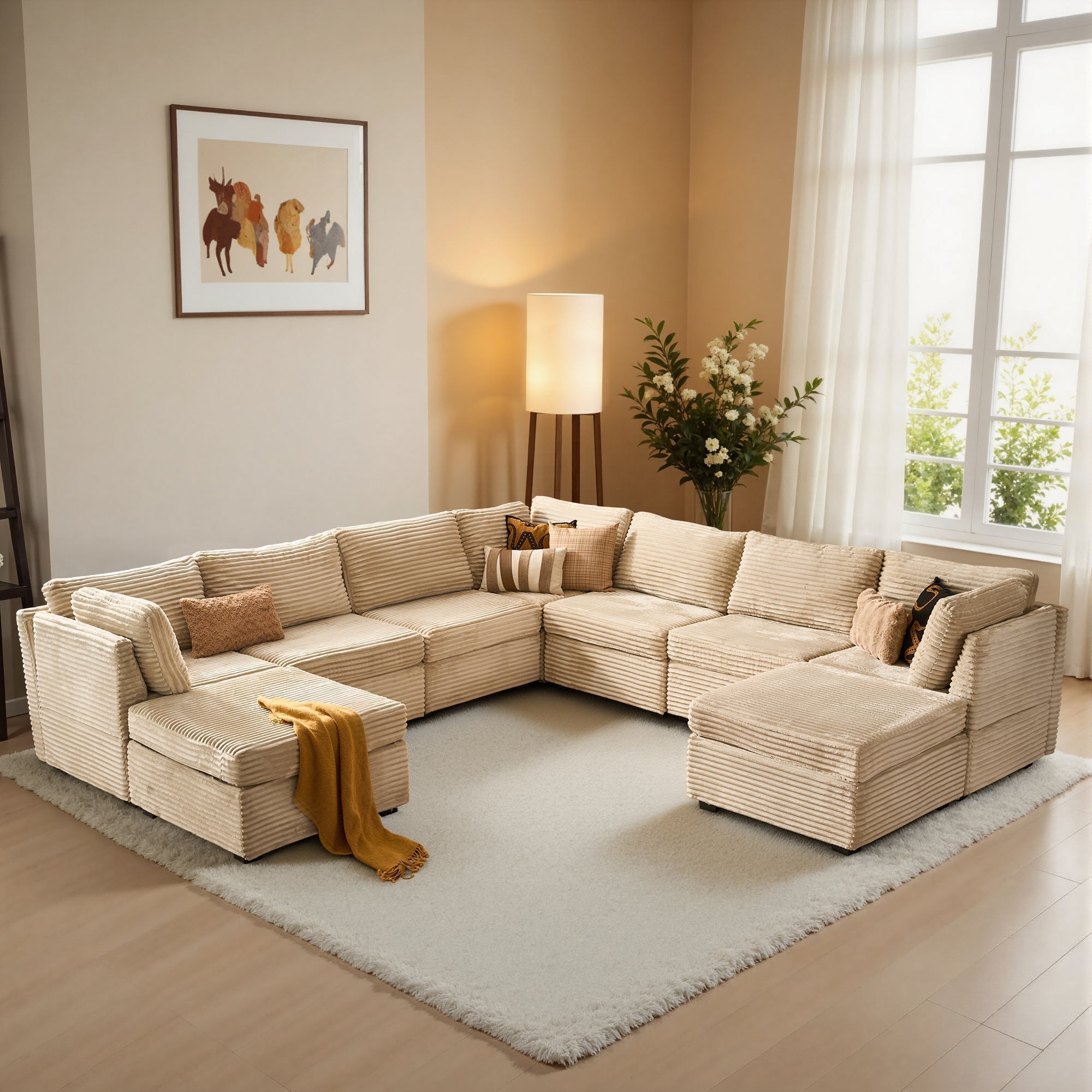
OVIOS 114" Cloud Sectional Sofa - L-Shaped Faux Leather Modular Couch with Deep Seat Chaise
5 Layout Strategies for Your Modular Leather Sofa
The way you position your modular sofa dictates the flow of the entire room. Because modular pieces are so flexible, you have several high-impact options depending on your square footage and lifestyle needs.
The Floating Island (Open-Concept Spaces)
In large, open-plan homes, pushing a sofa against the wall can make the room feel empty and cavernous. Instead, pull the sofa into the center of the room. This creates a "floating island" that defines the living area without the need for walls. To make the back of the sofa look intentional, place a slim console table behind it. This provides a spot for lamps, books, or plants, bridging the gap between the seating area and the rest of the house.
The L-Shape Corner Anchor
For most standard living rooms, the L-shape remains the gold standard. It utilizes corners effectively and creates a natural pocket for conversation. One trick to keep this looking modern is to leave about 18 to 24 inches of space between the sofa and the walls. This "breathing room" prevents the furniture from looking cramped and allows light to circulate around the leather.
The U-Shape "Conversation Pit"
If you have a large family or love to host, a U-shaped configuration is a great choice. This layout mimics the sunken conversation pits of the 1970s, encouraging people to face one another. Pair this setup with a cluster of small ottomans or a low coffee table in the center to keep the sightlines open.
The Deconstructed Scatter
For lofts or unconventional spaces, you don't have to keep all the modules together. Try splitting the pieces into two smaller loveseats or an armchair and a long sofa. This asymmetrical look feels like an art gallery and works well in rooms that have multiple focal points, such as a fireplace on one wall and a large window on another.
The Sectional Wall Hug
In a compact apartment, every inch counts. Placing a modular sectional directly into a corner maximizes seating without blocking walkways. To keep the room from feeling heavy, keep the walls a light color and use furniture with slim legs to create a sense of openness.
Finding the right layout for your modular leather sofa sets the foundation for your room. With the floor plan settled, you can now focus on the visual details as follows.

Pairing Your Sofa with Contemporary Color Schemes
Color plays a massive role in how "heavy" or "light" a leather sofa feels. Choosing the right palette for your walls and accents will help the leather blend into the room or stand out as a bold statement.
Cognac/Tan Leather + Warm Neutrals
Tan leather is perhaps the most popular choice for 2026. It brings an earthy warmth to a space. To keep it looking fresh, use "greige," cream, or soft taupe on the walls. For accents, look to nature-inspired colors like sage green, terracotta, or mustard yellow. This combination creates a look that is part Mid-century modern and part Scandinavian cozy.
Black/Charcoal Leather + Industrial Minimalism
If you prefer a sharper, more masculine vibe, black or charcoal leather is the way to go. These dark tones look best against high-contrast backgrounds like white walls, concrete floors, or exposed brick. To prevent the room from feeling too cold, add brass light fixtures or raw wood side tables. This adds a layer of urban sophistication that works well in city lofts.
Chocolate Brown Leather + Quiet Luxury Tones
Deep brown leather is making a comeback as part of the "quiet luxury" trend. This aesthetic is all about rich, dark colors and high-quality materials. Surround a chocolate-colored sofa with mushroom beige, ivory, or warm grey. Use monochromatic layering, meaning different shades of the same color, with linen and wool fabrics to create an expensive, understated feel.
Mixing Textures to Soften Leather's Edge
Leather can sometimes feel a bit cold to the touch or look too "slick" on its own. The key to successful styling is mixing in various textures to balance the smoothness of the leather.
Minimalist leather sofa styling relies on the rule of three: try to have at least three different textures in your seating area. Leather provides the "smooth" element, so you need to find the "rough," "soft," and "organic" counterparts.
- Bouclé pillows: The looped yarn of bouclé provides a bumpy, soft contrast that looks great against flat leather.
- Chunky knit throws: A heavy, knit blanket draped over a corner adds immediate tactile warmth.
- Jute or sisal rugs: These organic fibers ground the sofa and add a bit of "grit" to the room.
- Velvet accent chairs: Pairing a leather sofa with a velvet chair adds a touch of drama and softens the overall look of the space.
Getting Proportions Right with Rugs and Lighting
People often make the mistake of picking out items that are too small for a big modular sofa. Proper sizing ensures the room feels balanced and grounded rather than cluttered.
Rug Size Rules
The most important rule for a modular sofa is the "all legs on" rule. Ideally, the rug should be large enough that every module sits entirely on top of it. If the rug is too small, the sofa modules will look like they are floating away from each other.
At the very least, ensure the front legs of every section are firmly planted on the rug. Natural wool or low-pile rugs are best for high-traffic areas and make vacuuming easy.
Lighting at Sofa Level
Avoid relying solely on bright overhead lights, which can make leather look shiny and plastic-like. Instead, use layered lighting. An arc floor lamp that curves over the seating area provides a focused glow for reading. If your sofa is in the center of the room, consider a cluster of low-hanging pendants. Soft, warm light brings out the natural grain and depth of the leather.
Using Furniture That Complements And Not Competes
When you have a large leather piece, the surrounding furniture should feel light and airy. This prevents the living room from feeling like a showroom full of heavy blocks.
Instead of one massive, heavy coffee table, try using a cluster of two or three smaller nesting tables. This allows you to move the tables around as you reconfigure your modular sections.
C-shaped tables are also a brilliant invention for modular sofas; they have a flat base that slides under the sofa frame, bringing your coffee or laptop right to your lap without taking up floor space.
To balance the visual weight, look for materials like glass, polished marble, or light-colored woods. These materials "lift" the room and allow the leather to be the star of the show without overwhelming the senses.
Applying the 3-5-7 Pillow Rule for Styling
Styling pillows on a leather sofa requires a bit of strategy because leather is slippery. Using an odd number of pillows—3, 5, or 7—usually looks more natural and less forced than even pairs.
- Vary the sizes: Don't use pillows that are all the same size. Mix large 24-inch squares at the back with 20-inch squares in front. Add one long lumbar pillow in the center to break up the lines.
- Color Strategy: Use the 60-30-10 rule. Make 60% of your pillows a neutral color like cream or grey. Use 30% in tones that are similar to your leather, like caramel or rust. Use the final 10% for a "pop" of color like navy blue or deep forest green.
- Draping Throws: Avoid folding your blankets into perfect squares. Instead, drape a throw casually over one corner or across an ottoman. This makes the sofa look inviting and ready for use.
Common Mistakes to Avoid with Your Modular Leather Sofa
Even with a beautiful sofa, a few small errors can throw off the entire room. Being aware of these pitfalls will help you maintain a polished, contemporary look.
Avoid Monotone Boredom
Matching every item to your leather color is a frequent error. If you have a tan sofa, tan rug, and tan curtains, the room will look flat. Contrast is your friend. Use different shades and materials to help each piece stand out.
Watch Your Scale
A massive modern leather sectional needs large-scale accessories. Tiny lamps or small picture frames will look like toys next to big furniture. Choose bold art and substantial side tables to match the visual weight of the sofa.
Secure Your Modules
Don't ignore the practical side of a modular sofa. Since the pieces are separate, they can slide apart on hardwood floors.
- Use built-in clips: Most high-quality sets include these to lock pieces together.
- Add grip pads: Place rubber pads under the legs to stop shifting.
- Try velcro strips: These work well for keeping hidden edges flush.
Avoid Over-Styling
Contemporary design thrives on restraint. You do not need a pillow on every single module. Leaving some leather exposed shows off the quality of the material and keeps the room looking clean and organized.
Pro Tip: To maintain your leather patina, condition it every 6-12 months with a leather cream. Avoid placing the sofa in direct sunlight for prolonged periods to prevent cracking.
Mastering Your Modular Leather Sofa Style
A modular leather sofa gives your home the perfect mix of luxury and logic. You can change your layout as your life changes, keeping your space both stylish and practical. Mix in soft textures and choose a setup that allows for breathing room. Pick large accessories and bold color contrasts to keep the look fresh. These steps help your Modular Sofa remain a comfortable, high-end centerpiece for years.
FAQs About Modular Leather Sofa Styling
Q1: What color rug goes best with a tan leather modular sofa?
Natural textures like jute or cream wool are excellent choices. If you want a pattern, look for geometric designs that include grey, navy, or rust tones. Avoid rugs that are the exact same shade as the leather.
Q2: How do I keep modular sofa pieces from sliding apart?
Most modern sets come with metal clips or brackets. If yours doesn't, you can use heavy-duty velcro strips or rubber furniture cups under the feet to keep everything in place on smooth floors.
Q3: Can I style a leather sofa to look cozy instead of formal?
Yes. The trick is to use plenty of soft fabrics. Layering a plush rug underneath and adding several oversized knit pillows will immediately take away the "office" feel of a leather piece.
Q4: What's the ideal coffee table size for a modular sectional?
Look for a table that is about two-thirds the length of the sofa's main section. If you have a U-shaped layout, a round table with a 48-inch diameter usually works best to allow for easy movement.


Leave a comment
This site is protected by hCaptcha and the hCaptcha Privacy Policy and Terms of Service apply.