



Many homeowners discover the hard way that a low sticker price on patio furniture often leads to repeated replacements, rusted frames, faded cushions, and unraveling weaves within just a couple of seasons. Choosing materials designed for long-term outdoor exposure, such as powder-coated aluminum frames paired with high-quality PE wicker, can deliver better value over 5 or more years by resisting the common failure points that plague budget sets.
This guide breaks down why cheap patio furniture tends to fall apart quickly and how to evaluate options that actually last through rain, sun, humidity, and temperature swings. By understanding the real differences in materials and construction, you can avoid the cycle of disposable purchases and invest in outdoor furniture that holds up for your family and entertaining needs.
Why Cheap Patio Sets Often Become a False Economy
The frustration is widespread: a patio set looks decent when it arrives, but within 1–3 years the finish fades, metal starts to rust, wicker unravels or cracks, and the whole ensemble wobbles or sags. This pattern repeats because many low-cost options prioritize appearance over durable engineering for outdoor conditions.
Sunlight and outdoor exposure can fade finishes and gradually break down protective coating layers, according to National Park Service guidance on paint and stain weathering. When protective coatings fail, rust staining, fading, and other weathering signs often become visible, as noted in official Bureau of Reclamation coating inspection resources.
For families replacing broken outdoor sets or homeowners in coastal, humid, or high-sun climates, these failures drive up the true long-term cost far beyond the initial savings. The hidden trade-off is frequent replacement, storage hassles, and lost enjoyment of your outdoor space.
Common Myths About Patio Furniture Durability
Several misconceptions lead buyers to choose sets that won't survive repeated seasons:
-
Myth: All wicker is basically the same. Reality: Natural wicker and synthetic PE or resin wicker behave very differently outdoors. Even among resin options, weave quality and UV stabilizers vary widely, so two products labeled "wicker" can age at very different rates.
-
Myth: Resin wicker is indestructible. Reality: While resin wicker generally handles weather better than natural fibers, it can still fade, crack, or unravel when UV protection or underlying frame quality is inadequate.
-
Myth: Cheap patio furniture is good enough if it looks fine at purchase. Reality: Many low-cost sets appear acceptable initially but break down from sun, moisture, and coating failure much sooner than expected, often in the 1–3 year range.
These myths blur the line between material type and actual longevity. The practical distinction lies in whether the product features proper UV resistance, corrosion protection, and robust construction rather than just a trendy look.
Typical Lifespans: Disposable vs. Durable Patio Furniture
A useful rule of thumb helps separate short-life sets from those worth considering for long-term use. Cheap resin wicker or low-cost mixed-material sets often last about 1–3 years, especially under regular exposure. In contrast, better-built options with powder-coated aluminum frames and quality PE wicker more commonly reach 5–10+ years with reasonable care.
Here is an illustrative comparison of estimated service life across climates:
Estimated Service Life: Disposable vs Quality Patio Sets by Climate
Estimated lifespan ranges, shown as central illustrative values for comparison only.
View chart data
| Category | Cheap disposable set (years) | Quality powder-coated aluminum + PE wicker set (years) |
|---|---|---|
| Mild / covered | 3.0 | 10.0 |
| Sunny / inland | 2.0 | 8.0 |
| Humid | 2.0 | 7.0 |
| Coastal / salty | 1.5 | 5.0 |
Illustrative heuristic built from consumer-pattern thresholds and official weathering guidance: cheap resin/low-cost wicker often lasts about 1–3 years, quality powder-coated aluminum + PE wicker about 5–10+ years with care; sunny, humid, and coastal conditions shorten service life due to UV exposure, humidity, coating failure, rust risk, and salt exposure. Not official statistics or lab results.
These ranges are heuristics shaped by common consumer experiences and official weathering guidance on UV, humidity, and corrosion. They are not lab-certified predictions and will vary based on maintenance, cover use, and specific product quality. Sunny or coastal conditions tend to push results toward the lower end of each range.

Material Breakdown: Aluminum Frames and PE Wicker
Powder-coated aluminum stands out for outdoor use because the coating helps improve resistance to rust and fading. As consumer guides frequently note, powder-coated metal is often recommended for its ability to withstand rain, cold, and UV exposure. When the coating remains intact, it seals out moisture that would otherwise cause corrosion on lesser metals.
Some outdoor-rated materials, including aluminum and certain wicker constructions, handle rain and humidity better than less weather-resistant options, according to University of Florida IFAS gardening resources. However, durability testing for exterior coatings commonly uses combinations of UV, heat, humidity, and salt exposure, highlighting that no material is completely immune without proper design.
PE wicker offers clear advantages over natural rattan or lower-grade synthetics. It resists drying out in strong sun better than traditional wicker, which can become brittle without protection. High-quality PE wicker maintains its shape, color, and weave integrity far longer when paired with a strong frame. For more on these differences, see our comparison of Natural Rattan vs. PE Wicker.
Signs of Impending Failure and What to Check Before Buying
Before purchasing, inspect for these red flags that often signal short service life:
- Thin-feeling tubular frames that flex easily under pressure
- Coatings that chip or scratch during normal handling
- Wicker that appears brittle, overly shiny, or loosely woven
- Lack of clear statements about powder coating or outdoor-rated materials
- Designs that seem intended primarily for covered or indoor-outdoor use
When a protective coating starts to fail, rust staining, fading, and other weathering signs often become visible. Wicker can dry out in strong sun, so it needs more care than some other outdoor materials. Checking these points helps avoid sets likely to require replacement soon.
A practical pre-buy checklist includes:
- Lift and gently flex the frame to test sturdiness.
- Examine weld points and coating thickness on metal parts.
- Run your hand over the wicker to feel weave tightness and uniformity.
- Review product specifications for explicit UV and weather resistance claims.
- Consider your local climate and whether you can store or cover the set during extreme weather.
How to Choose Patio Furniture That Lasts 5+ Years
Focus on sets that combine powder-coated aluminum frames with high-density PE wicker. These materials work together to resist the primary causes of early failure: corrosion, UV degradation, and structural weakness.
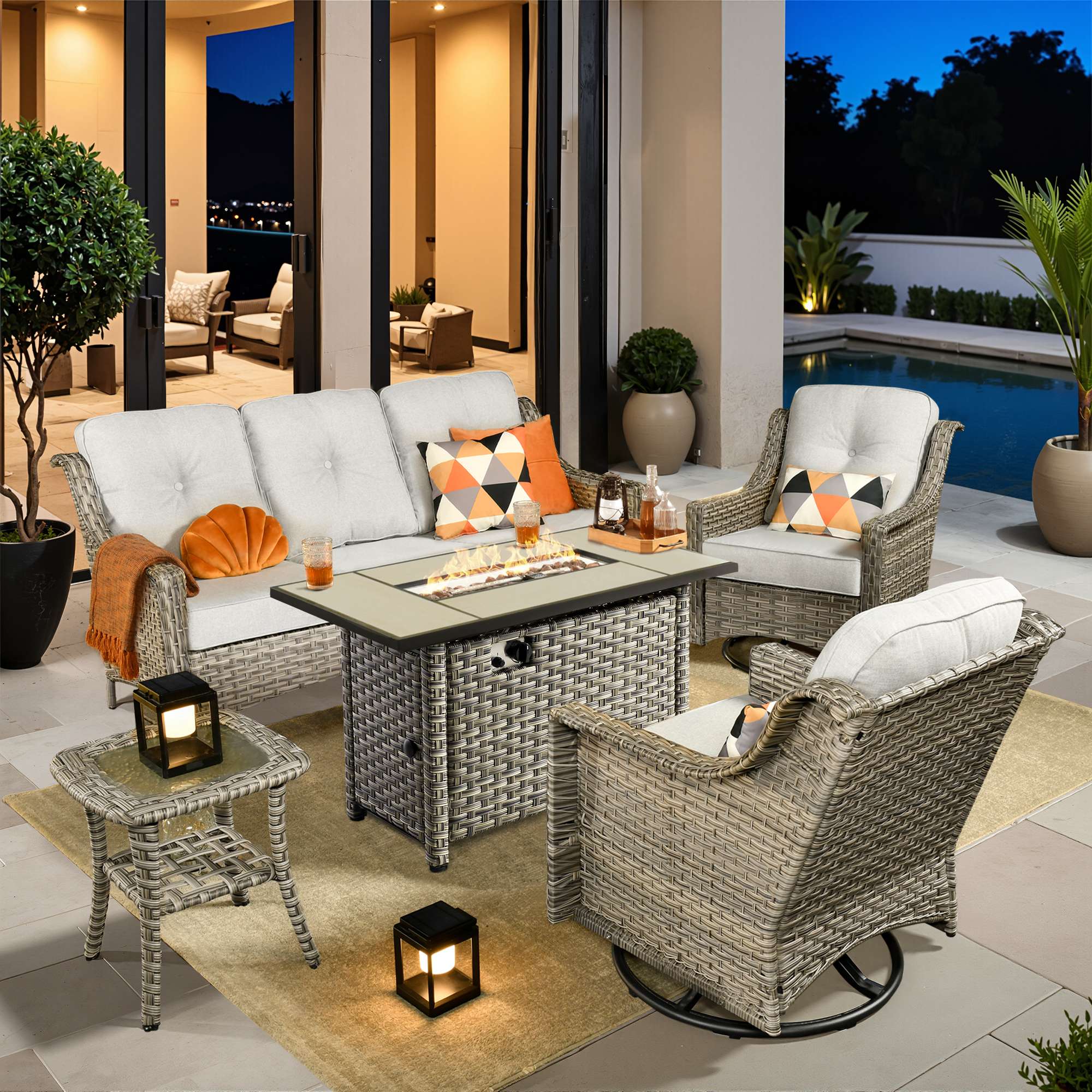
For example, our OVIOS Patio Furniture Set 13-Piece with Fire Pit Table uses durable wicker and robust construction designed for long-term outdoor enjoyment. Similarly, the OVIOS Patio Vultros 8-Piece Conversation Set pairs weather-resistant elements with comfortable seating for family gatherings.
Additional guidance on material performance is available in our articles on PE Wicker vs. Aluminum Patio Furniture and Hot-Dip Galvanizing for Rust-Free Outdoor Furniture.
Explore more options in our Outdoor Patio Furniture collection or Patio Conversation Sets.
In harsh climates, prioritize sets with thicker coatings and tighter weaves. Maintenance still matters: occasional cleaning, prompt repair of any coating damage, and using covers during off-season storage can extend usable life significantly.
The Bottom Line: Invest in Durability, Not Disposable Style
The true cost of patio furniture includes not just the purchase price but also the hassle and expense of repeated replacements. Cheap sets that fall apart quickly often prove to be a false economy, while well-engineered aluminum and PE wicker options can provide years of reliable service with proper care.
By focusing on powder-coated frames, quality synthetic weaves, and thorough pre-purchase inspection, you can select outdoor furniture that enhances your space for the long term rather than requiring constant attention or replacement. The difference shows in both daily comfort and overall value over time.
This article discusses comfort, setup, and material performance considerations for outdoor furniture. It does not constitute advice on health, safety, or medical matters. If you experience persistent discomfort or have specific health concerns related to outdoor use, consult qualified professionals. Actual results depend heavily on your climate, maintenance habits, and specific product quality.


Leave a comment
This site is protected by hCaptcha and the hCaptcha Privacy Policy and Terms of Service apply.