



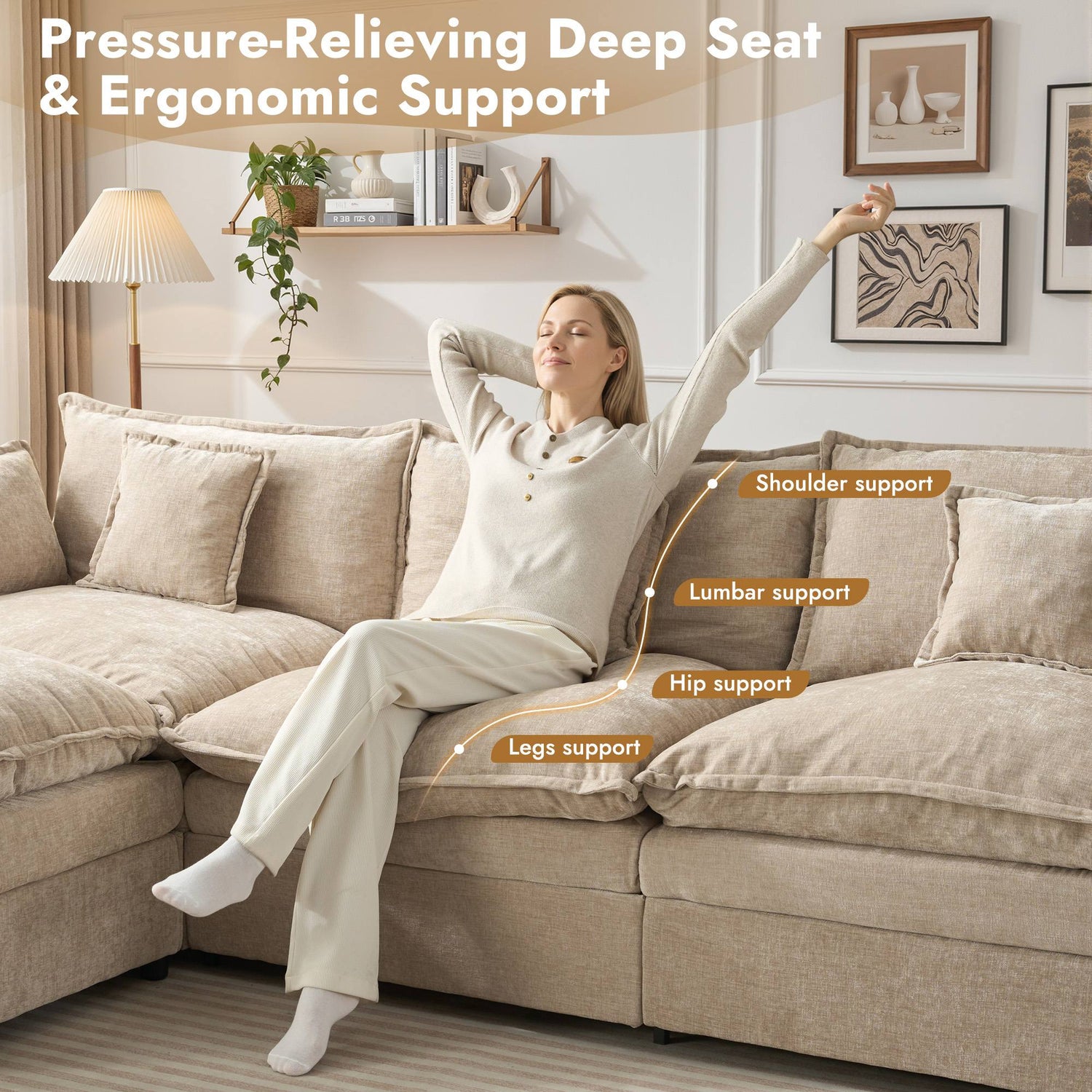
Living room sofas face more daily abuse than ever from spills, pets, kids, and high traffic. Many homeowners are turning to performance fabrics like olefin—originally developed for outdoor use—to deliver better stain resistance, easier cleaning, and longer lifespan without completely sacrificing indoor comfort or style.

This shift reflects the growing indoor-outdoor fluidity trend in 2026 homes, where furniture must handle real life while still looking polished. Olefin and similar outdoor-derived materials often outperform traditional upholstery in maintenance-heavy environments, but the best choice depends on your household's specific needs, not just the fabric label.
What Is Olefin Fabric and Why Is It Moving Indoors?
Olefin is a synthetic fiber made from polypropylene. It is solution-dyed, meaning color is added during manufacturing rather than after, which gives it strong resistance to fading, moisture, and many common stains. These properties made it a staple for outdoor furniture, where exposure to sun, rain, and dirt is constant.
Today, manufacturers are adapting olefin and other performance textiles for indoor sofas because families want furniture that survives everyday accidents. As this guide to olefin fabric explains, its weatherproof structure and stain resistance keep pieces looking fresh despite heavy use. The same benefits translate well to busy living rooms.
Traditional upholstery, by contrast, typically relies on natural fibers like cotton, linen, or wool, or blends with polyester. These materials often offer a softer hand feel and broader style options, but they absorb liquids more readily and can show wear faster in high-use homes.
Industry guidance from the National Upholstery Association emphasizes that upholstery care and performance depend heavily on fiber content and construction. No single fabric name guarantees results—outcomes vary by weave, backing, and applied finishes.
Olefin vs Traditional Upholstery: Key Practical Differences
The real comparison comes down to how each material behaves under typical living room conditions.
Durability and wear resistance. Olefin fabrics generally rate higher for abrasion resistance, making them less prone to pilling or fraying from daily sitting, pet claws, or rough play. Traditional fabrics can pill or show signs of wear sooner, especially in lower-quality constructions.
Stain resistance. Performance outdoor fabrics like olefin resist many water-based and oil-based spills better because the fibers do not absorb liquids as readily. Quick blotting often removes marks that would set into traditional upholstery. However, no fabric is completely stain-proof. Results still depend on prompt cleaning and the specific finish.
Maintenance and cleaning. Olefin sofas are usually easier to spot clean. Many can handle mild soap and water without special solvents. Traditional materials may require professional cleaning or risk damage from improper products. Our spot-cleaning guide for fabric modular sofas offers practical steps that work particularly well with performance textiles.
Comfort and feel. This is where traditional upholstery often has an edge. Many people find natural or blended indoor fabrics softer and more “cozy” for long evenings on the couch. Some olefin weaves can feel slightly firmer or less drapey, though newer indoor-adapted versions have narrowed this gap.
Style and variety. Traditional upholstery comes in countless patterns, textures, and luxurious finishes that suit formal or design-focused rooms. Performance fabrics have improved dramatically in appearance, but they still offer a narrower range of high-end looks compared with premium indoor textiles.
Pet and family friendliness. For homes with dogs, cats, or young children, olefin and similar materials reduce stress. They resist pet hair embedding, claw snags, and sticky fingerprints better. The 2026 buying guide for kid- and pet-friendly sofa fabrics highlights how performance options help families avoid constant worry about damage.
Here is an illustrative comparison of typical trade-offs for indoor sofa use. These are editorial relative scores (1–10 scale) based on common household scenarios, not laboratory test results. Actual performance varies by specific product construction, weave, and care.
Illustrative Trade-Offs: Olefin/Performance Outdoor Fabric vs Traditional Upholstery
Use this as a directional comparison, not as measured data.
View chart data
| Series | Durability | Stain resistance | Comfort | Style variety | Maintenance ease | Pet-friendliness |
|---|---|---|---|---|---|---|
| Olefin / performance outdoor fabric | 8.0 | 9.0 | 6.0 | 5.0 | 9.0 | 9.0 |
| Traditional upholstery | 6.0 | 5.0 | 9.0 | 9.0 | 5.0 | 5.0 |
Illustrative editorial 1-10 relative scores for indoor sofa use, derived from the article's comparison logic: performance fabrics tend to win on cleanup, durability, and pet/kid practicality; traditional upholstery tends to win on comfort and style variety. These are not measured test results and do not imply absolute proofing or universal performance; actual results vary by weave, finish, construction, and care.

Common Myths About Outdoor Fabrics Indoors
Several misconceptions can lead to poor buying decisions.
Myth: Olefin is completely stain-proof and maintenance-free. Reality: It resists many stains better than untreated fabrics and cleans more easily, but prompt action is still required. Heavy oils, certain inks, or prolonged exposure can still leave marks. As the National Upholstery Association notes, fiber content and construction determine real-world soil acceptance.
Myth: Outdoor fabrics always feel stiff or uncomfortable indoors. Reality: Modern indoor-adapted olefin and performance blends have improved softness significantly. Many families report they feel perfectly suitable for daily lounging, especially when paired with high-quality cushioning.
Myth: Traditional upholstery cannot handle pets or kids. Reality: Some treated traditional fabrics or higher-end performance blends offer good protection without the outdoor label. The choice depends more on the specific product than the category.
Myth: All performance fabrics perform the same. Reality: Huge differences exist between basic olefin and premium solution-dyed performance textiles with advanced protective finishes. Always check construction details.
When to Choose Olefin/Performance Fabric (and When Not To)
Performance outdoor fabrics usually make the strongest case in these situations:
- Homes with dogs, cats, or young children who frequently use the sofa
- High-traffic family rooms where spills happen weekly
- Households that want to minimize professional cleaning costs
- Buyers replacing a stained or worn couch and seeking longer-term reliability
Consider traditional upholstery instead when:
- The living room is more formal or lower-traffic
- You prioritize the softest possible hand feel and widest style selection
- Design and tactile luxury matter more than wipe-clean convenience
- Your household is careful and messes are rare
A practical self-check before buying: Count how many times per week you currently deal with sofa cleaning or worry about damage. If the answer is more than once or twice, performance fabric likely delivers noticeable value. If cleaning is occasional, the extra durability may not justify trading off comfort or appearance.
Our cloud couch alternative guide explores how modern performance materials address sagging and staining concerns many families face in 2026.
Buying Checklist for Stain-Resistant Indoor Sofas
Use this checklist to evaluate any sofa, whether it uses olefin, another performance fabric, or traditional upholstery:
- Check the fabric code and care instructions. Look for “W” or “WS” cleanability ratings that indicate easy water-based cleaning.
- Inspect the weave closely. Tighter, smoother weaves generally resist stains and abrasion better than loose or textured ones.
- Test the hand feel in person when possible. Sit on the sofa and run your hand over the surface—does it feel suitable for long periods?
- Review the full construction. Strong frame, high-resilience foam, and quality cushioning matter as much as the cover fabric.
- Ask about warranties. Many performance-fabric sofas now include explicit stain and abrasion coverage—read the fine print.
- Match the material to your lifestyle. Heavy-use homes benefit most from outdoor-derived performance textiles.
For modular or sectional needs, consider pieces like the OVIOS 104" L-Shape Modular Couch with Corduroy Fabric, which balances durability with comfortable texture, or explore the full sofa sets collection for performance-minded options.
Preventing Common Problems Like Pilling and Stains
Even the best fabrics last longer with basic care. Rotate cushions regularly, vacuum weekly, and address spills immediately. Our article on preventing couch pilling shares fabric selection and maintenance tips that extend the life of any upholstery.
For outdoor-inspired durability inside the home, brands like Sunbrella have long demonstrated how solution-dyed performance fabrics stand up to the elements. The same principles apply indoors when you choose quality constructions.
Final Thoughts: A Practical Upgrade for Many Homes
Olefin and other outdoor-derived performance fabrics are gaining popularity in living rooms because they solve real pain points—frequent cleaning, stubborn stains, and early replacement—for busy families and pet owners. They are not a magic solution that eliminates all maintenance, but they can meaningfully reduce daily friction compared with many traditional upholstery options.
The decision ultimately comes down to your household’s actual usage patterns. If easy cleanup and resilience matter more than the softest possible feel or broadest style range, performance fabrics like olefin often represent smart long-term value in 2026. Evaluate specific products on construction and care requirements rather than fabric names alone, and you will be far more likely to choose a sofa that stays looking good for years.
This article discusses comfort, durability, and maintenance considerations for sofas. It does not constitute medical, safety, or professional advice regarding allergies, chemical sensitivities, or specific health conditions. If you experience persistent discomfort, skin reactions, or have existing sensitivities, consult qualified professionals. Results vary by individual product, household conditions, and proper care.
References
- News/Blog - National Upholstery Association
- Olefin Fabric: The Outdoor Furniture Material You Need to Know About
- Best Sofa Materials for Homes With Kids and Pets (2026 Buying Guide)

Leave a comment
This site is protected by hCaptcha and the hCaptcha Privacy Policy and Terms of Service apply.