



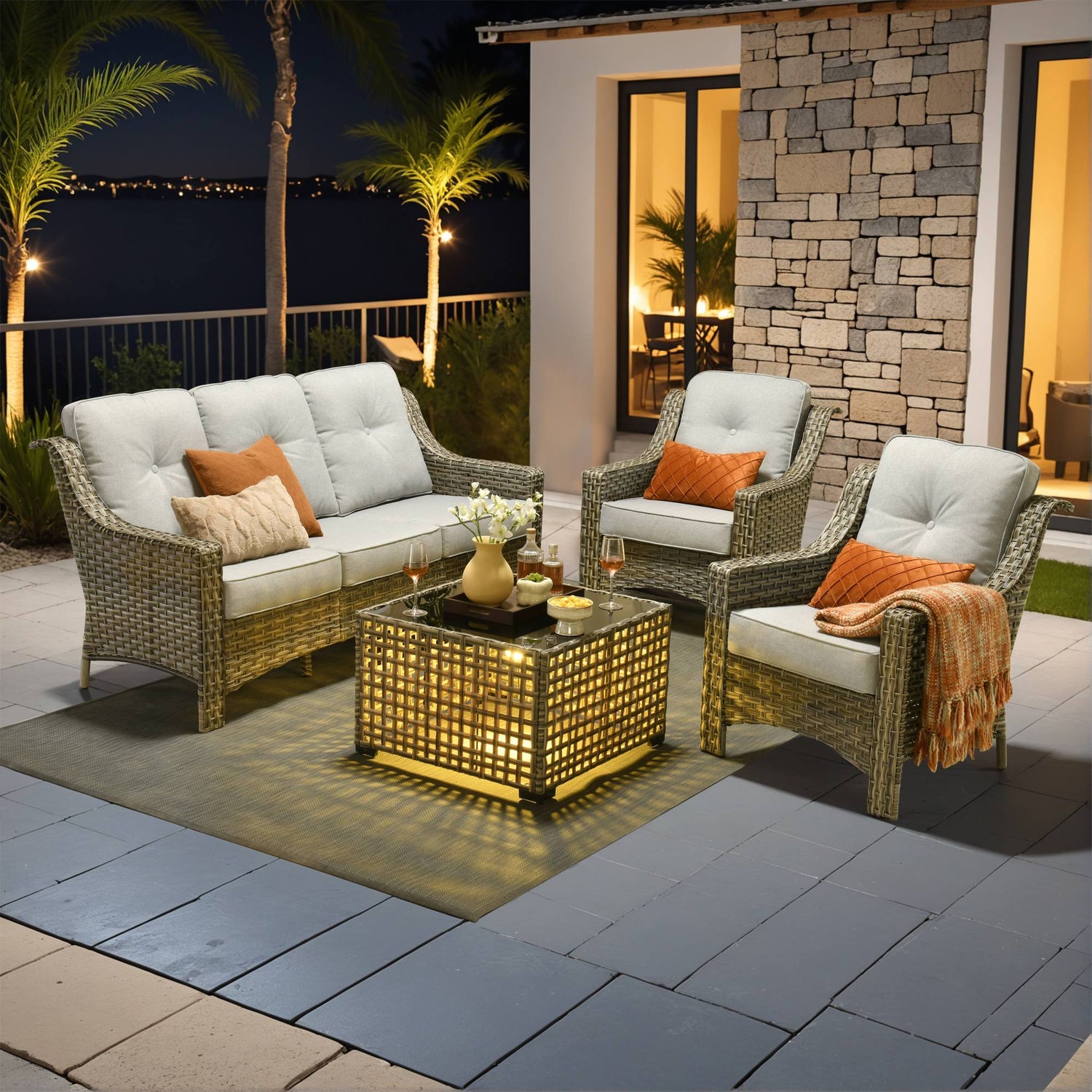
Not all patio furniture frames deliver the same long-term performance outdoors. For homeowners upgrading from budget sets that have already started to rust or sag, the choice between aluminum and steel frames often determines how much maintenance you'll face and how well the furniture holds up against rain, humidity, and coastal air.

Aluminum generally offers better inherent corrosion resistance thanks to its natural oxide layer, making it a lower-maintenance option in wet or salty environments. Powder-coated steel can provide a heavier, more rigid feel at a potentially lower price point, but its rust resistance depends heavily on the quality and integrity of the coating. Performance for both materials ultimately hinges on climate, drainage, scratches, and upkeep rather than any absolute "rust-proof" guarantee.
Why Frame Material Matters for Outdoor Durability
Outdoor corrosion occurs when moisture, oxygen, and salts interact with metal surfaces. As the NIST Guide to Corrosion explains, these environmental factors drive most real-world degradation in patio furniture left outside year-round. Humidity and salts accelerate the process, which is particularly relevant for furniture in coastal, rainy, or high-humidity regions.
This makes frame choice more than a cosmetic decision. A frame that resists corrosion well reduces the need for frequent inspections, touch-ups, or early replacement. For buyers comparing premium modular outdoor sectionals, understanding these differences helps justify investing in quality construction that matches their specific outdoor conditions.
Aluminum vs Steel: Key Property Differences
Aluminum and steel behave differently in outdoor settings due to their base chemistry and typical construction.
Aluminum forms a thin, self-healing oxide layer that helps protect against further corrosion. This makes it widely used in outdoor applications, as noted in resources from The Aluminum Association. It is also significantly lighter than steel, which improves ease of rearranging modular pieces or seasonal storage.
Steel offers greater inherent strength and rigidity, which can give furniture a more substantial, planted feel. However, exposed steel corrodes readily in the atmosphere, according to guidance on atmospheric corrosion of structural steel. Without effective protection, it is more vulnerable in humid or coastal environments.
Powder coating improves both materials by adding a durable, attractive finish that resists chipping better than many liquid paints. Yet, as the Powder Coating Institute highlights, real-world outdoor performance depends on the entire coating system, proper application, and ongoing maintenance. Scratches, chips at joints, or water pooling can still allow corrosion to begin underneath.
Common Myths About Rust-Resistant Patio Furniture
Marketing often uses broad terms like "rust-proof" or "maintenance-free," but these claims rarely hold up under scrutiny.
Myth: Any powder-coated steel frame is as rust-resistant as aluminum. Reality: Powder coating helps delay corrosion, but steel still relies on that coating remaining intact. Aluminum's protection is built into the metal itself through its oxide layer.
Myth: Aluminum never corrodes. Reality: While aluminum resists rust far better than steel, poor finish quality, galvanic corrosion from mixed metals, or extreme salt exposure can still cause issues over time.
Myth: Frame material alone determines longevity. Reality: Joint design, drainage, how the furniture is stored, and regular care often matter as much as whether the frame is aluminum or steel.
These distinctions matter most when replacing cheap patio furniture that failed due to rust. Choosing based on realistic expectations prevents repeating the same cycle.
Scenario-Based Comparison: When to Choose Aluminum or Steel
The best frame depends on your climate, how you use the space, and your tolerance for maintenance. Here's a practical framework:
- Humid, rainy, or coastal climates with year-round exposure: Aluminum is usually the safer default. Its natural oxide layer reduces dependence on perfect coating maintenance.
- Dry or covered patios with seasonal use: Powder-coated steel can perform well and may offer better rigidity at a lower cost, provided you inspect for damage occasionally.
- Frequent rearranging or storage: Aluminum's lighter weight makes modular sectionals easier to move without strain.
- Permanent, heavy-use setups where stability matters: Steel's added weight and rigidity can feel more substantial, but only if the coating quality is high.
A key caution from corrosion science: no material is completely immune. As atmospheric conditions research from NASA shows, salts and persistent moisture challenge any outdoor metal. Buyers in tough environments should prioritize quality construction and good drainage over marketing claims.
Heuristic Patio Frame Fit by Scenario
Illustrative comparison only: higher score means better fit for the stated scenario, not a measured durability index.
View chart data
| Category | Aluminum | Steel |
|---|---|---|
| Humid / Coastal | 5.0 | 2.0 |
| Dry / Covered | 2.0 | 5.0 |
| Low Maintenance Tolerance | 5.0 | 3.0 |
| High Mobility Need | 5.0 | 2.0 |
| Permanent Setup | 3.0 | 5.0 |
| High Rigidity Need | 2.0 | 5.0 |
Heuristic scoring only. Derived from corrosion behavior and maintenance tradeoffs summarized in the provided scenario_matrix and threshold_table: humid/coastal conditions favor aluminum for lower maintenance; dry/covered conditions can suit coated steel; aluminum is lighter for frequent moving; steel is heavier and stiffer for permanent rigidity. Scores use a 1-5 relative fit scale, not measured performance.
This chart illustrates relative fit across common buyer scenarios. It is a heuristic tool based on material properties and environmental factors, not laboratory test results.
Don't Buy Steel If...
Steel frames may not be the right choice in these situations:
- You plan to leave the furniture exposed year-round in humid or coastal areas with minimal maintenance.
- Drainage is poor and water pools under or on the frame after rain.
- You have no interest in periodic inspections for chips or scratches.
- The previous cheap set rusted quickly and you want to avoid similar issues.
In these cases, aluminum typically provides better peace of mind and lower long-term effort.
How to Choose the Right Frame for Your Outdoor Space
Use this practical checklist before purchasing:
- Assess your climate and exposure. Frequent rain, humidity, or salt air tilts toward aluminum.
- Consider how often you rearrange the furniture. Lighter aluminum reduces hassle with modular sectionals.
- Evaluate maintenance willingness. Steel requires more vigilance on coating integrity.
- Inspect joint quality, drainage design, and coating thickness in product details or reviews.
- Compare total ownership cost. A slightly higher upfront price for well-made aluminum often pays off through reduced replacement frequency.
- Check compatibility with your modular layout. Ensure the frame supports the intended configuration without flexing.
For design-conscious buyers seeking durable options, explore our outdoor loveseats featuring rust-resistant frames built for real outdoor conditions.
Learn more about protecting your investment by reading our guide on six weather factors that impact patio furniture.
Final Recommendation
For most homeowners in challenging outdoor environments, aluminum frames strike the best balance of corrosion resistance, low maintenance, and practical usability in modular setups. Powder-coated steel remains a viable option in milder conditions or when maximum rigidity is prioritized, provided the coating system is robust and you commit to basic care.
The right choice ultimately depends on matching the frame to your specific climate, usage patterns, and maintenance habits. By focusing on quality construction rather than absolute marketing claims, you can select patio furniture that looks great and performs reliably for years.
This article discusses comfort and setup considerations for outdoor furniture. It does not constitute advice on structural engineering, material certification, or medical topics. For persistent issues with existing furniture or specific health concerns related to outdoor spaces, consult qualified professionals.
Ready to upgrade? Browse our collection of outdoor chairs and patio conversation sets designed with durable frames for lasting outdoor enjoyment.
Additional reading that may help: How to balance budget and quality when buying garden furniture and how to prepare your outdoor living space for changing seasons.

Leave a comment
This site is protected by hCaptcha and the hCaptcha Privacy Policy and Terms of Service apply.