



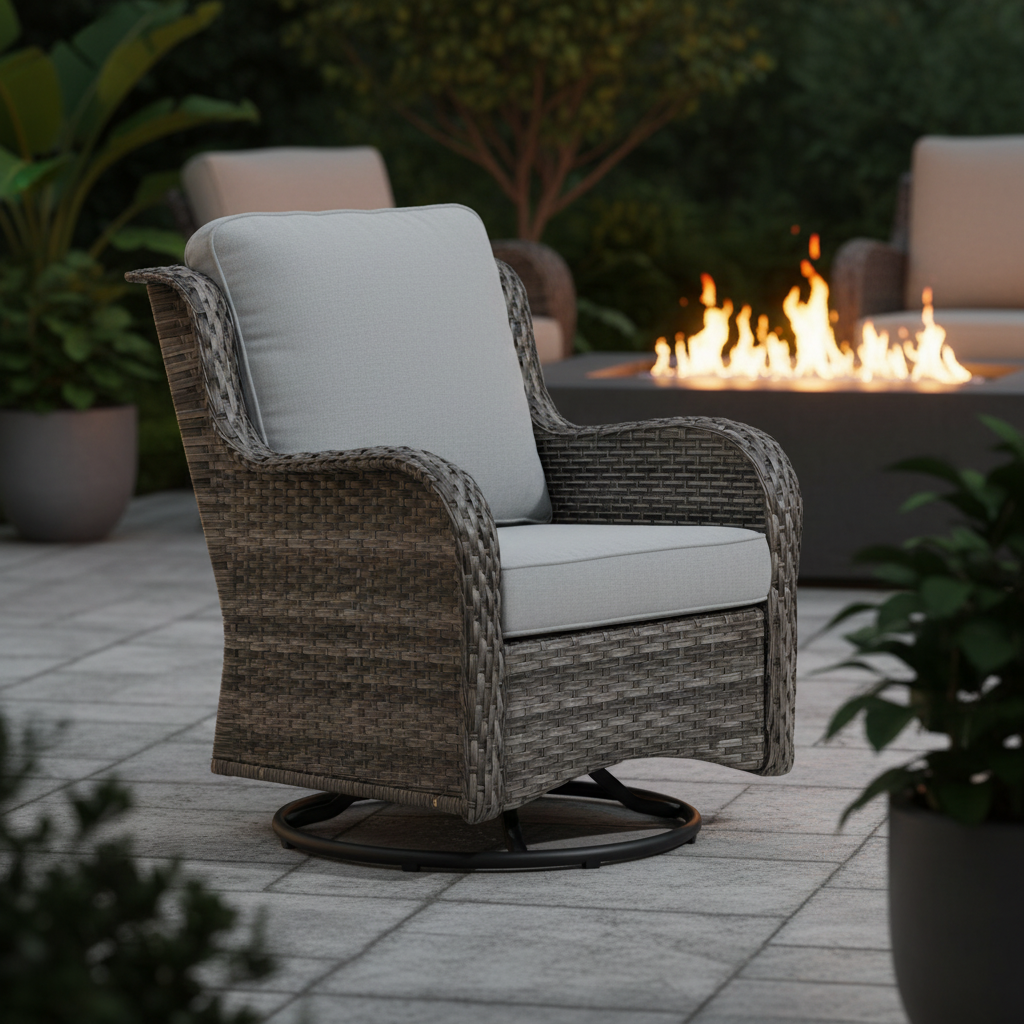
If low-back patio chairs leave you slouching, shifting, or standing up too soon during fire-pit evenings or weekend reading sessions, high-back patio chairs address the core issue by delivering better upper-body support and easier entry/exit without sacrificing outdoor style.
The difference comes down to back height that actually cradles the trunk and shoulders, combined with seat dimensions that prevent the “sink-in” trap common in deep lounge seating. For many homeowners with back sensitivity or a preference for longer sits, this combination turns regret into reliable comfort.

Why Low-Back Patio Furniture Leads to Sitting Regret
Low-back patio chairs often prioritize a sleek, relaxed aesthetic over practical support. The backrest typically stops at or below the shoulder blades, forcing your upper trunk to hold its own weight for the entire session. This quickly leads to neck tension, shoulder fatigue, and the familiar feeling of slumping forward after 20–30 minutes.
Many standard lounge designs also sit quite low to the ground, making it harder to stand without pushing heavily on the arms—especially noticeable for adults with knee or back sensitivity. The result is a piece that looks inviting but becomes uncomfortable precisely when you want to linger outdoors. This mismatch explains why so many people report “buying regret” after one season of fire-pit gatherings or patio reading.
The Ergonomic Case for High-Back Seating
High-back chairs improve comfort by distributing upper-body load more effectively. As Cornell University ergonomics resources explain, higher backrests provide significantly better trunk weight support than low-back models by allowing the chair to bear more of the torso’s weight instead of leaving the spine to manage it alone (Ergonomics of Sitting).

This support becomes especially valuable during extended outdoor socializing or reading. The taller back cradles the mid-back, upper back, and neck, reducing the forward head posture that low-back designs often encourage. When paired with a recline angle between 100 and 130 degrees, the setup helps maintain a more neutral spinal position for longer periods, according to the same Cornell guidance on recline angles (General Problems and Recommendations).
Keep in mind that “high-back” alone does not guarantee ergonomic performance. The seat height and depth must also align with your body and intended use, which is why a structured fit check matters before purchase.
The 'Fit Check' for High-Back Comfort: Seat Height and Depth
A tall backrest can still feel like a lounge chair if the seat sits too low. Look first at seat height: chairs in the 17–19 inch range typically make standing and sitting easier than lower profiles, according to NIH research on seating fit and independence (Seating in aged care: Physical fit, independence and comfort). Seat heights under 17 inches often create the mobility friction many people want to avoid.
Seat depth is equally important. Depths over roughly 22 inches can push you forward if your lower back loses contact with the chair, creating the “sink-in” slouch that negates high-back benefits. A good rule of thumb is to verify that your feet rest flat on the ground while your back remains supported; if not, a lumbar-friendly cushion or a shallower seat becomes essential.
Recline angle offers another quick screen. Models that settle between 100 and 130 degrees tend to balance relaxation with spinal comfort for long sits. These measurements together form a practical anti-low filter you can apply in-store or at home before buying.
Fit Check: High-Back Patio Chairs vs Low Lounge Seating
Use this as a decision aid for choosing between a higher-support patio chair and a lower lounge profile under typical outdoor-use scenarios.
View chart data
| Category | High-back patio chair | Low lounge seating |
|---|---|---|
| Seat height | 3.0 | 1.0 |
| Seat depth | 2.0 | 3.0 |
| Recline angle | 2.0 | 3.0 |
| Fire pit use | 3.0 | 1.0 |
| Reading | 2.0 | 3.0 |
| Social conversation | 2.0 | 3.0 |
Built from Cornell-style slight-recline guidance, NIH/ergonomic seat-height and seat-depth heuristics, and Eureka range checks; values are tiered to show fit patterns rather than exact measurements.
This chart visualizes the relative suitability patterns across key dimensions. Higher scores indicate better alignment with long-sitting comfort and mobility for the typical adult user.
Choosing the Right High-Back Chair for Your Patio Scene
The best high-back patio chair depends on how you actually use your outdoor space. For fire-pit gatherings, prioritize a tall back that shields against evening wind while offering layout flexibility. Modular sectional sets let you rearrange seating as the group size changes and keep everyone facing the fire comfortably. A cozy outdoor fire pit zone guide can help map safe clearances and seating flow.
Reading nooks benefit from stable recline, wide armrests for holding a book or tablet, and an ottoman that lets you elevate your legs. Look for models that maintain their angle without drifting and pair well with an ottoman for true relaxation. Our deep seating patio furniture comfort guide explores how cushion thickness and seat depth affect extended reading sessions.
For long conversation sessions, swivel or gentle rocking motion prevents stiffness by letting you face different speakers without twisting your torso. High-back swivel chairs shine here because they combine upper-body support with easy rotation. Many homeowners find that adding a swivel feature turns a static seating area into a natural social hub.
If you frequently host larger groups, consider scaling up to a 5–7 seat conversation set that keeps the high-back ergonomic profile across multiple pieces. Our patio conversation sets collection includes options that balance support, durability, and guest capacity.
Materials That Last: Beyond the High-Back Look
A chair that feels great on day one must survive sun, rain, and temperature swings. Rust-proof aluminum or powder-coated steel frames provide the strongest foundation, especially for swivel mechanisms that see repeated motion. Avoid frames that feel lightweight; they often loosen over time.
For the woven exterior, high-density polyethylene (HDPE) wicker offers excellent UV resistance and typically holds up for 5–10 years with minimal fading or cracking. It resists moisture better than many lower-grade resins and requires only occasional cleaning.
Cushion quality separates chairs that stay comfortable from those that bottom out. High-density foam at least 4 inches thick resists compression far longer than thinner fillings. Look for water-resistant, quick-dry fabrics that maintain their shape after repeated outdoor exposure. These material choices ensure your ergonomic high-back investment continues delivering support season after season.
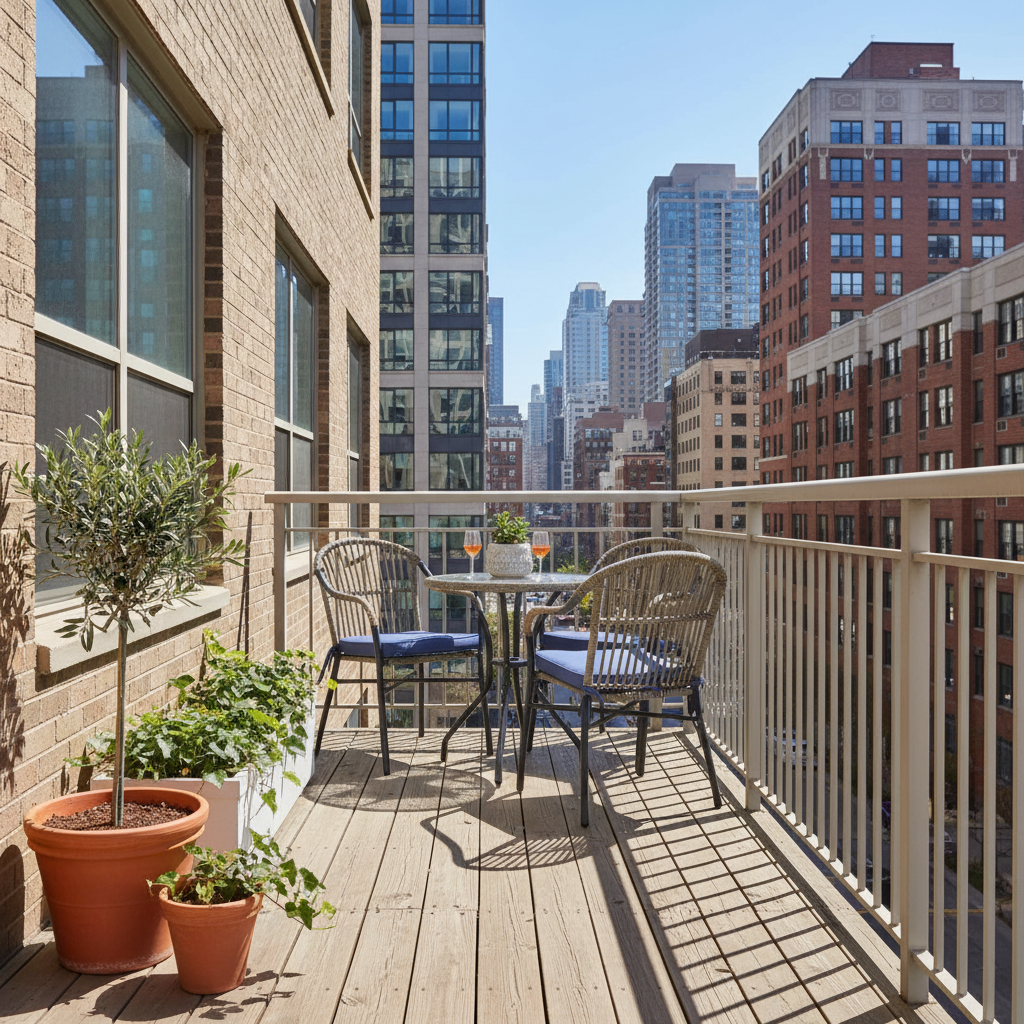
If your space is compact, a 3–4 seat conversation set or even a single high-back swivel chair with side table can deliver the same ergonomic benefits without crowding the patio. Our 3-4 seat collection and outdoor chairs pages show practical layouts for smaller decks and balconies.
For taller users or those who prefer deeper seating, cross-reference our dedicated guide on outdoor furniture for tall people to confirm back height and seat depth compatibility.
Frequently Asked Questions
Are high-back patio chairs better for people with back sensitivity?
They often feel more supportive because the taller backrest helps distribute upper-body weight, but results vary by individual posture and the specific seat height and cushion firmness. Test in person or use the fit-check measurements above rather than assuming every high-back model will suit every body type.
How do I know if a high-back chair will be easy to stand up from?
Check the seat height first. Models measuring 17–19 inches from floor to cushion top generally allow easier exit than lower lounge chairs. Sit fully back, place feet flat, and see whether you can rise with minimal arm assistance. This quick test reveals more than back height alone.
What is the ideal seat depth for long sitting without slouching?
Seat depths around 20–22 inches work for most adults when paired with proper lumbar contact. Anything significantly deeper often requires a back cushion or lumbar pillow to prevent the pelvis from tilting and the lower back from losing support.
Do swivel high-back chairs work well around a fire pit?
Yes, the swivel function lets guests rotate toward different speakers or the fire without repositioning the entire chair. Combine this with a tall back for wind protection and you gain both comfort and social flexibility.
How long should high-quality outdoor cushions last?
With high-density foam and water-resistant fabrics, expect 3–5 years of daily summer use before noticeable compression or fading appears. Storing cushions indoors during off-season extends their life considerably.
Can high-back chairs replace low lounge seating entirely?
They can for readers, conversationalists, and fire-pit users who value support and easier mobility. If your primary goal is deep, laid-back sunbathing, a lower lounge profile may still feel more natural. Many homeowners keep one or two of each style for different activities.
What maintenance do high-back wicker chairs need?
Most PE wicker and aluminum frames need only periodic hosing and mild soap cleaning. Check swivel mechanisms once per season for debris and apply a small amount of lubricant if movement feels stiff. Proper storage or covers during winter further reduces wear.

Leave a comment
This site is protected by hCaptcha and the hCaptcha Privacy Policy and Terms of Service apply.